Saturday Overtakes Friday as Happy Hour Habits Shift, New Hospitality Data Shows
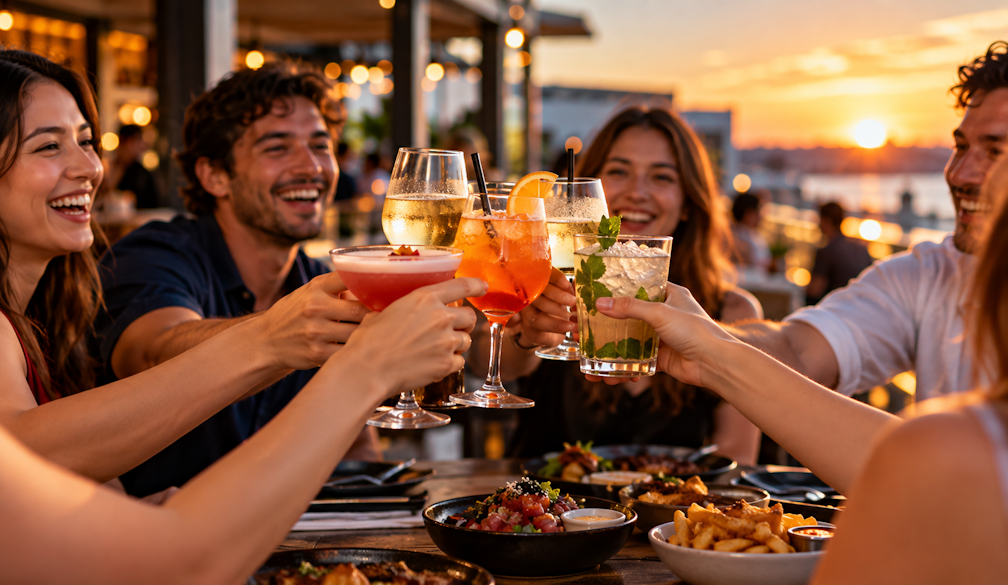
New figures from GoTab reveal changing patterns in evening spending, with Saturday sessions gaining ground and customer orders continuing beyond promotional hours.
The traditional Friday after-work drink is facing competition from Saturday socialising, according to new hospitality data showing how customer spending habits vary across Australian venues.
Figures from hospitality commerce platform GoTab, drawn from venues in Queensland, New South Wales and Victoria, reveal that Saturday is the busiest happy hour day at entertainment destination Fortress in Sydney and Melbourne, while Friday retains its lead at Mulligans Sports Bar in Airlie Beach.
The findings also suggest that the commercial value of happy hour extends beyond discounted drinks, with ordering activity at some venues continuing to increase after promotional periods have ended.
Saturday sessions and the early-evening spending peak
- Saturday leads in Sydney and Melbourne: At Fortress venues in both cities, Saturday accounts for the busiest happy hour trade, while Friday remains the strongest day at Mulligans in Queensland.
- The final hour drives orders: Between 5pm and 6pm, Fortress Sydney records 74% of its happy hour orders, compared with 66% in Melbourne and 57% at Mulligans.
- Weekday demand builds earlier: At Mulligans, orders increase by 64% between 3pm and 5pm on weekdays, compared with 44% during the same period on weekends.
- Spending continues beyond promotions: At Mulligans, weekday orders continue climbing until 7pm, an hour after the venue's 4pm to 6pm happy hour ends.
- Guinness dominates one venue's orders: The stout accounts for 56% of happy hour orders at Mulligans, highlighting the differences in customer preferences between venues.
The commercial value of happy hour
While discounted drinks have traditionally been used to attract customers during quieter trading periods, the figures point to the wider role promotions can play in generating evening revenue.
At Mulligans, approximately 20% of weekday revenue comes from orders associated with customers who first order between 4pm and 6pm, whether or not they purchase a happy hour special.
The figures suggest that attracting customers earlier in the evening can contribute to trade beyond the promotional window, although the patterns differ by venue.
“Happy hour isn't just about discounted drinks. It's an opportunity to bring customers through the door earlier and potentially generate trade well beyond the specials,” said Nathan Merriman, General Manager, Australia at GoTab.
“For venues, the key is understanding when customers are ordering and using those insights to shape promotions, attract more guests and make the most of the evening rush."
Digital ordering reshapes the hospitality experience
The findings also offer insight into the growing role of digital ordering within hospitality venues.
At Fortress Sydney, QR ordering accounts for 35% of happy hour orders, compared with 30% at Fortress Melbourne.
For operators, understanding these ordering patterns can help inform staffing decisions, promotional timing and service planning, particularly as venues prepare for the summer trading period.
“As we head into the busy summer season, it's a good reminder that every venue has its own rhythm. The more operators understand how their customers order, the better placed they are to make the most of those busy periods,” Nathan Merriman concludes.
While the findings represent a selection of venues rather than the wider Australian hospitality market, they illustrate how differences in customer behaviour can influence trading strategies, from the timing of promotions to the management of peak demand.