What Actually Changes When a Business Switches Its Work Vehicles to Electric?
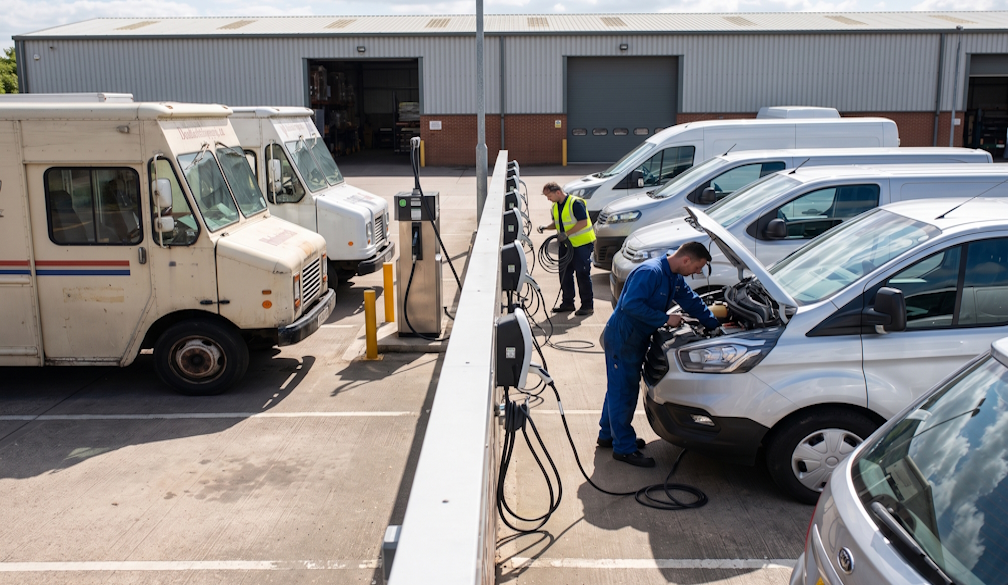
The strange thing about switching a work vehicle to electric is how quickly the conversation stops being about electricity. At first, everyone wants to talk about batteries and charging. Give it a few weeks and the questions become much more ordinary. Where does the van get parked tonight? Who forgot to plug it in? Can we fit tomorrow’s load in the back? Looking through what Farizon Australia is offering makes that point pretty clear. Its Australian range is focused on commercial electric vehicles, from compact vans through to larger cargo vans, cab chassis models and light trucks.
Week one: everyone watches the battery percentage
This is almost guaranteed.
A driver who never once thought about how many litres of diesel were sloshing around in the tank suddenly becomes intensely interested in a battery sitting at 63 per cent.
“Is that enough?”
Enough for what?
That’s the better question.
For commercial EVs, range only makes sense when you compare it with an actual route. A bakery van making deliveries around one side of Melbourne has very different needs from a technician who could be sent from Sydney to Newcastle with very little warning.
So the useful homework happens before the vehicle arrives.
Pull up a month of trip records. Find the longest normal day. Then look for the weird days too.
You know the ones. Someone forgot a part. A delivery went to the wrong address. The driver had to cross town again at 3:45pm.
Those days matter.
Farizon’s current Australian range includes vehicles aimed at different workloads, with quoted WLTP ranges varying by model and configuration. The company also notes that real-world range changes with factors such as payload, temperature, terrain and driving style.
Which is exactly why planning around your real kilometres beats choosing a vehicle because one number looks impressive.
Week two: charging gets boring
And boring is good.
The ideal charging routine probably shouldn’t feel like an event.
For a vehicle that returns to the same depot every afternoon, the routine can become surprisingly mundane. Park. Connect the charger. Grab your bag. Go home.
That’s it.
Of course, businesses without fixed parking have more to think about. A tradie taking a van home each night needs somewhere practical to charge. Fleets with several vehicles may need to stagger charging or look carefully at the electrical capacity available at the site.
But once there’s a routine, drivers tend to stop obsessing over it.
Actually, scratch that. Someone will still forget occasionally.
People are people.
The important part is designing the routine so one forgotten charge doesn’t wreck next morning’s schedule.
Week three: people start noticing the quiet
This one sounds minor until you spend a whole day stopping and starting.
Commercial vehicles spend an absurd amount of time moving twenty metres, stopping, moving another fifty metres and stopping again. Couriers know it. Council workers know it. Anyone doing service calls around a city definitely knows it.
An electric drivetrain changes the feel of that kind of work.
There’s instant response when pulling away and no diesel engine sitting there rumbling while the driver checks an address. Farizon specifically positions its smaller V7E around frequent urban delivery and service work, while its larger SV is available in several sizes for jobs that need more cargo room.
The quiet also becomes noticeable early in the morning.
Picture a suburban street at 6:15am. Roller doors opening. Plastic crates rattling around. Someone dropping a metal trolley with an almighty bang.
You can’t remove all the noise from commercial work.
But removing the engine from that chaotic orchestra certainly helps.
Then somebody asks about the load
Good.
Because this is where commercial vehicle shopping should have started.
Range gets attention because it’s new. Payload and cargo dimensions are less exciting, but they can make or break the vehicle’s usefulness.
A florist, an electrician and a flooring contractor could all travel exactly 120 kilometres per day and still need completely different vehicles.
Flowers take space.
Tools need organisation.
Boxes of tiles get heavy very quickly.
Farizon’s Australian offering reflects those differences. The current range stretches from the compact V7E and multiple SV van configurations to the F3E cab chassis and H9E light truck.
That means the sensible starting question isn’t “Which EV has the longest range?”
It’s “What are we putting in it?”
Walk out to the existing vehicle and open the doors.
Measure the shelving. Look at the scuffed section of the roof where that ladder keeps hitting. Notice which boxes are always wedged beside the wheel arch. Check what the vehicle actually weighs when loaded.
That information is worth far more than guessing from a brochure photo.
Month two: servicing becomes part of the maths
Businesses eventually get past purchase price and start looking at the whole cost of keeping a vehicle working.
That’s where electric commercial vehicles have another difference. There’s no engine oil to replace and fewer drivetrain components requiring the sort of servicing associated with diesel vehicles. Regenerative braking can also reduce conventional brake wear. Farizon lists these among the ownership considerations for its vehicles.
Still, electric doesn’t mean maintenance-free.
Tyres remain tyres. Suspension still deals with potholes. Doors get slammed thousands of times. Things wear out.
It happens.
Warranty and service coverage deserve attention for the same reason. Farizon currently lists a five-year or 200,000 km vehicle warranty, an eight-year or 200,000 km high-voltage battery warranty and five years of roadside assistance in Australia.
For a business vehicle, downtime matters almost as much as the repair bill itself.
Eventually, it just becomes the van
That might be the most interesting part.
The electric vehicle stops being “the electric one”.
It becomes Dave’s van. The delivery truck. The one with the shelving set up properly. The vehicle someone left three takeaway coffee cups in again.
And that’s probably when you know the switch has worked.
A commercial EV doesn’t need to turn every working day into a technology demonstration. It needs to carry the load, finish the route, charge when nobody is using it and be ready again tomorrow morning.
The novelty can disappear.
The usefulness shouldn’t.