Step-by-Step Process of Liquid Chemical Blending
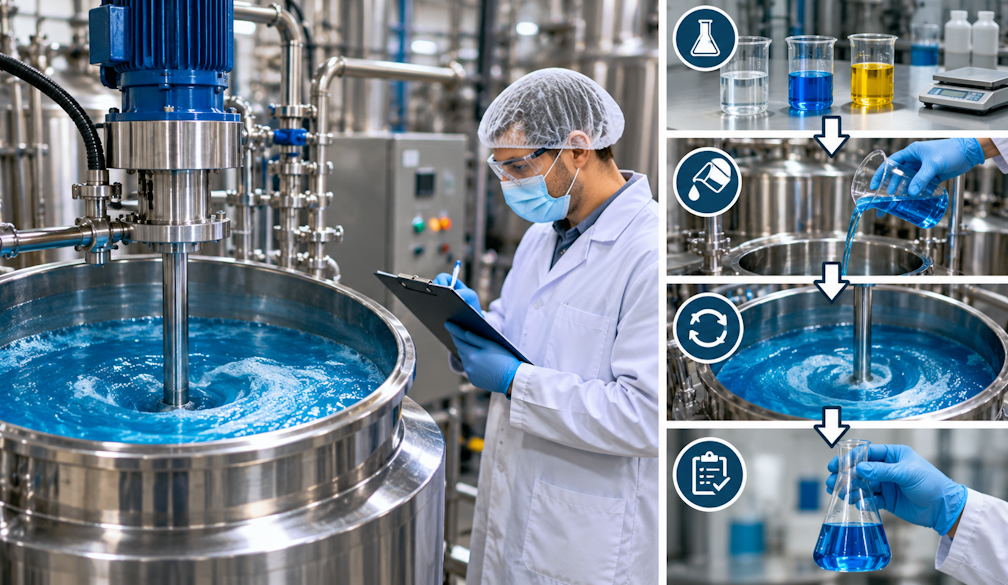
Liquid chemical blending is a manufacturing process that combines different liquid components to produce formulations with specific properties and applications. From selecting raw materials to testing the finished product, each stage requires careful planning and appropriate process controls to achieve consistent results.
Understanding the steps involved in liquid blending helps businesses make informed decisions about production requirements, product quality, and manufacturing processes.
What Is Liquid Chemical Blending?
Liquid chemical blending involves combining two or more liquid ingredients according to a defined formulation. The process aims to distribute the components appropriately to achieve the required composition and characteristics of the finished product.
The blending method depends on the materials being used, their compatibility, the intended application, and the product specifications. Different formulations may require different equipment, mixing conditions, and quality checks.
Step 1: Establishing Product Specifications
The process begins with defining the product requirements. These specifications determine the ingredients, proportions, and characteristics the finished formulation must meet.
Manufacturers consider factors such as the intended application, required product properties, batch size, and applicable quality standards. Clear specifications provide a reference for the production team throughout the blending process.
Step 2: Selecting and Preparing Raw Materials
The next step involves identifying and preparing the required raw materials. The suitability and quality of the ingredients can directly influence the final product.
Before blending, materials may be checked against their specifications, measured, and prepared for processing. Appropriate storage and handling procedures are also important for maintaining material quality before production begins.
Step 3: Measuring and Batching Ingredients
Once the materials are ready, the required quantities are measured according to the formulation or batch sheet.
Accurate measurement helps maintain the intended composition of the finished product. Variations in ingredient proportions can affect product characteristics, making careful batching an important part of the manufacturing process.
Documented instructions also help production teams follow the same procedure across repeat manufacturing runs.
Step 4: Combining and Blending the Liquids
During the blending stage, the prepared ingredients are combined using suitable equipment and mixing procedures.
The method depends on the properties of the materials and the requirements of the formulation. Factors such as mixing speed, duration, and temperature may need to be controlled where relevant to achieve the desired result.
Careful monitoring helps ensure the components are blended appropriately, and the process follows the established production instructions.
Step 5: Sampling and Laboratory Testing
After blending, samples may be collected for quality assessment. Testing helps determine whether the finished product meets its specified requirements before it proceeds to packaging or supply.
Depending on the formulation, testing may examine properties such as pH, concentration, appearance, or other relevant characteristics.
If the results do not meet the required specifications, further investigation may be necessary before the product is released.
Step 6: Packaging and Labelling
Once the product has met the applicable quality requirements, it can be prepared for packaging.
The packaging format depends on the product, customer requirements, and distribution arrangements. Liquid products may be supplied in bulk containers or smaller packages, depending on the intended use.
Appropriate labelling helps identify the product and communicate relevant handling and usage information.
Step 7: Storage and Distribution Preparation
The final stage involves preparing the finished product for storage, collection or delivery.
Depending on the manufacturing arrangement, this may include palletising, coordinating freight and preparing the product for transport. Suitable handling and storage conditions help maintain product quality until delivery.
The specific requirements depend on the chemical formulation and its storage and transportation needs.
Why Quality Control Matters in Liquid Blending
Quality control supports consistency throughout the liquid blending process. Checking raw materials, following documented batch instructions, and testing finished products can help identify variations before products are supplied.
Important considerations include:
- Raw material quality and suitability
- Accurate ingredient measurement
- Consistent blending procedures
- Appropriate sampling and laboratory analysis
- Correct packaging and product identification
Together, these measures help manufacturers assess whether finished formulations meet the required specifications.
The Role of Toll Chemical Services
Businesses that do not have suitable in-house manufacturing facilities may work with an external provider for their blending requirements. Toll chemical services allow businesses to access specialised blending capabilities without having to establish and operate their own production infrastructure.
Depending on the provider and agreed arrangement, support may include blending, technical advice, formulation, laboratory analysis and packaging-related services.
When evaluating a provider, businesses should consider its manufacturing capabilities, quality control procedures, equipment and ability to meet their specific production requirements.
Conclusion
The liquid chemical blending process involves several connected stages, from defining product specifications and preparing raw materials to blending, laboratory testing, packaging, and distribution preparation. Each stage contributes to achieving the required formulation and maintaining product consistency.
Understanding these steps helps businesses assess their manufacturing needs and identify the processes necessary for reliable production. Whether managing production internally or working with an external provider, appropriate procedures and quality checks remain essential to producing liquid chemical formulations that meet their intended specifications.