How Smart Navigation Is Changing Robotic Pool Cleaners
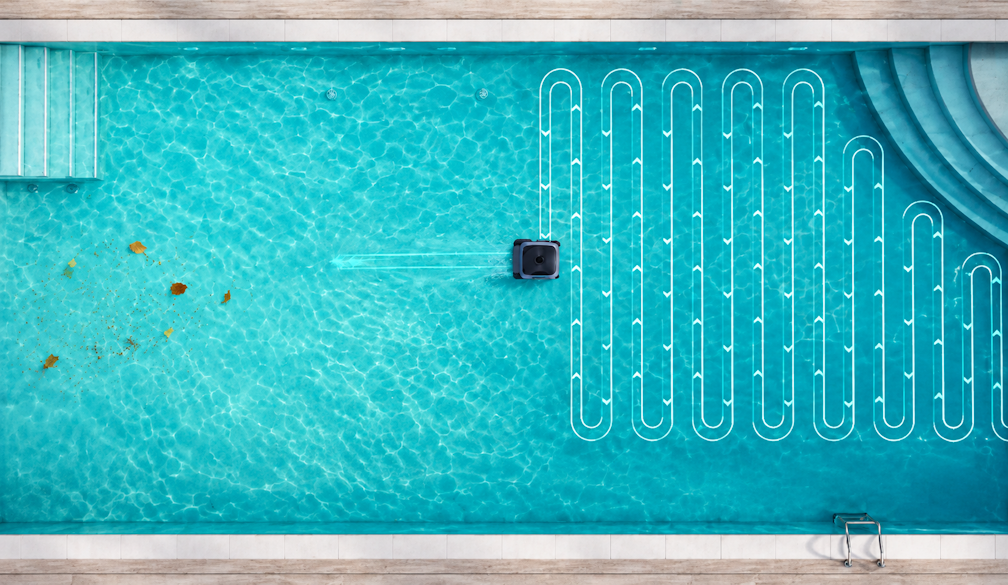
A robotic pool cleaner can travel across a swimming pool for hours and still leave dirt in a corner. That is why navigation deserves as much attention as suction power or battery life. Pool robots must deal with slopes, walls, drains, stairs and changing water depth, often without a clear view of their surroundings. Sensors and movement algorithms influence where they travel, how they react to obstacles and which areas receive a proper clean. Understanding these systems makes it easier to compare models, question impressive-sounding feature claims and choose a machine that suits the pool you actually own.
Why the cleaning route matters as much as suction
Take a rectangular pool with a ladder and curved entry steps. A cleaner that repeatedly crosses the centre may leave sediment behind the ladder; one that approaches the perimeter and redirects around obstacles has a better chance of reaching it. Suction ratings alone do not reveal these differences. Check whether a review shows the areas cleaned, the missed spots and the selected operating mode.
A robotic pool cleaner works independently of the main pool filtration system: onboard motors move the robot and pull debris into its own basket or cartridge. Its brushes loosen dirt, while the water flow carries particles into the filter. None of that matters in a corner the cleaner never reaches. A long runtime can compensate for some inefficient movement, but it does not guarantee complete coverage.
Navigation is particularly demanding underwater. Tiles, vinyl, fibreglass and concrete provide different traction. A slope can shift the cleaner's orientation, and an abrupt ledge can interrupt its route. Water also complicates wireless communication and optical sensing. It is more useful to ask how a robot handles these conditions than whether the packaging calls its route 'intelligent'.
From random movement to sensor-guided cleaning
Not every robot that changes direction is building a digital map. There are several ways to move intelligently enough to cover a pool, and the terminology in product listings often obscures the differences.
Pattern-based navigation
A basic system may travel until it detects an edge, turn and repeat. More structured software can use timed movements, wheel rotation or orientation data to produce overlapping lanes. Such systems can work well in simple rectangular pools, especially if the cleaning cycle allows enough time. They may spend longer revisiting already-cleaned sections when the shape becomes complicated.
Gyroscopes and motion tracking
A gyroscope measures changes in orientation; accelerometers and motor feedback can contribute further motion information. Together, these signals may help a cleaner maintain a heading, recognise a change in attitude and execute more consistent turns. They do not, by themselves, prove that a machine has made or stored an accurate map of the whole pool. Wheel slip, wall transitions and the limits of underwater positioning still matter.
Ultrasonic sensing and obstacle response
Ultrasonic sensors estimate nearby distances from reflected sound waves. They are attractive underwater because sound can remain useful where optical sensors struggle with lighting or visibility. A cleaner can use such readings to recognise a wall or obstruction before making contact, adjust its path, or identify a boundary. Sensor placement and software interpretation are crucial: extra sensors are not an automatic guarantee of better coverage.
Obstacle avoidance and coverage planning solve different problems. The first helps a cleaner pass a ladder or recover from a corner; the second concerns whether it returns to the area behind that ladder. Check real cleaning footage or a repeatable review for missed strips. A route animation alone does not demonstrate measured coverage.
The hardest parts of a swimming pool to navigate
An empty, flat pool floor is the easy case. Real backyards introduce geometry and debris that expose the limits of a navigation system.
Walls and the waterline
Climbing requires sufficient grip and a design that maintains contact with the wall. A wall-capable cleaner may still behave differently on a curved transition, a vertical tile face or a slippery section. The waterline also contains sunscreen residue and surface grime that benefit from active brushing. Check whether the machine is explicitly designed to clean the waterline, rather than assuming that 'wall cleaning' includes it.
Steps, benches and shallow platforms
These features are easy to overpromise. A large tanning ledge may have room for a robot to turn, whereas a narrow step barely fits its body. Some machines cannot operate in very shallow water, even if they clean deeper benches successfully. Measure both the depth and the usable width or area of your platform, then compare the measurements with the precise published limits of the model. The phrase 'step cleaning' alone is not enough.
Floating debris versus debris on the floor
Leaves and insects on the water surface are not in the same place as grit at the bottom. Most traditional underwater cleaning functions deal with submerged surfaces; collecting floating material requires an appropriate surface mechanism. For a pool beneath gum trees, that distinction may affect daily convenience more than a marginal difference in suction figures. A robot also does not replace every task performed by the pool's skimmer or filtration system.
A current example: what the Beatbot Sora 70 actually claims
The Beatbot Sora 70 offers a useful illustration of how cleaning-zone design and navigation interact. On its Australian product information page, Beatbot describes dual ultrasonic sensors for obstacle response, floor and wall cleaning, waterline cleaning, shallow-platform cleaning and a separate active water-surface collection system. These are manufacturer-described capabilities, not results of independent testing for this article.
The details underneath those claims are more valuable than a promotional label. Beatbot specifies that suitable shallow platforms or steps need water deeper than about 20 cm and an area at least 1 m by 1 m. Its Pro Mode is described as covering five zones, including the surface; Standard Mode excludes water-surface cleaning from that combined cycle. The app's remote steering and one-tap parking functions are limited to when the device is on the water surface, reflecting underwater connectivity constraints.
For a homeowner with a broad sun shelf and frequent floating leaves, those functions could be relevant. For a small pool with narrow stairs and little surface debris, they might not change much. The point is not that one model wins every comparison, but that coverage claims need to be checked against physical dimensions, cleaning modes and the type of mess the pool actually collects.
A practical checklist before choosing a navigation system
Rather than ranking machines solely by the number of sensors or advertised suction, use the following checks. They also give reviewers a more transparent way to report what happened during a test.
- 1. Sketch the pool. Record its length, width, deep end, slopes, steps, benches, ladders and tight corners. Include the type of surface and any unusual transitions.
- 2. Identify the missed-work risk. Is the recurring problem fine sand at the deep end, leaves floating under trees, dirt trapped behind steps or a dirty waterline? Match the robot's supported cleaning zones to that specific job.
- 3. Read the mode descriptions. Find out whether the robot cleans all advertised zones in one cycle, whether surface cleaning is separate, and whether mode changes require an app. Confirm any water-depth or platform-size thresholds.
- 4. Compare filtration with debris. Large baskets can be useful during leaf season, while fine filtration can matter for dust and silt. Filter specifications and optional accessories should be checked separately from navigation claims.
- 5. Assess handling. Consider the cleaner's weight when lifted, water drainage, basket access, storage and charging requirements. The robot will need attention after a cycle even when its navigation is automatic.
- 6. Look for meaningful review evidence. A useful test names the pool shape, debris, cleaning mode, cycle duration and areas left dirty. Be sceptical of a simple '100% coverage' statement without a stated method.
- 7. Confirm local support. For an Australian purchase, check compatible power supply, warranty terms, spare parts and service availability through the seller. Navigation software is only one part of ownership.
How to evaluate cleaning coverage without a laboratory
Try a two-cycle home check: before each run, note the date, cleaning mode, weather, visible debris and whether the filter was clean. Mark three trouble spots, such as the deep-end corner, the base of the steps and the waterline near the skimmer. Inspect those same spots afterward and record what remains. Use naturally occurring debris rather than adding objects to create a test.
This does not yield a scientific coverage percentage. Still, it shows whether the robot repeatedly ignores the same corner, struggles at the wall transition or leaves material on a shallow ledge. Run more than one cycle before drawing a conclusion; debris movements, filter loading and starting positions can vary. A single attractive route is not evidence of consistent performance.
If a particular zone stays dirty, consult the operating instructions before assuming a navigation defect. Check whether the selected mode includes that zone, whether the filter or brush needs cleaning and whether the pool feature falls outside the stated limits. Changes to the pool's chemical treatment or unsafe electrical modifications are not appropriate troubleshooting shortcuts.
What smart navigation cannot replace
A pool-cleaning robot removes physical debris and may brush surfaces. It does not make unsafe swimming water sanitary. Testing and maintaining disinfectant concentration, pH, circulation and the main filtration system remain necessary. Green water, persistent algae and cloudy water need appropriate water-quality diagnosis and treatment; a robot alone cannot correct them.
That limitation also applies to the word 'automatic'. You still have to empty and rinse filters, maintain brushes, charge or connect the unit correctly, and inspect the pool for hazards. Automation changes which tasks require manual effort; it does not remove pool care altogether.
Frequently Asked Questions
Do robotic pool cleaners map the entire pool?
Not necessarily. Some follow structured patterns or react to sensor readings without retaining a complete map. A named navigation system should not be treated as proof of detailed mapping unless the manufacturer explains the function or reliable testing demonstrates it.
Are ultrasonic sensors better than gyroscopes?
They do different jobs. A gyroscope helps track orientation; ultrasonic sensors can detect nearby objects or boundaries. A well-designed system may combine them. Pool compatibility, software behaviour and cleaning coverage matter more than comparing sensor types in isolation.
Can a robotic pool cleaner clean steps and tanning ledges?
Only if the model supports the relevant depth and dimensions. Shallow water and narrow steps are common exclusions. Measure these areas and check the product's specific limitations before purchasing.
Does a longer runtime mean a cleaner covers more of the pool?
A longer cycle offers more opportunities to reach missed areas, but repetition and poor routing can waste time. Runtime should be evaluated alongside the size and shape of the pool, supported zones and observed cleaning consistency.
Can a robotic pool cleaner replace chemical pool maintenance?
No. Robots can remove dirt and leaves and may scrub surfaces, but water chemistry, disinfection and filtration still need regular attention.
The takeaway
Smarter navigation is useful when it solves an identifiable cleaning problem: reaching edges, responding to obstacles or handling a difficult change in depth. For most buyers, the strongest comparison is not a contest of sensor counts. It is whether the machine can reliably clean the particular surfaces and debris in their pool, with clear limits and manageable upkeep. Start with the pool, not the marketing terminology.