Retail Margin Defense: How IoT Automation and Dynamic Pricing Are Solving Australia’s In-Store Labor Squeeze
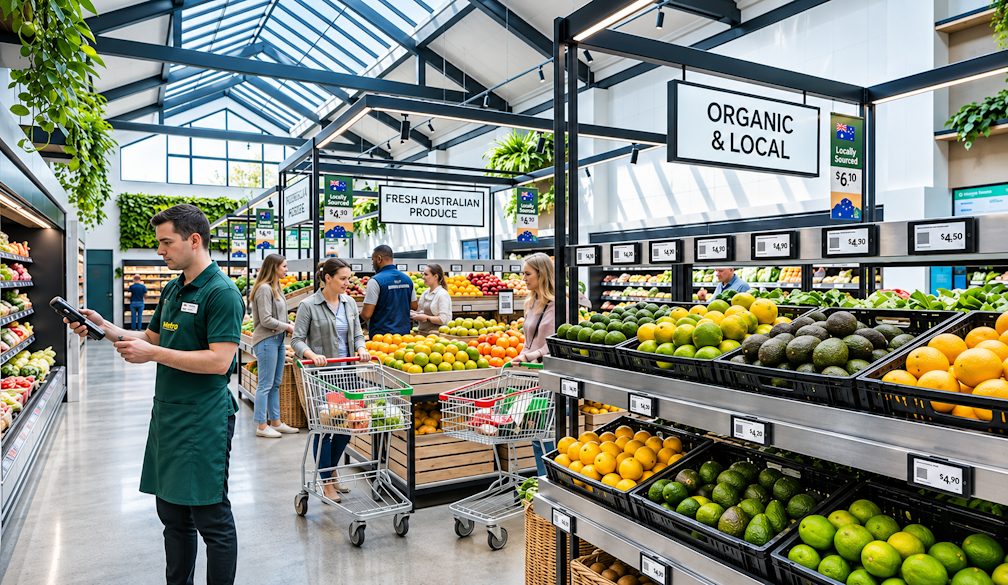
Australian brick-and-mortar retail operators face an unprecedented convergence of economic pressures. Sustained core inflation, combined with statutory wage increases ratified by the Fair Work Commission, has significantly expanded store-level operational expenditure.
At the same time, regional grocery chains, independent supermarket banners, and consumer goods retailers must defend operating margins against persistent stock loss and price competition. Within this compressed operating climate, legacy manual processes on the sales floor represent an unsustainable cost center that directly compromises store profitability.
The Margin Compression Dilemma in Australian Brick-and-Mortar Retail
Operating an enterprise retail store in Australia requires managing inventory portfolios spanning 15,000 to 40,000 active stock-keeping units (SKUs). Maintaining pricing accuracy across these inventories has historically relied on paper-based price tags, requiring store associates to manually print, cut, sort, and slot shelf labels into plastic shelf channels.
This recurring operational workflow generates substantial bottom-line friction:
- Store associates routinely dedicate 20 to 40 payroll hours per week purely to executing physical tag changes.
- Weekly promotional transitions create severe staffing bottlenecks, frequently delaying morning trading readiness.
- Administrative maintenance diverts floor staff away from customer consultations, inventory replenishment, and loss prevention.
- Recurring material expenses for specialized cardstock, thermal ink ribbons, and extruded PVC shelf runners accumulate into substantial store operating costs.
Beyond direct labor allocations, paper-based pricing introduces severe shelf-to-register latency. In fast-moving consumer goods (FMCG) environments, wholesale input costs and supplier allowances shift rapidly. When shelf updates lag behind centralized point-of-sale (POS) databases, price discrepancies inevitably emerge at checkout lanes.
These mismatches trigger customer disputes, lengthen register queue times, and expose retailers to statutory penalties under the Australian Consumer Law administered by the Australian Competition and Consumer Commission (ACCC). Transitioning to automated store-edge infrastructure is no longer merely an aesthetic modernization; it has become a necessary operational defense mechanism.
Architectural Pillars of Modern Electronic Shelf Label (ESL) Ecosystems
Modern shelf-edge digitization relies heavily on balancing ultra-low power consumption with enterprise-grade network reliability. To prevent transmission bottlenecks across sprawling retail footprints, commercial display manufacturers such as Zhsunyco have engineered multi-frequency hardware architectures—spanning proprietary 2.4GHz, sub-1GHz 433MHz, and BLE protocols—that allow thousands of e-Paper displays to refresh simultaneously without disrupting local enterprise Wi-Fi channels.
Enterprise electronic shelf labeling platforms replace static cardstock with network-connected micro-display terminals managed through a coordinated, three-tier architecture.
Display Physics and Optical Legibility
Unlike commercial tablet screens or liquid crystal displays (LCDs) that demand continuous backlight illumination, bi-stable electronic paper (E-ink) utilizes electrophoretic display technology. Microscopic micro-capsules containing charged black, white, red, or yellow pigment particles suspend within a clear fluid medium. Applying an instantaneous electrical charge moves specific pigments to the surface, where they remain fixed without further power draw.
This physical mechanism delivers distinct operational properties:
- Zero Standby Power Draw: The display draws micro-amperes of power strictly during page refreshes, enabling five to ten years of continuous operation from integrated lithium coin cells.
- Paper-Equivalent Legibility: Reflective optical characteristics provide complete legibility under intense store spotlights without screen glare.
- Wide Viewing Angles: A 180-degree optical viewing arc ensures product details and prices remain fully legible across low bottom shelves and high display tiers.
- Multi-Color Accents: Dedicated color pigments allow merchandising teams to render promotional banners, clearance indicators, and unit-pricing metrics directly on the tag face.
Wireless Protocol Resilience in High-Density Retail Spaces
Australian commercial stores present dense radio frequency environments characterized by structural steel shelving, refrigeration units, and hundreds of concurrent shopper mobile devices. Standard consumer Wi-Fi networks degrade rapidly when tasked with maintaining thousands of persistent wireless handshakes.
Industrial ESL platforms resolve this challenge through targeted frequency deployment:
- Sub-1GHz (433MHz / 868MHz): Long wavelength signals penetrate metal shelving uprights and structural barriers with minimal signal attenuation.
- Proprietary 2.4GHz Protocols: High-speed frequency-hopping spread spectrum (FHSS) algorithms cycle across non-overlapping Wi-Fi channels, executing high-volume batch refreshes in seconds.
- Bidirectional Verification: Gateway base stations transmit encrypted data packets and require positive acknowledgment from each endpoint tag, ensuring zero missed updates across the facility.
Synchronizing POS and Shelf-Edge: Implementing Algorithmic Dynamic Pricing
The primary commercial value of digital shelf infrastructure lies in establishing direct synchronization between central commerce databases and the physical shelf edge. Through lightweight middleware, store management engines connect to established enterprise systems—including SAP, Oracle Retail, and specialized POS platforms—via standardized RESTful API endpoints.
When inventory managers modify price records, adjust supplier promotional margins, or update compliance disclosures, the changes propagate to aisle endpoints in seconds.
This synchronization enables advanced dynamic pricing strategies across product categories:
- Dynamic Perishable Markdowns: Fresh produce, meat, and dairy inventories approaching their use-by dates can be automatically discounted in progressive tiers throughout the trading day, recovering revenue and reducing organic food waste.
- Omnichannel Price Parity: In-store shelf prices mirror digital promotions and online store pricing instantly, eliminating customer showrooming friction and checkout disputes.
- Intraday Demand Balancing: Store managers can implement time-based promotional pricing during off-peak trading windows to stimulate customer foot traffic and increase basket sizes.
- Elimination of Checkout Discrepancies: Automated synchronization ensures complete shelf-to-register price parity, eliminating compliance violations under statutory retail trade regulations.
Beyond Price Tags: Micro-Location and Dark Store Picking Efficiency
As major Australian retail operators expand their online order fulfillment capabilities, physical supermarkets increasingly function as hybrid fulfillment centers. Fulfilling click-and-collect and last-mile delivery orders within active store aisles introduces significant labor overhead, as fulfillment staff navigate crowded aisles searching for specific products.
Modern electronic shelf labels integrate high-output, multi-color LED visual indicators that support intelligent Pick-to-Light (PTL) workflows:
- Aisle Navigation Guidance: Store picking devices transmit location coordinates directly to target shelf tags, triggering visible LED flashes as pickers enter an aisle.
- Concurrent Multi-Order Picking: Color-coded LED pulses allow multiple order pickers to work within the same aisle simultaneously without cross-order confusion.
- Restocking Acceleration: Nightfill associates can pulse target shelf tags using handheld scanners, accelerating shelf restocking and eliminating misplaced stock.
- Near Field Communication (NFC) Interactivity: Shoppers can tap their smartphones against shelf tags to surface allergen disclosures, sourcing provenance, and dietary certifications.
Deploying visual picking cues within store aisles shortens picking search times by more than 30%, driving down fulfillment labor costs while improving order accuracy.
Evaluating Total Cost of Ownership (TCO) and Capital Return in Store Modernization
Evaluating an enterprise ESL deployment requires an analysis of upfront capital expenditure balanced against recurring operational savings. Initial capital commitments encompass display hardware procurement, gateway base station installation, bracket mounting infrastructure, and enterprise system integration.
Against this initial investment, retailers realize immediate operational recoveries:
- Labor Reallocation: Reallocating 20 to 40 hours of weekly manual labeling labor directly lowers store payroll requirements or redirects personnel toward customer-facing sales roles.
- Consumable Elimination: Eliminating recurring purchases of paper cardstock, thermal printheads, ink ribbons, and plastic channel strips reduces store operating expenses.
- Margin Preservation: Dynamic markdown execution on short-dated perishable stock salvages up to 25% of gross margins that would otherwise be written off as waste.
- Extended Hardware Lifecycles: Industrial-grade lithium battery cells provide five to ten years of continuous operation, amortizing initial equipment costs over a prolonged operational lifespan.
Commercial grocers and multi-store operators typically achieve full capital payback within 12 to 18 months of completed deployment.
While upfront capital expenditure remains a consideration for independent grocers, long-term operational resilience heavily favors digitized workflows. According to macroeconomic reporting from the Australian Bureau of Statistics, wage price indexes across retail and logistics continue to outpace productivity growth, driving multi-store operators to amortize automation hardware over five-to-ten-year lifecycle horizons. Transitioning from passive paper labeling to an active IoT edge network establishes the operational agility necessary to defend commercial retail margins in an evolving economic landscape.