Elevator Shoes in Australia: How Much Height Is Right, and What to Check Before You Buy
Key takeaways
- Elevator shoes add height through a hidden internal lift or a thicker sole. Depending on the style, the gain ranges from about 5 cm to 15 cm.
- For a first pair, 5–7 cm usually looks the most natural and is the easiest to walk in.
- Before buying, check fit, weight, outsole grip, and the retailer’s return terms, especially if the shoes ship from overseas.
What are elevator shoes?
Elevator shoes add extra height in the heel or sole, so the wearer stands taller without making the shoe look obviously raised. They come in two main forms: a hidden lift inside an otherwise ordinary shoe, and a platform sole that raises the whole foot evenly.
How much height is right for a first pair?
For most people, 5–7 cm is the sweet spot. Noticing it in photos and in how clothes sit is enough, but your walking stride and posture barely change. As a general guide:
|
Added height |
What to expect |
|
5–7 cm |
Looks natural, easy to adapt to, suits everyday wear |
|
8–10 cm |
Clearly noticeable, needs a short adjustment period |
|
10–15 cm |
A specialist choice, better for occasional wear |
Height ranges vary a lot between brands, so check each pair’s listed measurement. Specialist labels, like Chamaripa elevator shoes, offer 5–15 cm of lift.
The exact height depends on the style. They make most of their pairs from cowhide, while a small number of high-end custom styles use specialty leathers.
Hidden lift or platform sole?
|
|
Hidden internal lift |
Platform sole |
|
How it works |
Raised heel inside the shoe |
Thicker sole under the whole foot |
|
Look |
Looks like a regular shoe |
Chunkier, more visible |
|
Foot angle |
Heel higher than toe |
Flatter, closer to natural |
|
Best for |
Dress shoes, boots, discreet height |
Casual wear, street style |
If you plan to walk a lot, a platform sole tends to feel more natural, because the foot sits flatter. A hidden lift suits people who want the shoe to stay unnoticed.
Are platform sneakers a good everyday option?
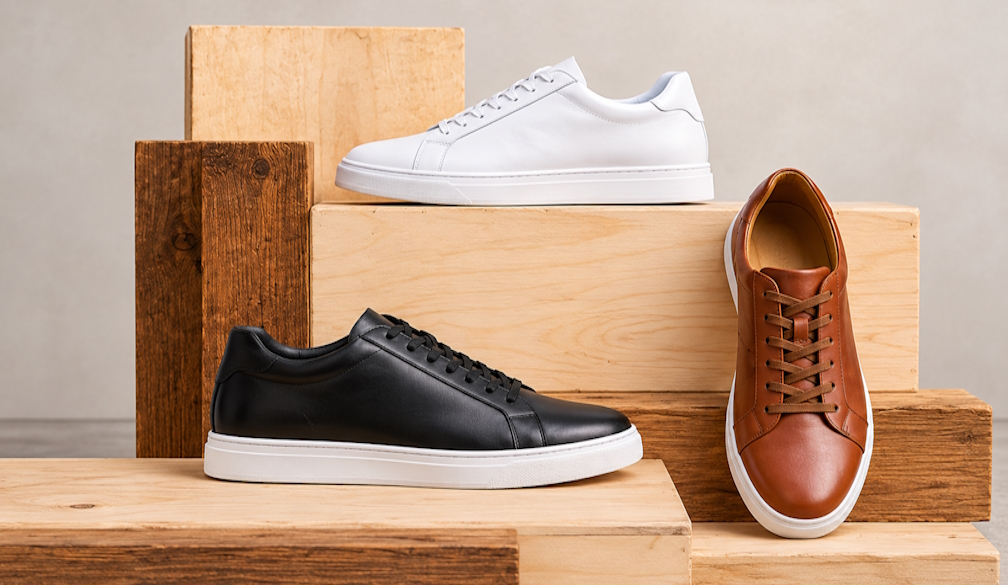
Yes, they are the easiest way to start. A thicker sole has been part of street style for several years, and male platform sneakers now work well with jeans, chinos and shorts.
A white platform sneaker with shorts and socks: an easy warm-weather pairing.
Australian conditions matter here. In summer, a heavy sole and padded upper can run hot. So, look for breathable panels. For commuting, a lighter sole is kinder after a long day.
What should you check before buying?
- Heel-to-toe angle. The bigger the lift, the more weight shifts forward onto the ball of the foot. Start moderate.
- Insole and sole. A firm but cushioned insole and a slightly flexible sole are easier over distance.
- Weight. If a shoe feels weighty in the hand, it will feel heavier after a few hours.
- Fit. Because the foot sits at an angle, a shoe that is slightly small will cramp the toes faster than a flat one.
- Grip. A taller sole is less stable on wet tiles and uneven pavement, so check the outsole pattern.
Elevator shoes suit dinners, events and office days. They are not ideal for hiking, running or standing on hard floors all day.
Buying elevator shoes online: what to confirm before you order
Fit is harder to judge through a screen, and the angle of an elevator shoe makes sizing a little less forgiving. Whichever retailer you choose, a few checks are worth doing first:
· Sizing. Australian men’s sizes generally match UK sizing, and US sizes run about one size larger. Use the brand’s own size chart, and measure your foot length in centimetres if the chart offers it.
· Returns and exchanges. Check the return window, who pays postage, and what condition the shoes must be in. Longer windows give you time to test the shoes properly, for example a 90-day window like the one Chamaripa lists on its Australian site. Read the full terms before you order.
· Final price and delivery. Confirm the checkout total includes GST and any shipping costs. Check the estimated delivery time, so there are no surprises.
· Support and tracking. Look for clear contact details, order tracking and a published sizing or fit guide, so you can get help if the first pair doesn’t fit.
FAQ
Do elevator shoes hurt your feet?
Not if the lift is moderate and the fit is right. Problems usually come from extremely high lifts, poor fit or rigid soles.
Will people notice I’m wearing them?
At 5–7 cm in a hidden-lift style, usually not. Platform soles are more visible by design.
Can I wear them all day?
Most people manage a full office day at 5–7 cm. For long walks or standing, choose a flatter platform sole and break them in first.