Oil turmoil exposes Australia’s dependence on a world at war
- Written by: The Times
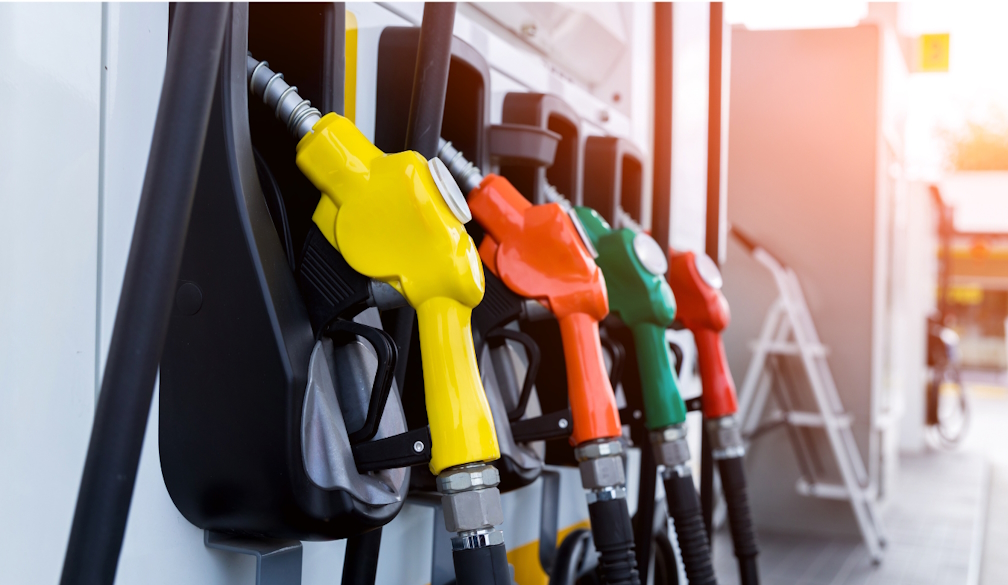
Australia has oil wells, refineries and fuel infrastructure. What it does not have is the capacity to meet its own fuel needs without a continuing flow of imports. As conflict threatens production and shipping, that dependence deserves renewed scrutiny.
A refinery attacked in Russia. Commercial ships sunk near the Strait of Hormuz. A missile intercepted over Saudi Arabia. Iran continuing to threaten shipping despite an American blockade.
These are separate developments with a shared consequence: greater uncertainty surrounding the fuel that keeps economies moving.
For Australia, the question reaches beyond the price displayed outside a service station. It concerns the security of deliveries to farms, mines, transport operators, airports and businesses whose operations depend on fuel arriving when required.
Australia participates in an international supply system that offers considerable advantages during peaceful times. The present turmoil exposes the cost of relying so heavily on that system when several parts of it come under pressure together.
Oil infrastructure is part of the battlefield
Ukraine struck a Russian refinery on October 15 after President Volodymyr Zelenskiy said Kyiv was abandoning an arrangement to halt attacks on energy targets, accusing Russia of continuing its own strikes. The development renews uncertainty over Russian fuel production. The full operational consequences of an individual attack can take time to establish.
The distinction between crude oil and usable fuel matters.
Oil underground cannot power a truck. It must be extracted, transported, processed and delivered. Damage to a refinery, storage installation or loading facility can interrupt that chain even when oil remains available elsewhere.
A market can therefore face pressure from a shortage of refining capacity or disrupted transport, as well as from reduced crude production.
Around the Gulf, the vulnerabilities extend beyond the Strait of Hormuz itself. A Reuters investigation published on October 15 documented Iranian and allied attacks on infrastructure across Gulf countries, including damage to Saudi pipeline pumping stations and disruption at Fujairah in the United Arab Emirates. Both are important to routes that bypass Hormuz.
The implication is troubling: an alternative route provides less protection when its supporting infrastructure is also within reach of attack.
Ships sunk and Saudi Arabia threatened
Maritime officials told Reuters that a container ship and a dry bulk carrier sank near Hormuz after separate projectile attacks, reported on October 14. Iran said it was intensifying attacks in response to the American blockade of its ports and tighter sanctions.
These were commercial cargo vessels, rather than two oil tankers. Nevertheless, attacks on commercial shipping demonstrate the danger facing vessels using the waterway.
On October 15, the Saudi-led coalition also said it intercepted a cruise missile over Medina province. Responsibility remained disputed: the coalition did not identify the attacker in its statement, and the Houthis denied involvement. Saudi Arabia separately reported destroying a drone over its oil-producing Eastern province.
An intercepted missile does not establish that oil production has stopped. Nor does an attack on a company office necessarily mean a refinery has been disabled.
Those distinctions matter. So does the broader picture of continuing threats to shipping and infrastructure.
Iran does not have to win to keep imposing costs
The continuation of attacks illustrates a difficult strategic reality.
A blockade can place severe pressure on a country without immediately removing its ability to retaliate. Military superiority does not automatically translate into safe commercial passage.
For the oil market, the relevant question is whether vessels, crews, insurers and suppliers can operate with sufficient confidence.
Iran does not need to defeat the United States militarily to remain a source of disruption. The capacity to threaten a narrow waterway or damage selected infrastructure can impose costs well beyond its borders.
That is an assessment of its disruptive capacity, rather than a declaration that its strategy will ultimately succeed.
Does Australia have oil wells?
Yes. Australia produces crude oil and other petroleum liquids from onshore and offshore fields.
Geoscience Australia identifies producing regions including the North West Shelf, the Cooper–Eromanga basin across South Australia and Queensland, and Gippsland in Victoria. However, much of Australia’s petroleum liquids production consists of condensate and LPG associated with gas production. These should not be confused with a ready supply of diesel, petrol or aviation fuel.
Having oil resources is therefore only one part of fuel security.
The country also needs suitable processing capacity, transport connections, storage and distribution—and enough production to meet demand.
Australia’s status as a substantial energy exporter can obscure this distinction. Export strength in one form of energy does not guarantee self-sufficiency in another.
Does Australia have its own infrastructure?
Yes, but its domestic refining capacity is limited.
Australia’s two remaining major oil refineries are Ampol’s Lytton refinery in Brisbane and Viva Energy’s Geelong refinery in Victoria. The country also has fuel import terminals, storage and distribution infrastructure.
A Parliamentary Library briefing published in June puts domestic refinery supply at about 20 per cent of Australia’s liquid fuel needs. It also explains that Australia exports most of its crude oil and refinery feedstock, reflecting the mismatch between lighter Australian production and the feedstock requirements of domestic refineries.
Consequently, “keep our oil here” is not a complete solution. Refinery compatibility, production volumes and the mix of fuels Australians consume all have to be considered.
Retaining refining capacity provides valuable options during an emergency. It does not, by itself, deliver independence from imports or international prices.
What is being done?
The federal government’s 2026–27 Budget announced a $3.2 billion Australian Fuel Security Reserve, intended to hold around one billion litres of diesel and jet fuel. It also announced expanded stockholding requirements, continued support for the two refineries and $10 million for studies into additional refining capacity.
These measures recognise the vulnerability. Their practical value depends on implementation: fuel physically held, facilities operating and supplies able to reach the places that need them.
An announced reserve and a completed, stocked reserve are different stages of preparedness.
Was globalisation such a good idea?
The oil turmoil provides a strong reason to question how globalisation has been managed.
International trade allows Australia to obtain products from multiple suppliers, access large overseas refineries and sell its own resources abroad. Those advantages are substantial.
However, commercial efficiency and national resilience measure different things.
A business may reasonably choose imported fuel because it is cheaper than producing it locally. A country must also consider the consequences if shipping is disrupted, suppliers restrict exports or several customers compete for replacement cargoes.
Fuel security therefore requires a deliberate balance: diversified imports, sufficient reserves, viable domestic capacity and lower dependence on oil where practical.
Electrifying suitable transport can reduce exposure over time. It cannot immediately replace the liquid fuels required across aviation, farming, mining and heavy transport.
The transition and the security of today’s supply must be managed together.
The Times View
Australia cannot control the wars threatening international oil supplies. It can make decisions about how much exposure it is prepared to accept.
Those decisions should include preserving useful refining capacity, testing the economics of expansion, maintaining credible reserves and ensuring that emergency plans work beyond metropolitan fuel terminals.
Complete self-sufficiency would be difficult and expensive. Excessive dependence also carries a price—one that becomes clearer when the international system is under strain.
Globalisation delivered access and efficiency. Governments still had a responsibility to preserve the capacity to withstand disruption.
A country’s fuel security is measured by what it can keep running when its usual arrangements fail.