Heat and Hail Damage Machinery: Protect Gear Before Storms
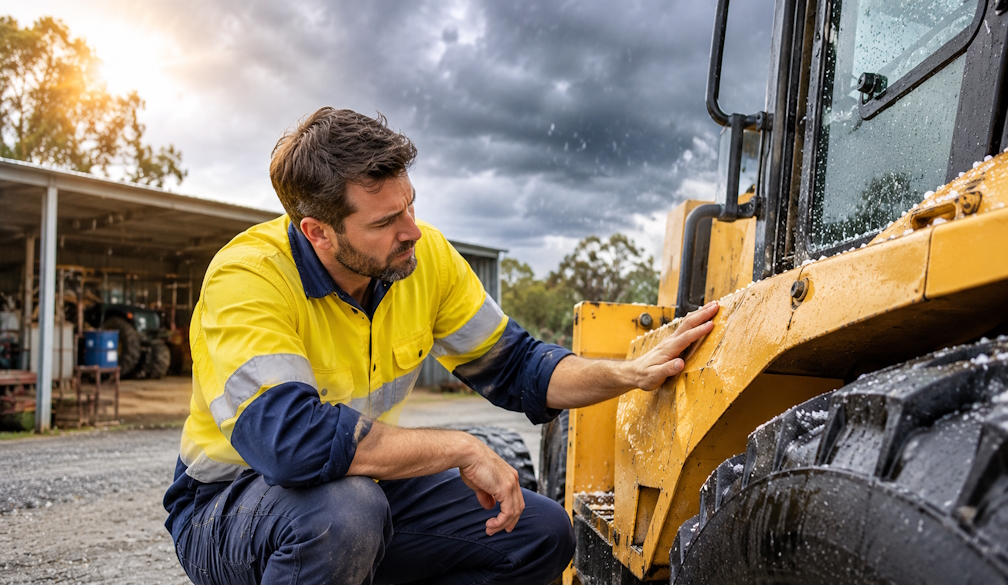
Heat and hail do the same damage to machinery, just slower
A header or a seeder rarely fails on the day it is parked in the open. It fails a few seasons later, when the hose cracks at the fitting, the cab trim goes brittle and the paint has chalked to grey. Heat and hail do most of the work between them. One does it slowly and quietly, and the other does it all at once, but the result on the machine is often similar: a lower price at sale time and a repair bill nobody planned for.
Sun and heat wear down machinery left outside
Sunlight carries ultraviolet light, and that light breaks down the materials that hold a machine together. Rubber hoses and seals are the first casualties. They harden, lose their flexibility and develop fine cracks that widen over time. Tyre sidewalls and weather seals follow the same pattern, and a hose that looks sound from a distance can split under pressure once it has aged in the sun.
Plastics suffer in a similar way. Black plastic guards, dashboards, lenses and trim can fade, become chalky, or lose their strength. Heat speeds all of this up, because high temperatures soften the parts that are meant to stay firm and push the chemicals in rubber and plastic to migrate out of the material. A machine that sits in full sun through a long summer ages much faster than one parked under cover, even when both are used the same amount.
Paint is no exception. Sun fades colour and dulls the gloss on bonnets, panels and cabs, and once the clear coat starts to fail, water and dust get underneath. A machine with faded paint looks older than it is, and buyers notice.
Hail adds sudden damage to parked machinery
Hail arrives with little warning and does its damage in minutes. Dents in panels and bonnets are the most visible result, but the worst damage is often hidden. Hail can crack headlights, shatter glass in cabs and break radiator fins. It can strip paint right back to the metal, which then starts to rust.
The damage is not only cosmetic. A cracked lens lets in water, and a dented radiator fin reduces cooling. Hail that breaks the seal on a cab or a control panel lets dust and moisture into the electronics. None of these faults are costly to fix on their own, but together they can turn a useful machine into one that needs a workshop visit before it can be used again.
Where heat and hail damage overlap on machinery
The real trouble starts when heat weakens a part and hail finishes it. A hose that has hardened in the sun is more likely to split when hail strikes the machine next to it. A sun-faded guard breaks more easily under impact than a fresh one. For that reason, a machine should be judged on its weakest point, and the weakest points on most farm machinery are the same ones: hoses, seals, lenses, guards and the paint on exposed panels.
Walking around a machine with this in mind is useful. Look at the hose sleeves, especially where they bend near the frame. Check whether the seals around the cab door and the lights are still soft and whole. Run a hand over the paint on the bonnet and roof, where the sun hits hardest. Any cracking, chalking or softness there is a sign that the machine has been in the weather for longer than its hour meter suggests.
Choosing a farm machinery shed that handles sun and hail
The most effective protection is cover. A shed or shelter keeps the sun off the rubber and plastic, and it stops hail reaching the paint, lights and glass. It also protects the machine during the storm itself, which is when many of the sudden losses happen.
Cover is not always possible straight away, and it helps to plan the order of work. Put the machines with the most exposed hoses and electronics under cover first. Move anything that can be moved before a storm warning, and secure loose items such as tools, tarps and bins that could turn into hail-driven debris. If a machine must stay outside, fit hose sleeves and shade what you can, even if it is only a cloth over a control panel.
Container shelters as cover for machinery
Covered storage is where the two threats are handled together, so it helps to be clear about what a structure has to do. A structure that blocks the sun but does not stand up to hail, or one that handles hail but lets the sun bake the hoses, only solves half the problem. The hard top container shelters on the Allshelter site are one option to compare when planning cover for machinery, and the same questions apply to any structure you consider: how much sun reaches the machine, how it is held down in wind, and whether you can get the machine in and out quickly when a warning comes through.
A pre-season checklist for machinery sheds
Before the season turns, a machinery owner can cover most of the risk with a few checks.
- Inspect hoses and seals for cracks, hardening or splits, and replace any that are soft or cracked.
- Look at lights, lenses and cab glass for chips or cracks that let in water.
- Check the paint on bonnets and roofs, and touch up bare metal before rust starts.
- Decide which machines go under cover first, and keep a plan for moving them when a warning comes through.
- Clear loose items from the yard so they cannot become debris in a storm.
- Keep a record of each machine’s condition, with dated photographs, so you can show it at sale time.
The sun and the hail will not stop, but the damage they cause is partly a matter of planning. A machine that is checked, covered and cleaned before the season starts is a machine that holds its value through it.