The Harmony of Tolerances: Why Phone Accessories Work Best as a Set
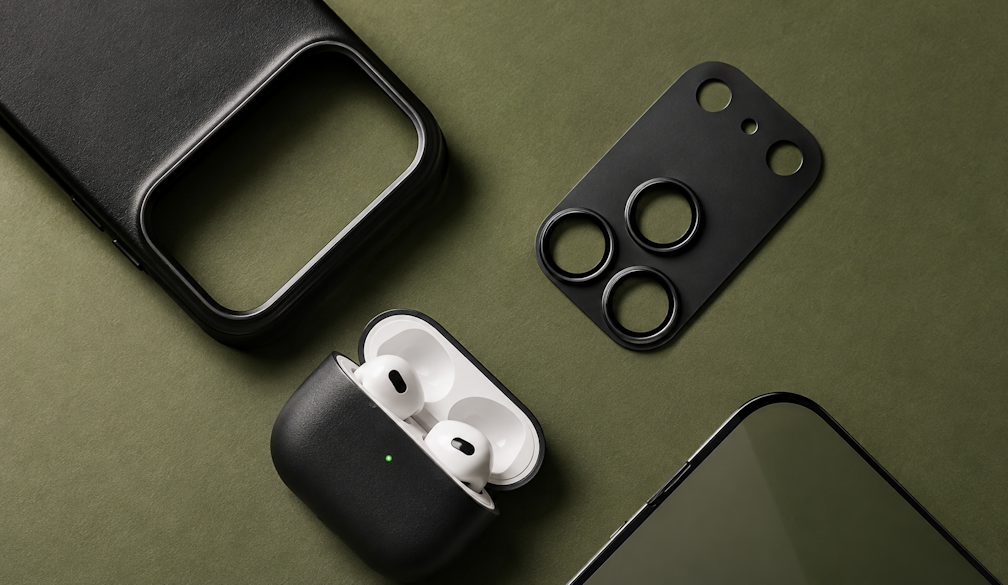
Our phones go everywhere with us, from the kitchen bench to the bottom of a bag, so most of us try hard to keep them safe from knocks and scratches.
To give your phone the best protection possible, you’ll have a leather phone case, tempered glass screen protector and camera lens protector, and each one of these items does its job well on its own. The trouble starts when they have to work together.
If you have three different accessories from three different brands all working on the same phone, the problems are all too obvious. Edges peeling up, air bubbles working their way in along the corners, the camera lens protector never quite settling around the camera the way it should.
The issue with most of these problems is tolerance. Those fractions of a millimetre variance that each accessory can get away with, and the effect they have when you combine everything together onto your device. These are the sorts of things you can avoid if you buy a matching screen and lens protector bundle together with the case you plan to use it with, as opposed to mixing and matching without anything actually being checked against anything else.
Where the Case Meets the Screen Protector
One of the main problem areas you’ll find is at the edge of your screen. Your phone case will likely include some sort of raised bezel or lip that sits slightly above your screen, so the glass is protected when you place the device screen-down on a table. If your screen protector sits a little too close to that lip, the lip pushes against its edge each time you take the case off and put it back on. Over time the glass peels up, dust gets trapped and air bubbles work their way in from the corners.
That’s why you’ll find that a lot of screen protectors will leave just a little bit of space between the end of the glass protector and the edge of your screen itself. Exactly how much space you need depends on the case you use, which is why a protector can be fine with one case and then lift when you switch to another. When the screen protector is designed in conjunction with your case, its edge can sit right up to the case lip without peeling.
Lining Up the Camera
The next main problem area you may find when looking at your phone’s protection is around the camera. In terms of camera lens protection you’ll find that there are typically two options. These are lens rings, which are individual rings around each lens, or a full camera island lens protector that covers the entire area at once. Whichever option you choose, it will add extra height to your camera, so you need to check that the camera cut-out in your phone case is deep enough to accommodate it.
If it isn't, your case won't settle properly, and the raised edge around your camera won't sit high enough to do its job. An ill-fitting camera lens protector can also catch light from your flash and create glare in your photos. Camera layouts often change from one iPhone generation to the next, so check that your lens protector and case are designed specifically for the iPhone 18, instead of being carried over from an older model.
All Parts as One System
In an ideal world, your phone protection will encompass everything: your screen, the rear of the device, the corners and yes, your camera. To really achieve this, everything needs to work together seamlessly. If you have a precision fit leather phone case, a screen protector designed to work with the lip of that case and a camera lens protector that fits perfectly inside the case’s camera cut-out you'll find you have a much more integrated and effective system. You don't want the camera area and the sides of your phone bulking out. You want everything as slim as possible while still offering protection.
What to Check Before You Buy
Some things you should check before buying: does that screen protector state that it’s actually compatible with your case as well as your phone? How does the camera lens protector sit over the camera lens and does the camera cut-out of the case itself accommodate it properly? Is each accessory made for your exact iPhone 18 model? Camera layouts and measurements can vary between models, such as the Pro and Pro Max.
Once you have installed your screen protector, put your case on and check the edges. You should be able to tell pretty quickly if anything is lifting or pushing. If it is, swap it out straight away. That's far easier than finding the problem a few months later and putting up with it for the life of the phone.