How to Choose Watch Repair Tools for Your Next Project
Buying watch repair tools is easier when you begin with a specific task rather than the largest kit you can find. Changing a strap, adjusting a bracelet and working on a mechanical movement call for different equipment, different information and different levels of experience.
For an Australian hobbyist building a first workbench, the useful question is not simply, “What should I own?” It is, “What do I need to do this job properly, and what should I leave to a watchmaker?” That distinction helps turn a collection of small tools into a practical working setup.
Start with the watch and the task
Before ordering anything, identify the watch, the part you intend to work on and the way that part is secured. A bracelet may use screws, pins or a different fastening arrangement. A strap attachment may need a different approach from one that looks similar in a photograph. Guessing from appearance alone can lead to buying the wrong tool or damaging a finish.
Write down what you know and what still needs checking. Useful details include the watch reference, movement calibre where relevant, clear photographs and measurements appropriate to the part. A model number helps narrow the search, but it does not establish every dimension or compatibility detail.
Specialist retailers such as WatchRepairTools.com.au bring watch repair tools, parts and bench supplies together for hobbyists and professional watchmakers. Comparing individual product details against the job in front of you is more useful than assuming that every item in a general kit will suit your watch.
Choose fit and control over a bigger tool count
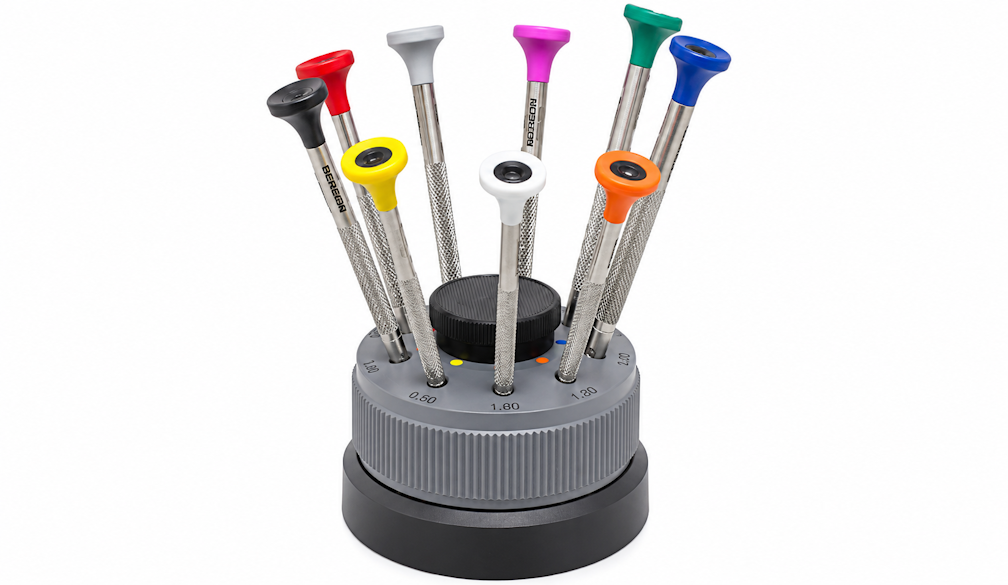
Small fasteners leave little room for a poor fit. With screwdrivers, check the working tip rather than relying only on the handle colour or the size printed on a listing. The blade needs to suit the screw slot, and a worn or damaged tip should be addressed before it is used.
The same principle applies to spring-bar tools, bracelet tools and case-opening equipment. The tool should match the component and allow controlled contact. If the working end cannot engage properly, extra force is not a substitute for identifying the right method.
A starter kit can be a convenient way to organise basic equipment. Its value depends on the actual inclusions and the work you intend to attempt, not just the number of pieces on the packaging. Check whether replacement blades, tips or other consumable parts are available for the tools you expect to use regularly.
Give the workbench as much thought as the tools
A bright, uncluttered workspace makes small components easier to see and organise. Before starting, clear unrelated objects from the bench and arrange a suitable surface, lighting and a place to keep removed parts separated.
Magnification should suit the task. A loupe may be useful for a close inspection, while other work may call for a microscope and a stand that leaves enough room for tools and hands. More magnification is not automatically a more comfortable or useful working arrangement.
Component trays and suitable holders are worth considering alongside the more obvious tools. A holder should support the item being worked on without forcing a poor fit. A tray provides somewhere deliberate to put small parts, instead of relying on memory or leaving them loose beside the watch.
Treat replacement parts as a separate compatibility check
Finding a part with a familiar name is only the beginning. A replacement stem, crown, screw or movement component needs to match the relevant application. Similar-looking parts are not necessarily interchangeable, and a broad movement-family description may not be enough to confirm a particular fitment.
A movement replacement can involve several linked questions: the case and holder, dial, hands, date-window arrangement, stem and crown all need consideration. Matching one specification does not settle the rest.
Keep the original part and record its position before removal where practical. If the identity or fit remains uncertain, seek confirmation before modifying a part or ordering on an assumption. A clear photograph and the correct calibre or case reference can make that conversation more useful.
Know when equipment is not enough
Owning a case opener or a set of tweezers does not make every repair a suitable first project. Movement servicing, fault diagnosis and work on a valuable or sentimental watch can require experience beyond the tool list.
Opening and closing a watch also does not prove that its water resistance has been preserved. Where water resistance matters, appropriate inspection and testing belong in the decision about who should carry out the work. Avoid treating a tightly closed case back as evidence that the watch is ready for swimming.
Manufacturer instructions are important for operating the finished watch as well. Crown positions, calendar-setting restrictions and other procedures can differ between movements. Follow the documentation for the actual calibre rather than applying a routine learned from another watch.
Build the toolkit around the next useful step
Before adding another tool to the basket, check:
- The exact task and the component involved.
- The size, working-end shape and fit the tool needs.
- What is included, and whether consumables are sold separately.
- The product or selected option's current availability and stated lead time.
- Whether the work needs professional inspection, testing or specialist experience.
There is no need to build an entire workshop for one small project. A focused set of suitable tools, reliable identification and an organised bench provide a clearer starting point. As experience grows, add equipment to solve a real limitation in the work, rather than buying pieces simply to make the collection larger.