Digital vs. Traditional Signage – Which One is Best for Your Business?
- Written by: The Times
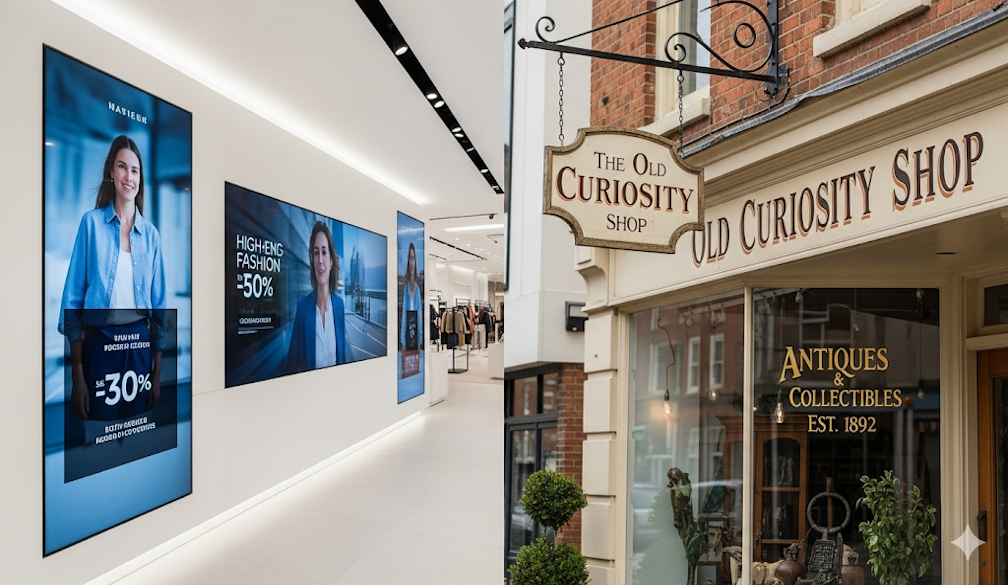
Signage remains a fundamental tool for guiding customers, communicating offers and shaping brand perception. Digital signage, which uses screens to display content, and traditional signage, which relies on static graphics, each offer distinct strengths. This article will compare digital and traditional signage to help you decide which approach best suits your goals, budget and audience.
What is Digital Signage?
Digital signage uses networked screens like LED walls, LCD panels or projection to display images, video and live data. Content is managed via a central software platform, enabling remote updates and targeted messages at different times of day. The brightness and motion of digital signs can capture attention more effectively than still posters, and interactivity (touch screens, QR codes or beacon-triggered content) can deepen engagement. However, the upfront investment is often higher, and ongoing maintenance should be considered as part of the total cost.
What is Traditional Signage?
Traditional signage relies on printed graphics on materials such as aluminium, plastic, vinyl or wood. There’s a tactile, physical presence to these signs, often with longer-lasting outdoor durability when properly protected. Traditional signage can be easier to maintain in some settings and generally has lower ongoing costs. It doesn’t depend on electricity or high-tech support, which can be beneficial in areas with limited connectivity or for brands aiming for a classic aesthetic.
The Benefits of Digital Signage
The big advantage of digital signage is flexibility. Content can be changed instantly, campaigns can be tested and messages can be personalised by location or audience. Real-time data and weather or social feeds can be integrated, keeping content fresh. Analytics from digital signage systems can track impressions, dwell time and trigger responses from passers-by, helping to demonstrate return on investment. For busy venues, digital signage offers high impact and rapid adaptability.
The Benefits of Traditional Signage
Traditional signage offers clarity and timeless design. It’s often more cost-effective over the long term for simple messages and doesn’t require power or software updates. A well-crafted printed sign can convey a brand personality with colour, texture and typography that remains legible from a distance. In outdoor environments, traditional signage can harmonise with the surroundings and provide a consistent, low-maintenance presence.
Costs & Maintenance
Digital signage requires upfront hardware investment and ongoing software licences, updates and potential repairs. Ongoing energy consumption and the need for technical support should be budgeted. Traditional signage usually has lower ongoing costs but may require periodic replacement of panels or coatings. Consider installation conditions, weather exposure and local regulations, as these can affect durability and maintenance.