How Shade Sails Help Victorian Schools Solve Their Sun Safety Headaches
- Written by: Times Media
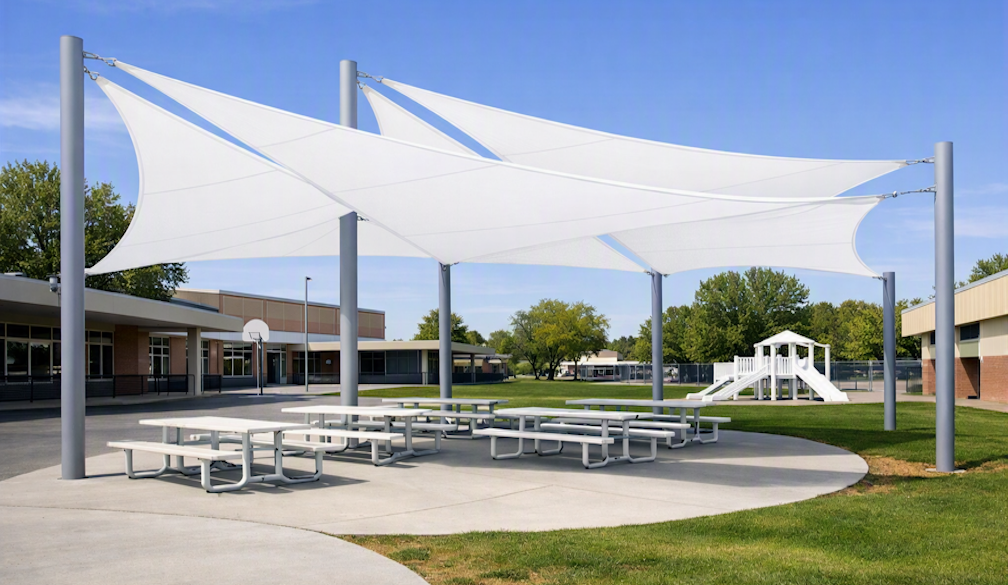
Australia’s sun doesn't mess around. If you’ve ever walked across a primary school oval in the middle of a Melbourne February, you know how intense the heat and UV radiation get by lunchtime. Because peak school hours often coincide with the day's dangerous UV windows, principal teams and school councils across Victoria carry a massive responsibility to keep kids safe outdoors.
It isn't just about handing out bucket hats anymore. Creating proper sun-safe spaces takes careful planning. That’s why high-tension commercial shade sails have become a popular solution for schools, preschools, and childcare centers looking to meet their SunSmart goals without breaking the budget.
What the Department Actually Expects from Schools
The Victorian Department of Education’s Sun and UV Protection Policy isn't just a set of polite suggestions—it sets clear expectations for duty of care. When the UV index reaches 3 or higher (which is pretty much guaranteed from mid-August through late April), schools are required to provide accessible shade for outdoor activities.
To stay compliant, school facilities need to check three major boxes:
- Real coverage over high-use zones: You need shade where kids actually gather—playground equipment, outdoor canteens, assembly courtyards, and sandbox areas.
- Proper structural paperwork: Anything built on school grounds must be safe, structurally sound, and cataloged on the Victorian School Building Authority (VSBA) asset register.
- Proven UV protection: The material needs to actually block radiation, not just cast a faint shadow.
If a school falls short during a safety review, it’s usually because certain outdoor play zones were left completely exposed to direct midday sunlight.
Why High-Tension Shade Sails Work So Well
Not all shade is built equally. Throwing up a cheap metal shed roof might give you cover from the sun, but it creates a whole new problem: trapped heat. Metal roofs trap rising warm air underneath, turning the area beneath into an oven by 1:00 PM.
Architectural-grade shade sails use heavy-duty, high-density knitted fabrics (or waterproof PVC membranes). The micro-weave design allows hot air to escape upwards while keeping the UV radiation out.
Commercial-grade shade cloth can block between 95% and 98% of harmful UV rays. That cuts solar exposure down to almost zero for children playing underneath and keeps plastic slides or metal climbing frames cool enough to touch without burning little hands. Plus, if you go with a waterproof membrane, the space stays usable even when a sudden Melbourne rain shower rolls through during lunch break.
Solving the Shade Audit Puzzle
If your school has ever gone through a formal SunSmart shade audit, you know the routine. Auditors look at how shadow lines move across your property between 10:00 AM and 3:00 PM. They map out where kids hang out and pinpoint the dangerous gaps.
The tricky part is that schoolyards are rarely neat, uniform shapes. Play equipment is scattered, pathways curve, and courtyard layouts are often awkward.
Rigid timber structures or metal pergolas struggle with these weird footprints. Tensioned shade sails, on the other hand, offer total flexibility. Because they can be designed as custom triangles, rectangles, or overlapping hyperbolic shapes, installers can cover large, irregular spaces that would otherwise be impossible or extremely expensive to cover with traditional construction methods.
Getting Through the VSBA Red Tape
You can’t just put up a couple of posts and pull a tarp tight over a schoolyard. In Victoria, structural work on education sites involves strict compliance steps:
-
Engineering computations: Wind-load calculations must be prepared and certified by a registered structural engineer before anyone digs a hole.
-
Asset logging: Once installed, the structure must be formally logged in the VSBA asset register and updated on your school's official site map.
-
Ongoing checks: Schools should carry out quick visual hardware checks every term, along with getting a professional structural inspection done every three years.
This is where working with certified trade specialists matters. When school councils hire experienced Victorian commercial shade builders like ShadeScape, they get full engineering sign-offs and heavy-duty steel posts anchored deep into concrete, ensuring the structure easily passes OHS requirements and withstands strong storm winds.
Keeping Kids Connected Outdoors
There’s a social side to this that often gets overlooked. Most Australian primary schools run a strict "No Hat, No Play" policy. If a child forgets their hat on a sunny Tuesday, they aren't allowed out on the open oval.
When a school installs wide, sweeping shade structures over its central courtyards, those hatless students don't have to spend their breaks sitting alone on a corridor bench inside. They can stay outdoors in the shade, socialize with their classmates, and enjoy the space safely.
On top of that, teachers love having Covered Outdoor Learning Areas (COLAs). Being able to move an art class or reading group outdoors under a shade sail breaks up the monotony of the classroom without putting anyone at risk of sunburn.
Quick Action Checklist for School Facility Managers
If your school council is planning to upgrade its outdoor shade before the warmer months hit, keep these steps in mind:
- Map your sun angles: Walk the grounds at 11:00 AM and 1:00 PM to see where coverage is actually missing.
- Demand 95%+ fabric ratings: Don't settle for residential-grade cloth; insist on commercial fabrics with tested UV ratings.
- Check builder registrations: Make sure your contractor handles the engineering sign-offs required for VSBA documentation.
- Schedule regular inspections: Add quarterly hardware visual checks to your facility team's maintenance log.
Investing in high-quality shade sails isn't just about keeping inspectors happy. It's about building safe, comfortable outdoor spaces where kids can run around, play, and learn without dangerous sun exposure getting in the way.