

Buying a Boat in Another State? Why a Marine Survey Matters Before It Ships
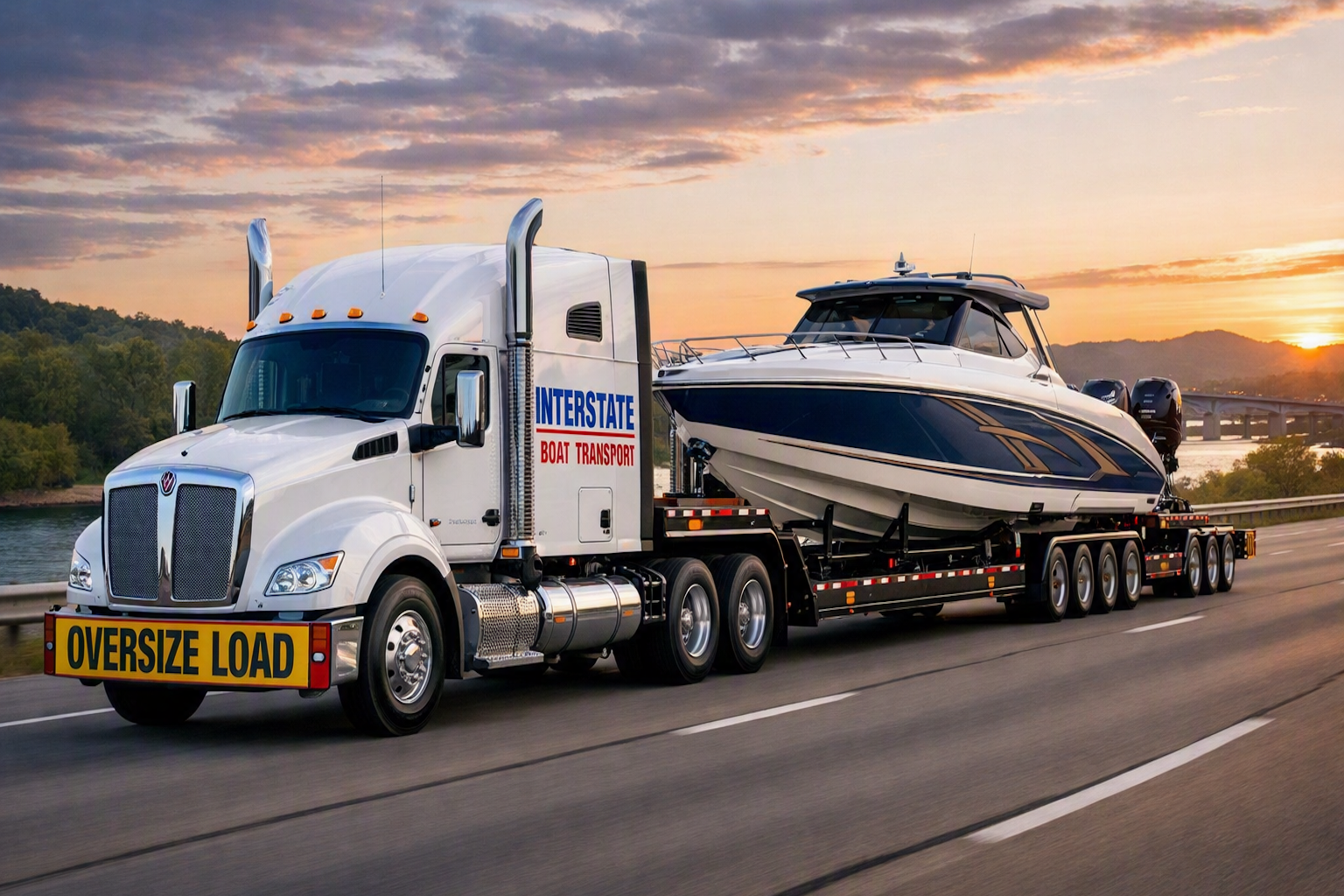
You find a great boat for sale in Cairns. The photos look sharp. The seller is friendly. The price is right. So you pay, and you book transport to bring it home to Melbourne.
There is one problem. You have never actually stood on that boat.
Buying a boat close to home is easy to check. You walk around it, tap the hull, take it for a run, and walk away if something feels off. Buying one interstate is a different game. You are handing over a lot of money for something you have only seen in photos, then paying again to move it thousands of kilometres.
This is why a marine survey matters so much before the boat ships. A survey is a proper inspection by a qualified person. When you buy interstate, it is not an added extra. It is the one step that tells you whether you are moving a good boat or an expensive problem.
Photos Show the Boat's Best Day, Not Its Real Condition
A listing exists to sell the boat. The photos are taken on a good day, from the best angles.
What they cannot show you is the stuff that actually matters:
- Water soaked into the hull
- Osmosis (small blisters forming under the paint on a fiberglass hull)
- A soft transom (the back section where the motor mounts)
- A hull starting to separate in layers, known as delamination
A pre-purchase survey checks all of this. The boat is usually lifted out of the water so the surveyor can inspect the bottom of the hull, tap along it to listen for weak spots, and run a moisture meter across the fiberglass to find water hiding inside. A phone camera cannot do any of that.
Here is what happens without one. The buyer only finds the soft spot after the boat arrives, once the money is long gone. When you cannot inspect the boat yourself, the surveyor becomes your eyes.
It helps to see the two ways of buying side by side:
|
Buying locally |
Buying interstate |
|
|
Can you inspect it? |
Yes, in person |
No, only photos |
|
Last check before you pay |
You |
The survey, or no one |
|
The trip home |
A short tow |
A long haul across the country |
|
Comeback if it's wrong |
Easier to chase the seller |
Hard once you've paid |
|
What protects you |
Your own inspection |
A marine survey |
The Trip Puts the Boat Under Pressure It Never Feels on the Water
A boat sitting in the water barely moves. Put it on a trailer at highway speed for a day or two, and it shakes, flexes, and takes strain it never gets on the water.
A strong boat handles this fine and arrives the same as it left. A boat with a hidden weak spot can turn up with cracks in the gelcoat or a small leak at the transom.
The key point: the road did not cause the fault. It found it.
A good transport company like Interstate Boat Transport supports the hull properly to spread the weight and prevent damage. But careful handling cannot add strength that was never there. Good transport protects a sound boat. It cannot fix a weak one. That is exactly why the survey comes first.
Think of it like a long run. It does not hurt a fit runner. It just exposes the ones who skipped training.
Your Insurer and Lender Expect a Survey, Even If They Don't Say So
A lot rides on one quiet assumption: that the boat was in good shape when it left.
Banks and insurers often ask for a survey, especially on older boats, before they will back the purchase. And once you have paid for a used boat, you usually have little recourse if problems show up later.
The worst phone calls in this business are not about transport damage. They are the "was it the road, or was it already like that?" arguments. Without a survey done before the move, no one can prove it either way.
A survey with a date on it ends that argument. It shows the boat's condition on that day, before it moved a metre. It is the cheapest piece of mind on the whole bill.
Not Every "Survey" Is the Same, So Ask for the Right One
Many buyers assume "marine surveyor" is a strictly controlled title. It is not, quite. And a "survey" can mean anything from a quick look while the boat is still in the water to a full inspection out of the water.
Booking the wrong one is worse than booking none, because it gives you false confidence.
For an interstate purchase, ask for:
- A full pre-purchase survey, done out of the water
- A surveyor with proper accreditation. In Australia, look for membership of a recognised industry body like the Australasian Institute of Marine Surveyors
- The scope agreed in writing, so you know what is covered
- A separate engine check if you need it, since the hull surveyor often does not sign off the motor
Expect to pay from a few hundred dollars up to around $1,500 for a mid-sized boat, depending on size. Next to the price of the boat and the freight, that is a tiny amount.
Check the Trailer Too, and Do Things in the Right Order
On an interstate move, the trailer is not a spare part. It is the vehicle. A trailer that has sat in salty coastal air can look fine and still hide a worn bearing, bad brakes, rust, or old tyres.
That is the thing carrying your new boat across the country, and it tends to fail at the worst possible moment, out on the highway.
We once watched an "included, good condition" trailer leave a boat stuck at a roadhouse when a bearing gave out on the Newell Highway. The boat was fine. The trailer was not. If the trailer comes with the boat, get it checked with the same care as the hull.
The order matters too. Do it like this: survey first, then decide, then transport. Not survey after it arrives, which is just checking a problem you already own. A report in your hand before you pay helps you agree on a fair price, and it tells the transport company exactly what they are picking up.
A boat always tells the truth about itself in the end. A survey just lets you hear it before you have paid to move the problem two thousand kilometres.
Frequently Asked Questions
Do I really need a marine survey if the boat looks fine in the photos?
Photos only show the surface on a good day. They cannot reveal water in the hull, osmosis, a soft transom, or a boat coming apart in layers. On an interstate purchase, you cannot inspect the boat yourself, so a survey is the only way to know its real condition before you pay and ship it.
What does a pre-purchase marine survey actually check?
A full survey covers the hull inside and out, the transom, the deck, the electrics and safety gear, and usually the trailer. The boat is lifted out of the water so the surveyor can check below the waterline, tap for weak spots, and use a moisture meter to find hidden water. The engine is often a separate check.
How much does a marine survey cost in Australia?
For a mid-sized boat, expect roughly a few hundred dollars up to around $1,500, depending on the size and how detailed the inspection is. Compared with the price of the boat and the cost of transport, it is a small spend that can save you from a very expensive mistake.
Who pays for the survey, the buyer or the seller?
The buyer. You are the one taking on the risk of the purchase, so you arrange and pay for the survey. That also keeps it independent, since the surveyor is working for you and no one else.
Can transport damage my boat, or does it just reveal existing problems?
A properly handled boat that is structurally sound arrives in the same condition it left. Long-distance transport does not create weakness. It can bring an existing weak spot to the surface, which is one more reason to survey the boat before it goes on the truck rather than after.
Should I get the trailer inspected as well?
Yes, if the trailer is part of the deal. The trailer carries the boat across the country, and a worn bearing, bad brakes, or old tyres can cause a breakdown far from help. A quick check of the trailer is well worth it before a long move.
When should I book the survey, before or after transport?
Before. The right order is survey, then decide, then transport. A survey done first tells you whether the boat is worth buying, gives you a dated record of its condition, and lets the transport company know exactly what they are moving.










