Investment Property Tracking: How to Monitor Property Performance
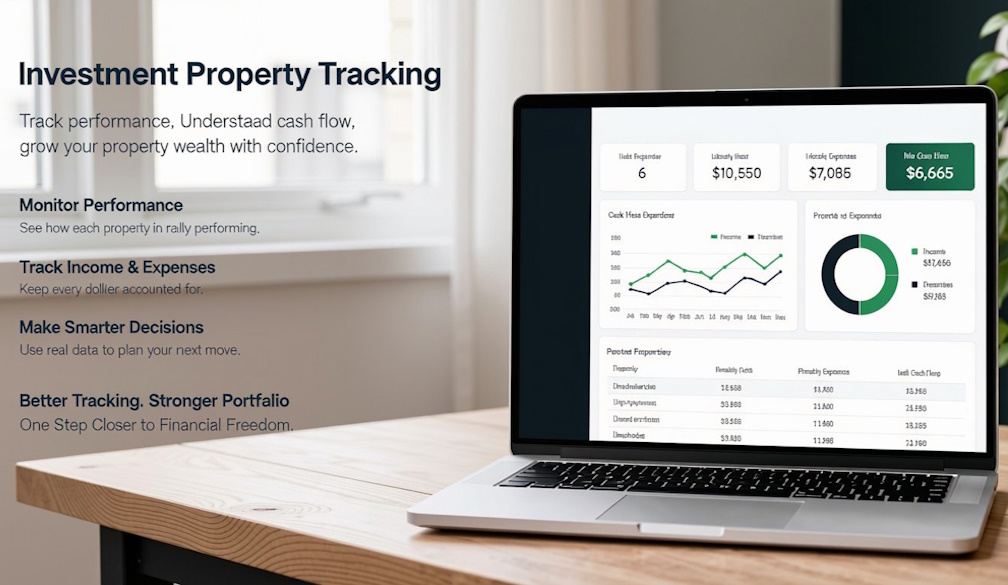
There is far more to owning an investment property than collecting the rent each month. Australian property investors should also keep in mind the mortgage, property maintenance, property insurance, rates, rent collection fees, and the fluctuation of rental income. Without a clear system, these numbers can become difficult to follow, especially when someone owns more than one property. Effective investment property tracking brings this information together and helps investors understand how their properties are performing over time. It can also provide a clearer picture of cash flow, recurring expenses and the contribution each property makes to overall wealth. With the right approach, investors can spend less time sorting through financial records and more time understanding what their numbers actually mean.
What Does Investment Property Tracking Involve?
Investment property tracking means regularly recording and reviewing the financial activity connected with a rental property. The process can include rental income, mortgage payments, property expenses, maintenance costs and changes in estimated property value. The purpose is not simply to record transactions.
Instead, tracking helps investors understand whether their property is meeting expectations and where their money is going. This becomes particularly useful when costs change over time. A property might appear profitable based on rental income alone, but higher insurance, repairs or financing costs could significantly affect the actual cash flow.
Why Should Australian Investors Track Property Finances?
Property ownership involves ongoing financial commitments. If investors only review their numbers occasionally, important changes can easily go unnoticed. Regular tracking makes it easier to identify rising expenses, changes in rental income and periods of weaker cash flow.
It also creates a useful financial history that investors can refer to when reviewing their property strategy. Australian investors may also have additional financial considerations, including home loans, investment loans, tax-related records and other assets. Keeping property information organised can therefore make the wider financial picture easier to understand.
Which Property Expenses Should You Monitor?
Rental income is an obvious starting point, but expenses deserve equal attention. Investors should consider the costs that regularly affect the property's financial performance. These may include council rates, insurance, repairs, maintenance, property management fees and relevant loan costs. Some expenses occur every month, while others may appear annually or unexpectedly.
Recording them consistently helps investors distinguish between normal operating costs and unusual expenses. Over time, this can reveal patterns that are difficult to identify when financial records are scattered across different statements.
How Can You Measure Investment Property Cash Flow?
Cash flow provides one of the clearest ways to understand the financial performance of a rental property. It compares money coming into the property with the costs associated with owning and operating it.
For example, high rental income does not automatically mean strong cash flow. Payments for mortgages, maintenance, and other property costs can result in less money left after the property expenses.
Several months of cash flow history allow the investor to have more context. It can identify if the negative month was due to one-off repairs or if the property is continually breaking down.
How Does Tracking Help With Multiple Properties?
Managing multiple properties creates another level of complexity. Each property may have different rental income, expenses, loan arrangements and maintenance requirements. Keeping all transactions in one organised system makes it easier to compare properties without mixing their financial information.
An investor might discover that one property produces higher rental income while another has lower ongoing expenses. These differences can provide useful information when reviewing the performance of the overall portfolio.
Can Property Tracking Improve Investment Decisions?
Having timely and accurate financial information can help an investor who is weighing refinancing, renovating, selling or buying a different house. Historical data can provide insight into a property's performance, rather than solely assumptions.
Investors can see rental trends, investor expenses and investor cash flow before moving forward. This information can also be useful if you're working with an accountant, mortgage specialist or financial adviser when discussing monetary choices. Those conversations are better grounded in fact with good records.
Spreadsheets vs Property Tracking Software
A spreadsheet can work well for a small portfolio. It gives investors control over how information is organised and allows them to create their own calculations.
However, manual tracking can become increasingly difficult as transactions grow. Investors may need to download statements, enter figures, update formulas and categorise expenses repeatedly.
Dedicated financial software can provide a more structured alternative. Depending on the platform, users may be able to import financial data, organise transactions and review spending or cash-flow patterns without maintaining complicated formulas themselves.
How Does Data Privacy Affect Property Tracking?
Financial information can reveal a great deal about an investor's circumstances. This makes data handling an important consideration when choosing financial software. Some of these applications will link directly to financial accounts, while others give the ability to download financial statements and upload the user's.
Before selecting either course of action, it is wise for investors to know how their data is gathered and used. For privacy-conscious property owners, manual data uploads can provide more control over when financial information is shared. This can be useful for people who do not want to provide continuous access to their bank accounts.
What Can Investors Learn From Property Data?
Tracking generates a history that may show patterns over time. Investors can perform an investor analysis that will enable them to see the revenue, costs, and cash flow from a rental property over a period of time instead of just analysing one month. This can help answer practical questions.
Are maintenance costs increasing? Has rental income changed? Is the property's cash flow improving? Are certain expenses consistently higher than expected? The answers can provide a more realistic understanding of the property's financial position and help investors identify areas that may need attention.
How Technology Is Improving Property Financial Management
Financial technology is making it easier to organise information that was previously spread across bank statements, spreadsheets and property management records. Modern financial platforms can categorise transactions, summarise spending and help users review financial patterns. Some also provide forecasting features that allow investors to explore possible future outcomes.
For property owners, this can make financial analysis more accessible. Instead of manually calculating every figure, investors can spend more time interpreting their financial position. However, the quality of the insights still depends on the quality and completeness of the underlying data.
Build a Simple Property Tracking Routine
Investors do not necessarily need to spend hours reviewing their finances every day. A consistent monthly routine can provide a useful balance. Review rental income, property expenses, loan costs and unusual transactions regularly. Every few months, compare current results with previous periods to identify meaningful changes.
Keeping invoices, statements and other supporting records organised can also make future reviews easier. This is particularly helpful when preparing information for professional financial or tax advice. A simple system that is updated consistently is often more useful than a complicated system that becomes difficult to maintain.
Make Your Property Portfolio Easier to Understand
Good property management starts with knowing what is happening financially. Investment property tracking can help Australian investors go beyond just taking notes on rent and expenses and gain a clearer understanding of how each investment property benefits them as a whole. Investors who regularly track their income, expenses and cash flow can make better decisions based on the information they gain about trends.
This is especially beneficial as a portfolio expands and investments become more complex. The best tracking method depends on the investor. Some may prefer spreadsheets, while others may benefit from dedicated financial software. What matters most is having a reliable system that makes property performance easier to understand. For investors looking beyond basic expense tracking, combining property data with broader financial information can provide a much clearer view of where their portfolio stands and where it could go next.