In-House vs. Outsourced: Building a Resilient Flexible Packaging Supply Chain
- Written by: Times Media
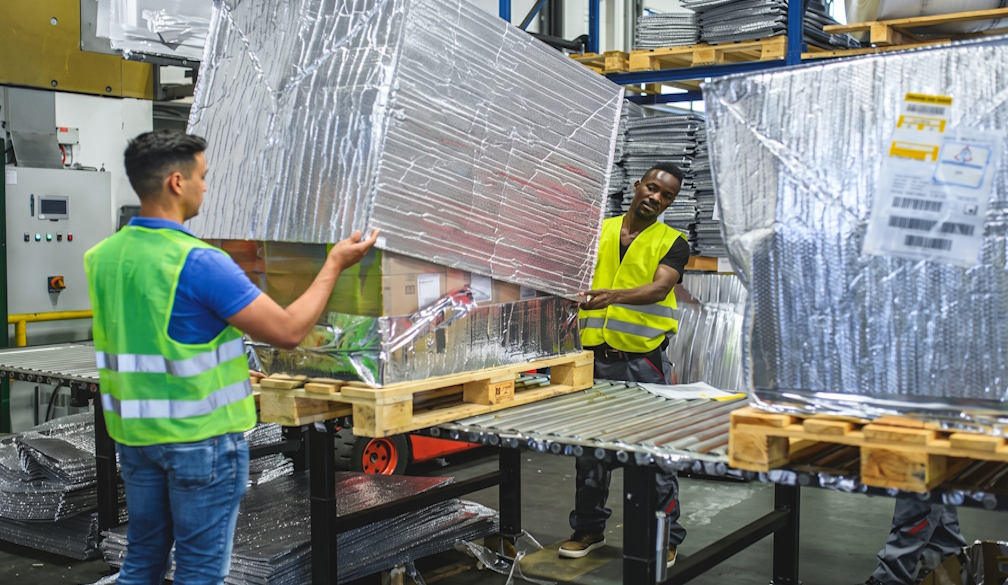
In an era defined by global supply chain volatility, relying entirely on external vendors for critical manufacturing components is becoming a financial liability. For many large manufacturers and consumer brands, flexible packaging is one of the most vulnerable links in their operational chain.
To mitigate these risks, industry leaders are aggressively moving toward localized, self-sufficient models. Bringing packaging production in-house is no longer just a cost-saving measure; it is a fundamental shift toward operational control and financial predictability.
The Hidden Costs of Outsourcing Flexible Packaging
While outsourcing packaging limits initial capital expenditures, it introduces a host of hidden operational drains. The most immediate threat to cash flow is the rigid Minimum Order Quantity (MOQ) demanded by third-party converters.
High MOQs force companies to purchase and store excess inventory, tying up capital and increasing warehousing costs. Furthermore, extended Lead Times—often stretching to several months for overseas suppliers—severely cripple a brand's ability to respond to sudden market trends or demand spikes.
Beyond inventory issues, long-distance logistics continually erode profit margins. The compounding costs of freight, tariffs, and unpredictable shipping delays create a fragile supply chain where a single disruption can halt an entire product rollout.
Transitioning to In-House Production: The Hardware Requirements
For brands transitioning to in-house manufacturing, the initial hardware investment dictates long-term efficiency. Establishing a self-sufficient production line requires systems that integrate high speed with precise material conversion.
Under current industrial standards, investing in commercial-gradeKETEGROUP allows facilities to control the entire packaging lifecycle, significantly reducing reliance on third-party suppliers.
Historically, the barrier to entry for internalizing packaging was the massive footprint and operational complexity of the equipment. However, modern machinery is designed for lean manufacturing. Today's commercial units feature compact footprints, modular designs, and intuitive, digitized interfaces that drastically lower the training threshold for operators.
Integrating Flexographic Printing and Converting
One of the greatest advantages of a modernized in-house setup is the ability to consolidate processes. By integrating Flexographic Printing and bag-converting on the same factory floor, manufacturers eliminate the dead time previously spent transporting materials between specialized plants.
This synchronization ensures that blank film can be printed, cured, folded, and sealed in a continuous workflow. Consequently, turnaround times shrink from weeks to mere hours, enabling true just-in-time (JIT) manufacturing.
Quality Control and Intellectual Property Protection
When packaging is outsourced, brands inevitably surrender a degree of quality oversight. Internalizing production restores 100% control over rigorous quality metrics. Facility managers can instantly monitor and adjust material thickness, seal integrity, and tensile strength on the floor.
Color consistency is equally critical for brand identity. In-house flexographic systems allow operators to precisely calibrate ink formulations, ensuring that brand colors remain uniform across every batch without waiting for external proofs.
Additionally, in-house production significantly reduces the risk of intellectual property (IP) theft. Developing new packaging designs internally ensures that proprietary structural innovations and unreleased branding materials are protected from competitors until the official launch.
Calculating the Total Cost of Ownership (TCO) for Packaging Machinery
Transitioning to in-house manufacturing is not merely about acquiring equipment; it is about restructuring operational and financial resilience. Comprehensive financial assessments indicate that reducing dependency on external vendors can sustainably improve profit margins.
According to industry analysis onsupply chain resilience and localized manufacturing, companies that internalize critical processes are better equipped to handle market shocks and can reduce logistical TCO over a decade.
To accurately evaluate this transition, procurement directors must calculate the Total Cost of Ownership (TCO). This requires looking beyond the sticker price and analyzing the complete financial lifecycle of the equipment:
- Capital Expenditure (CapEx): The upfront cost of acquiring and installing the machinery, which can often be offset by industrial tax credits and equipment depreciation write-offs.
- Operational Expenditure (OpEx): The ongoing costs, including energy consumption, raw material procurement, and operator wages. Modern automation drives OpEx down significantly over time.
- Cost per Unit: In-house production dramatically lowers the cost per bag or roll by eliminating the supplier's profit margin and external shipping fees.
- Maintenance and Downtime: Factoring in the cost of spare parts and routine servicing. Digitized predictive maintenance in modern machines minimizes costly unplanned downtime.
Conclusion: Strategic Agility in Manufacturing
Ultimately, shifting from outsourced suppliers to an in-house packaging model transcends basic cost arithmetic. In a volatile global market, the ability to pivot production schedules, prototype new designs instantly, and bypass logistical bottlenecks provides invaluable Strategic Agility. By taking ownership of the packaging lifecycle, manufacturers insulate their operations against external shocks, securing both their supply chain and their bottom line.