Why More Sydney Families Are Turning to Private Piano Lessons
A piano used to be furniture. Something inherited, something for display, something the kids might try once and abandon.
That is changing.
Piano teachers across Sydney report steadier enquiries over the past couple of years, and the families asking are often not musical themselves. They just want their child off a screen for an hour a week doing something that goes somewhere.
Why now?
School terms are already stacked with sport, tutoring and whatever else fits around work.
When a parent adds one more commitment, they want it to earn its place.
Piano tends to survive that filter. Progress is visible. A child cannot fake their way through a piece they have not practised. Either they learned it or they did not.
That kind of honest feedback is rarer than it used to be in a child's week.
It also does not need a team, a car trip, or good weather. Lessons happen on a schedule the family controls.
The Shift to One-on-One
Group piano classes at community centres used to be the default entry point.
Cheaper. More social. Less individual attention.
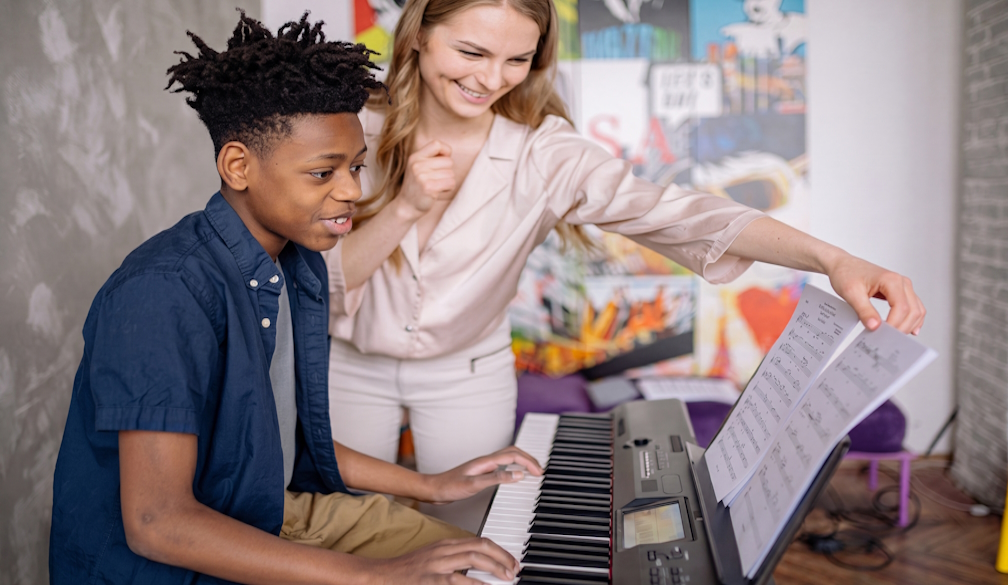
Many Sydney parents have moved away from that model toward one-on-one instruction, either at home or with private piano teachers in Sydney running their own studio.
The reasoning is usually practical rather than aspirational.
A private lesson moves at the pace the child actually needs, not the pace of whoever else is in the room. A nervous seven-year-old and a confident eleven-year-old do not learn the same way. Group formats tend to flatten that difference out.
Cost is part of the calculation. Private lessons are not cheap, and most families are watching every line item right now.
But parents who stick with it tend to say the same thing: their child practises without being nagged. That is usually what makes the expense feel worth it.
What Parents Actually Want From a Teacher
A framed certificate on the wall matters less than it used to.
What parents ask about now:
Can this teacher hold a child's attention?
Will they adjust when something is not clicking?
Can the first few months feel like progress rather than homework?
For younger or more anxious students, patience matters as much as technical grounding.
Exam preparation, AMEB grades in particular, remains a common goal, especially for older students building a portfolio for high school auditions. Plenty of other families skip the exam ladder entirely and are happy for their child to simply play.
Still One of the Few Things That Sticks
Most extracurriculars get dropped within a year or two.
Piano has a stubborn habit of surviving that churn. It does not rely on a season, a team, or anyone else showing up.
A child who sticks with it for even eighteen months usually ends up with something durable: a party trick, a coping mechanism, occasionally a genuine passion.
The Times View
In a school week built almost entirely around things that move fast, piano remains one of the few activities that asks a child to slow down and sit with something difficult until it works. That is apparently still worth something to a lot of Sydney parents, even in a year when everyone is watching their spending more closely than usual. It is a small, old-fashioned kind of investment, and for many families, that is exactly the appeal.