Parents Seeing Their Children Less in Lockdown Despite Living in the Same Home
- Written by: Richard Johnson
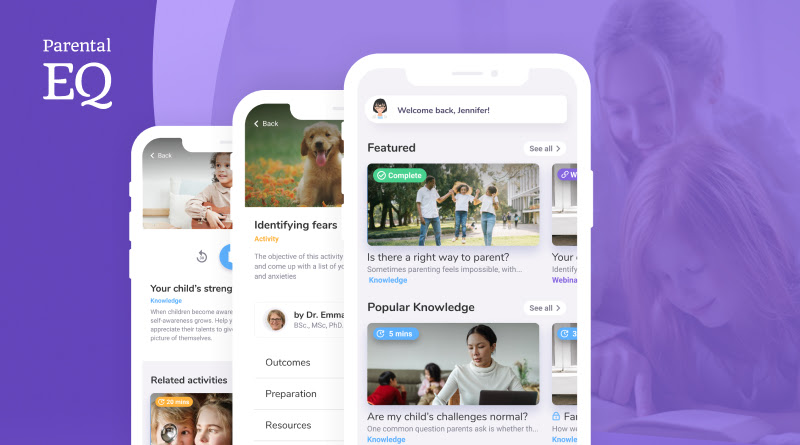
Calls and messages to ParentalEQ, a platform that simplifies psychology & provides on demand counselling for parents, has seen a 190% increase in parents reaching out since the second wave of COVID started.
“The main catalyst for parents reaching out for help is concern about their child withdrawing and parents feel like they don’t know what is happening in their child’s life and how they are feeling even though they are essentially with them 24/7 in the home,” said ParentalEQ co-founder Francisco Fleming who has over a decade of experience in mental health and wellbeing clinical research.
“At the start of the pandemic children were considered low risk in regards to medical concerns from Covid-19 but now they are emerging as the invisible casualties of this global crisis with mental health suffering.”
“The lack of structure is having a major impact on relationships between parents and children as both are not going to work or school so there is no routine,” said Mr Fleming.
“Sleep patterns are often the first to suffer when routines go by the wayside followed by exercise, healthy eating patterns and the line between study and relaxation becomes blurred,” said Mr Fleming.
“Parents are telling us they feel their child is less communicative as they are spending more time on screens or in their bedroom and often not even sitting down to a meal together as children are grazing throughout the day.”
“Half of all mental health issues start before the age of 14 with most going unnoticed until later in life and now with covid and lockdowns the number of children impacted will skyrocket.”
“Without structure, communication is key to helping with self confidence, understanding others and ourselves as well as improving our moods and feelings.”
“Communication styles can push people away or bring families closer together so it’s important throughout the day to regularly communicate, even if only for 10 minutes while at other times it might be a lot longer.”
Mr Fleming has these tips for parents to help improve communication with their child during lockdown:
Quality Time - Have breaks during the day with your child and spend quality time doing something together even if it is as little as ten minutes at a time. Play some handball outside, bake some cookies together, read a book, or simply go for a walk and be present together.
Active listening - Ask open ended questions to find out more about what’s happening or how they are feeling while avoiding making judgements or giving advice. Use verbal queues like words of encouragement and non verbal queues like nodding to encourage your child to keep sharing. Then reflect aloud by paraphrasing.
Communicate clearly - Too often messages and their meaning get muddled up. Could you please take the garbage out is a clear message to take the garbage out rather than why hasn’t anyone taken the garbage out or the garbage needs taken out. Messages misinterpreted often will lead to conflict.
Show affection - This should happen often. Smiles, eye contact, a hug, words of love, When we are glued to a screen all day we can forget we all need more than virtual hugs. Sometimes our children might not want to talk but they still might want a hug.
“Good communication makes people feel they are not alone and that they have your back so working on truly being present with each other and making it a habit to give each other some undivided attention will naturally lead to parents and children spending more time together.”
About ParentalEQ
ParentalEQ is a parenting psychology platform that helps parents to raise emotionally strong families. The platform has simplified the complex area of parent-child psychology for every parent to use, with user-centred design thinking and the latest digital software powering its outcomes. It has a unique blend of psychology theory, practice, methods and parenting programs, and has shaped them into simplified courses that fit into the busy lives of modern day parents, focusing on children aged 5-12.
The app can be downloaded here: https://parentaleq.com/