How much do we really spend on food?
- Written by: The Times

The supermarket receipt tells only part of the story. Coffee, lunches, takeaway and dining out can turn a modest grocery budget into a much larger household expense.
Ask someone how much they spend on food and the answer may begin with their last supermarket shop.
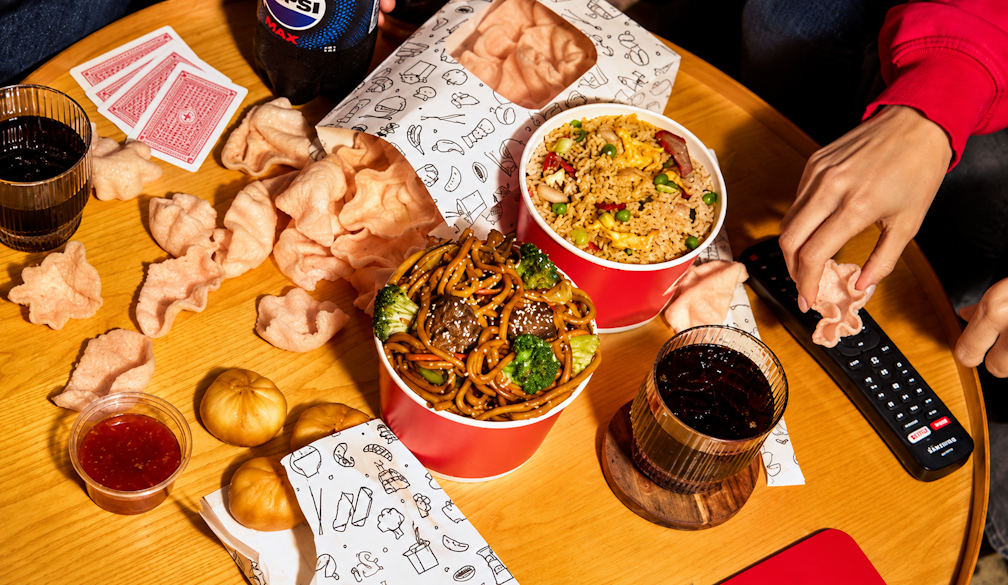
But what about the lunch bought at work, the children’s canteen orders, Saturday breakfast at a café and the takeaway collected on the way home?
Food spending is spread across so many transactions that knowing the price of individual purchases does not necessarily mean knowing the total.
Comparing that total with other households is harder still. One family’s “food bill” includes cleaning products and pet food. Another counts groceries but leaves out every meal purchased outside the home.
Before asking whether we spend more than other people, we need to establish whether we are counting the same things.
What do Australian households spend?
Finder’s Consumer Sentiment Tracker for March 2026 reported average weekly grocery spending of $152 for a single person, $200 for a couple without children and $274 for a couple with children, using four people as its household example. Annualised, those amounts become substantial.
| Household | Average weekly groceries | Annual equivalent |
|---|---|---|
| Single person | $152 | $7,904 |
| Couple without children | $200 | $10,400 |
| Couple with children, illustrated as four people | $274 | $14,248 |
Source: Finder Consumer Sentiment Tracker, March 2026. Annual equivalents are weekly figures multiplied by 52. These are reported grocery expenses, rather than complete food and dining budgets.
These figures provide a comparison point, rather than a prescribed budget.
They also do not establish a precise average for two adults and two school-aged children. A household with two young primary school pupils can have different requirements from one feeding two active teenagers.
A separate Canstar Blue survey from July 2025 reported lower averages: $111 a week for one-person households, $161 for two-person households and $240 for four-person households. Its categories describe household size, rather than the relationship or ages of the people living together.
The difference is a useful caution. Surveys conducted at different times, with different respondents and questions, will not produce identical answers.
For a family of four, the published benchmarks above put groceries at roughly $240 to $274 a week. That is a starting point for comparison—not a current price guarantee, a minimum healthy food budget or a ceiling that every family should meet.
The food bill beyond the supermarket
Consider an illustrative family spending $275 a week on groceries.
Add $60 for takeaway, $50 for purchased lunches and $35 for coffees and snacks. The weekly total reaches $420, or $21,840 across a year.
Those additional amounts are an example, not a measured Australian average. They show why a household can accurately remember its supermarket spending while underestimating its total food bill.
A couple might spend less on groceries than a family but more on restaurants. A single person might buy relatively little supermarket food because several meals are purchased elsewhere.
A lower grocery bill, by itself, tells us little about total spending.
Nor does a higher bill automatically indicate extravagance. Food allergies, dietary requirements, location, access to shops, working hours and the number of meals eaten at home all affect the result.
Why living alone can cost more per person
In Finder’s figures, a single person’s grocery spending is $152 a week, while a couple’s $200 works out to $100 each.
That does not mean the single person is shopping badly.
Two people can share ingredients, finish perishable food more easily and divide the cost of pantry staples. Cooking a meal for two also does not necessarily require twice the ingredients of cooking for one.
Someone living alone faces a different calculation: whether the larger, cheaper-per-unit pack will actually be used.
A bargain that ends up in the bin offers little saving.
For couples without children, meanwhile, the absence of school lunches and children’s snacks does not necessarily translate into a small food budget. Premium ingredients, entertaining, delivery meals and regular dining out can absorb the difference.
Household size matters. Habits matter too.
Nutrition and recreational eating
Food serves more than one purpose.
We eat to nourish ourselves, but also to celebrate, socialise, explore, relax and enjoy someone else’s cooking.
A restaurant meal purchases ingredients and preparation, along with service, atmosphere and time away from the kitchen. A café breakfast can be a social outing. Takeaway can buy a tired household an easier evening.
These are legitimate benefits. The useful question is how much of the household budget goes towards each.
“Recreational eating” describes food spending where pleasure or the occasion is a major part of the purchase: an afternoon pastry, a tasting menu, a weekend brunch or dessert after a satisfying dinner.
It is not a nutritional classification. A restaurant meal can be highly nutritious, while a supermarket trolley can contain plenty of foods bought primarily for enjoyment.
Australia’s dietary guidance places vegetables, fruit, mostly wholegrain cereals, protein foods, and milk products or suitable alternatives at the centre of everyday eating. It separately identifies discretionary foods and drinks that tend to be high in saturated fat, added sugars, salt or alcohol.
The place of purchase does not determine the nutritional value.
Neither does the price.
Spending more does not necessarily mean eating better
An expensive shopping basket can reflect premium cuts, individual packaging, prepared ingredients and favourite brands.
A less expensive basket can contain oats, eggs, beans, seasonal vegetables and ingredients for several meals.
But preparing food also requires time, equipment, storage and energy. Advice to “just cook everything from scratch” can overlook the circumstances of people working long hours, caring for others or managing disability.
Convenience has value. The important distinction is between paying for convenience deliberately and paying for it repeatedly without noticing the accumulated cost.
The same applies to pleasure. A memorable dinner may be money well spent. An automatic delivery order that nobody particularly enjoys deserves a different assessment.
Find your own number before judging it
The most useful food spending exercise is to record a complete month.
Include supermarket food, the butcher, bakery and produce shop, workplace lunches, school food purchases, takeaway, delivery fees, café visits and restaurant meals.
Separate non-food supermarket items. Record alcohol separately too, so it does not distort the comparison.
Then divide the month’s spending into three practical groups:
- Food for home: meals, ingredients, packed lunches and everyday snacks.
- Convenience: purchases made chiefly to save preparation time or effort.
- Dining and enjoyment: outings, celebrations and food experiences.
The boundaries will overlap. Their purpose is to reveal choices.
Finally, divide the monthly total by about 4.33 to obtain a weekly equivalent. Dividing by four overstates the weekly amount because most months contain more than four weeks.
Once the full number is visible, a household can decide what it wants to change.
That might mean taking lunch to work twice a week, reducing unused groceries or preserving a favourite restaurant outing while cutting forgettable purchases elsewhere.
For a household already buying essentials and struggling to afford enough, there may be little discretionary spending to remove. Budgeting cannot make an inadequate income sufficient.
The Times View
Knowing what other households spend can provide perspective. It should not become a competition to produce the smallest receipt.
The better measure is whether food spending provides adequate nourishment, fits the household’s means and delivers enjoyment worth its cost.
There is room for both a sensible grocery shop and a good meal out. The difficulty begins when we cannot see how much each contributes to the total.
Food is both a necessity and one of life’s pleasures. A useful budget makes room for both—and makes the difference visible.