Sustainable Sales means Environmental Responsibility from Australian Businesses
- Written by: Stacey Taylor
In 2020, the term ‘sustainable sales’ no longer refers to a business needing to achieve a certain volume of sales to remain sustainably viable, but instead means that businesses need to operate sustainably to make sales. In an ever increasing environmentally conscious world, terms like ‘sustainability’, ‘eco-friendly’ and ‘recyclable’ are important to the eco-passionate consumer when deciding what products to buy and where to spend their money. These consumers demand and expect that Australian businesses operate in an ethically sustainable and environmentally friendly way – and the demand is high, with over 15 million Google search results for ‘sustainable Australian brands’.
Sometimes balancing market realities and corporate social responsibility can be a tricky task for businesses. To navigate and implement procedures to reduce, reuse and recycle in a commercially viable way can feel near impossible with some businesses not knowing where or how to start. Considering the 2017 – 2018 Australian Plastics Recycling Survey found that a total of 3.4million tonnes of plastics were consumed in Australia with the national plastics recycling rate only being 9.4% (environment.gov.au) – the reusability of plastics within an organisation is a great place for businesses to start when improving their sustainability levels.
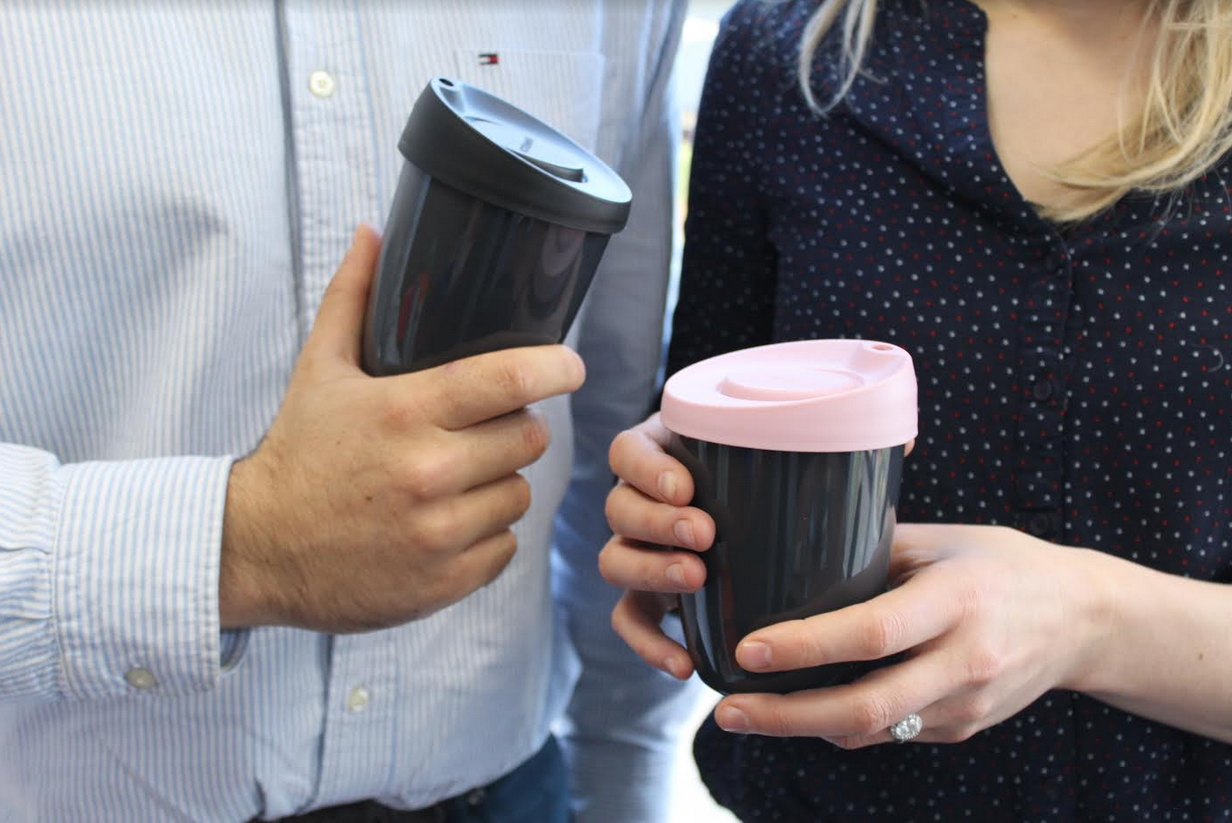
Female-led small Australian B-Corporation certified business, Uppercup, help Australian companies switch to reusable solutions by implementing reusable cup and container programs to reduce waste and support sustainability initiatives. Uppercup have always been passionate about focussing beyond the bottom line and balancing profit with purpose while looking after the environment, with their range of reusable cups for consumers to purchase with the aim of eradicating single-use coffee cups from distribution and eventual landfill. Now, Uppercup have upped the ante by providing businesses with the assistance they need to create a closed-loop solution to remove disposable food and beverage containers from their supply chains.
Uppercup make the transition to becoming a more sustainable company easy for their business partners. Experts in sustainable solutions, Uppercup manage the program end to end – taking away the confusion and stress that some businesses have when trying to move towards a more environmentally conscious and sustainable work environment. Uppercup help reduce an organisation’s landfill and engage their staff in allowing them to become part of a socially responsible workplace. The Uppercup team assess the needs of the organisation and then work with them to implement the perfect custom branded swap cup and container program. The end result is a tailored solution that removes single-use products from the organisation’s supply chain. Uppercup ensure all their reusable systems are QA tested and ISO approved to meet hospitality, corporate and government procurement needs.
Considering that 15.2 million Australians drink hot coffee, tea or chocolate each week (Roy Morgan, 2019) and many employees purchase lunch and snacks at work, removing disposable food and beverage containers from an organisations supply chain is a great place to start when moving towards a more sustainable and eco-friendly workplace. The tailored and purpose-built long-term reusable product solutions program by Uppercup has already helped the Woolworths Bella Vista Head Office remove 1million disposable coffee cups per year from distribution and eventual landfill. Elizabeth Wood, the Risk, HSE and Sustainability Manager at Woolworths Bella Vista Head Office said “Our 5,000 strong team members and visitors have overwhelmingly embraced this change and support the positive impact the Uppercup program is having on the environment”.
The reusable cup and container solutions by Uppercup are Australian made and 100% reusable and recyclable. As a certified B-Corporation business, ethical supply chains and circular economies are important to Uppercup. This is why they conduct their end-to-end business function all within a 25k radius of their head office in Melbourne, Australia. This includes everything from design to manufacturing to warehouse operation. As big advocates for equal opportunity, Uppercup supports small businesses and the Australian job industries as their manufacturing process proudly supports a human resources strategy where migratory and refugee workers are also employed with equal opportunity, regardless of the language or communicational barriers.
From corporate gifting to everyday business function, Uppercup partner with Australian cafes, restaurants, governments, local councils, in-house caterers, offices, corporates, hospitality providers, hotels, hospitals, aged-care facilities and technology service platform providers to help them become more sustainable. Australian businesses can learn more about the Uppercup program by emailing hello@uppercup.com.au or by visiting www.uppercup.com to book a consultation or take the quiz to calculate their organisation’s coffee cup waste.