How will COVID-19 vaccines be approved for use in Australia?
- Written by: Marco Rizzi, Senior Lecturer in Law, University of Western Australia
Some Australians could be receiving a COVID-19 vaccine within weeks.
Amid the continued spread of the virus and emergence of highly contagious variants[1], the federal government has accelerated[2] the start of the roll out — initially set for March 2021 — to February.
Read more: The Oxford vaccine has unique advantages, as does Pfizer's. Using both is Australia's best strategy[3]
Other countries, who have been less successful in containing the virus, have already begun[4] vaccination programs. While this has been met by celebration around the world, there have also been concerns[5] about possible side-effects.
It is expected the Therapeutic Goods Administration[6] (TGA) will approve the Pfizer vaccine[7] for use in Australia any day now. Approval for the AstraZeneca vaccine is expected in early February.
Given the uncertainty surrounding the virus and the speed at which vaccines have been developed, what processes are in place to assure Australians’ safety?
What is the TGA?
The TGA is part of the federal Health Department. Its job is to regulate any product that carries a therapeutic claim[8]. This includes prescription drugs, medical devices, certain food supplements, and of course vaccines.
It maintains the Australian Register of Therapeutic Goods[9] (ARTG), which records every therapeutic good available in the country.
 Adjunct Professor John Skerritt is the Health Department official responsible for the TGA.
Lukas Coch/AAP
Adjunct Professor John Skerritt is the Health Department official responsible for the TGA.
Lukas Coch/AAP
The TGA regulates therapeutic goods in two main ways. First, it authorises products so they can be put on the ARTG and distributed. This involves its experts reviewing safety and efficacy data.
It then monitors products once they are in use. This includes collecting, analysing and reacting to data from health-care providers, patients, manufacturers, and overseas regulatory authorities.
How does it work?
The TGA says it adopts a “risk-based approach[10]”. That is, it must be satisfied a vaccine or medication’s benefits outweigh its risks.
The TGA therefore is not tasked with the impossible goal of avoiding all risks. Rather, it must make sure that only products carrying acceptable risks can be marketed.
Read more: Bad reactions to the COVID vaccine will be rare, but Australians deserve a proper compensation scheme[11]
So, for example, common minor side effects (such as a stomach ache) associated with certain painkillers are deemed acceptable compared to their benefit. Similarly, a severe but rare side effect can be acceptable where the medical benefit is significant. This is the case with vaccines.
Along with internal scientific and medical staff, the TGA is advised by seven committees[12], providing independent expert advice on scientific and technical matters. There includes a specific committee for vaccines[13].
Vaccine approval under ‘normal’ circumstances
The TGA requires a manufacturer or importer (the “sponsor”) to demonstrate the safety and efficacy of their product.
That is, companies need to show not only that their product is not harmful, but it does what it is supposed to do.
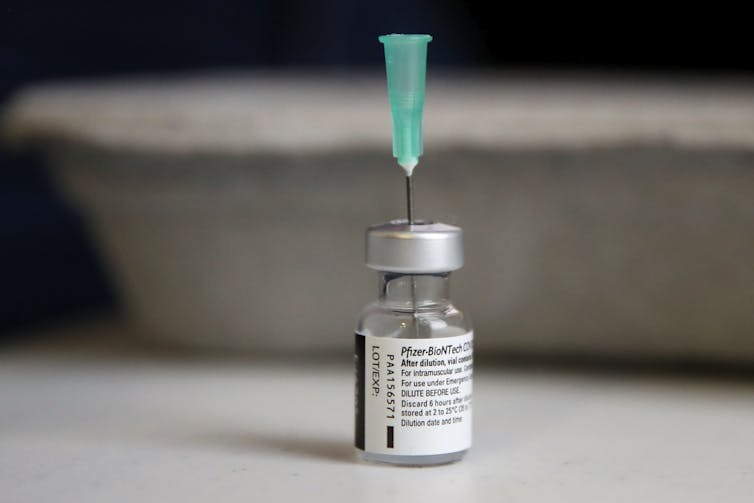 Some at risk Australians are due to start receiving a COVID vaccine in February.
Francois Mori/AP/AAP
Some at risk Australians are due to start receiving a COVID vaccine in February.
Francois Mori/AP/AAP
Sponsors must submit a substantive body of clinical data[14], gathered according to Good Clinical Practice[15] guidelines, which are developed in keeping with world’s best practice[16].
The TGA also reviews the data using internationally recognised guidelines[17] from the European Medicines Agency.
Read more: Australia's vaccine rollout will now start next month. Here's what we'll need[18]
The key data[19] for approval arises from the third phase of clinical trials[20]. These test a new product on very large groups, which can number in the tens of thousands. The TGA review can take up to eleven months[21].
If a therapeutic good is approved, but a problem later emerges, the TGA can recall it[22].
Special provisions for COVID-19 vaccines
The devastating speed of the COVID-19 pandemic has prompted regulatory authorities across the world to speed up approval processes.
Almost all have used existing special provisions to fast-track their reviews. Importantly, clinical trials have been conducted at unprecedented speed thanks to unlimited funding and motivated volunteers[23].
The scientific consensus is that the rigour of clinical evaluation has not been compromised[24].
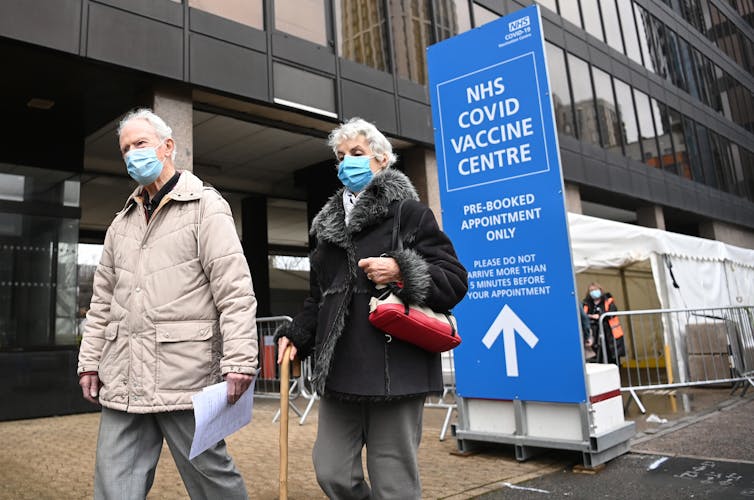 The UK began vaccinating against COVID in December.
Neil Hall/EPA/AP
The UK began vaccinating against COVID in December.
Neil Hall/EPA/AP
Similarly, the TGA can conduct a speedier review of clinical data.
Instead of reviewing all the data prior to registration, the TGA conducts a preliminary assessment[25]. This is followed by rolling submission[26] of clinical data, leading to provisional registration. In other words the process is accelerated by allowing the TGA to look at data on an ongoing basis.
This special pathway is in place for treatments or vaccines for life-threatening diseases.
A provisional registration means the vaccine is approved for a set period of time (to be determined by the TGA), during which vaccinations can start under close monitoring. Following this, the vaccine proceeds to full registration.
Benefits outweigh risk
Both the Pfizer[27] and AstraZeneca[28] vaccines have conducted phase three trials on tens of thousands of participants. Additionally, the TGA stresses[29] it will only approve provisional registrations when the data so far makes clear
the benefit of early availability of the medicine outweighs the risk inherent in the fact that additional data are still required.
In the context of COVID-19 vaccines, provisional registration reduces bureaucratic hurdles, while maintaining the highest possible scientific rigour.
Working with the international community
The TGA does not operate in a vacuum either.
Regulatory authorities worldwide and the World Health Organisation have committed to work together[30] on COVID-19 vaccines and medicines to improve “regulatory alignment”.
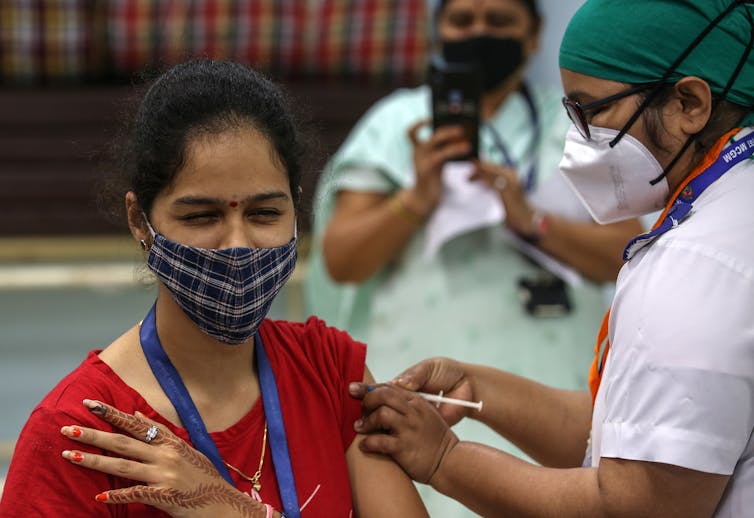 India began its huge vaccination program in mid-January.
Divyakant Solanki/EPA/AAP
India began its huge vaccination program in mid-January.
Divyakant Solanki/EPA/AAP
The TGA is a member of the International Coalition of Medicines Regulatory Authorities, which has committed to full cooperation and transparency[31] between its members, particularly with regard to sharing data.
The TGA is also part of the Access Consortium[32] alongside regulatory authorities from Singapore, Canada, Switzerland and the United Kingdom.
So, while the speed of development of the first COVID-19 vaccines is unprecedented, so is the level of global monitoring over their safety and efficacy.
References
- ^ highly contagious variants (www.cdc.gov)
- ^ accelerated (theconversation.com)
- ^ The Oxford vaccine has unique advantages, as does Pfizer's. Using both is Australia's best strategy (theconversation.com)
- ^ have already begun (ourworldindata.org)
- ^ concerns (theconversation.com)
- ^ Therapeutic Goods Administration (www.tga.gov.au)
- ^ approve the Pfizer vaccine (www.canberratimes.com.au)
- ^ product that carries a therapeutic claim (www.tga.gov.au)
- ^ Australian Register of Therapeutic Goods (www.tga.gov.au)
- ^ risk-based approach (www.tga.gov.au)
- ^ Bad reactions to the COVID vaccine will be rare, but Australians deserve a proper compensation scheme (theconversation.com)
- ^ seven committees (www.tga.gov.au)
- ^ vaccines (www.tga.gov.au)
- ^ substantive body of clinical data (www.australianclinicaltrials.gov.au)
- ^ Good Clinical Practice (www.tga.gov.au)
- ^ world’s best practice (www.ich.org)
- ^ internationally recognised guidelines (www.ema.europa.eu)
- ^ Australia's vaccine rollout will now start next month. Here's what we'll need (theconversation.com)
- ^ key data (www.ifpma.org)
- ^ third phase of clinical trials (www.australianclinicaltrials.gov.au)
- ^ up to eleven months (www.tga.gov.au)
- ^ recall it (www.tga.gov.au)
- ^ unlimited funding and motivated volunteers (theconversation.com)
- ^ has not been compromised (theconversation.com)
- ^ preliminary assessment (www.tga.gov.au)
- ^ rolling submission (www.tga.gov.au)
- ^ Pfizer (www.pfizer.com)
- ^ AstraZeneca (www.astrazeneca.com)
- ^ TGA stresses (www.tga.gov.au)
- ^ have committed to work together (www.who.int)
- ^ full cooperation and transparency (www.icmra.info)
- ^ Access Consortium (www.tga.gov.au)
Read more https://theconversation.com/how-will-covid-19-vaccines-be-approved-for-use-in-australia-153640