

Port of Darwin review opens a Pandora's box
- Written by: Michelle Grattan, Professorial Fellow, University of Canberra
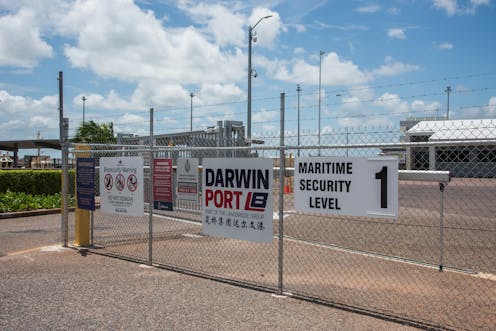
How hard is Scott Morrison willing to poke the panda? That’s a question posed by the government’s review of the Chinese company Landbridge’s 99-year lease of the Port of Darwin.
The defence department is to advise on the security implications of the lease, granted by the Northern Territory government in a $500 million highly controversial deal in 2015.
At the time, then-United States president Barack Obama chided prime minister Malcolm Turnbull for not giving the Americans a heads up about the deal.
Turnbull added insult to injury by suggesting the president should subscribe to the NT’ News, where it was reported.
Although the federal government had no formal part in the lease at the time, the NT government sought federal advice. The defence department, ASIO and others in the national security establishment were not fazed by it. Neither was the national security committee of the Coalition cabinet.
The defence department secretary at the time, Dennis Richardson, and Duncan Lewis, who headed ASIO, both defended the arrangement when questioned by a senate committee.
Nevertheless, the deal had many critics and subsequently the federal government acted to ensure that in future such proposals would go before the Foreign Investment Review Board.
Fast forward to the present, and this week the new and hairy-chested defence minister Peter Dutton told the Sydney Morning Herald cabinet’s national security committee had asked his department to review the lease and “come back with some advice”. The work was already under way, Dutton said.
Last week Morrison had flagged the move, saying if the government received any advice from the defence department or intelligence agencies suggesting “there are national security risks there then you’d expect the government to take action”.
The Port of Darwin came into the frame after Foreign Minister Marise Payne cancelled two Victorian government agreements with China that were under that country’s Belt and Road Initiative.
Read more: Why scrap Victoria’s ‘meaningless’ Belt and Road deal? Because it sends a powerful message to Beijing[1]
She was implementing the recent legislation for the examination of agreements state and territory governments and public universities have (or propose) with foreign governments.
The Port of Darwin lease, being with a commercial company, does not fall within that legislation, but the segue to discussion of its future was inevitable.
Despite its defenders at the time, it is clear the deal should never have been concluded. But it is less clear what should be done about it now.
The increasing assertive and aggressive stands by China seem to argue for the lease to be broken.
While the lease is only over the commercial port, the Chinese presence sits somewhat uneasily with the growing US military footprint in northern Australia.
Peter Jennings, executive director of the Australian Strategic Policy Institute (ASPI) think tank, says: “I do think this is probably the moment that the government needs to step in”. He believes the government should buy out the lease and then sell it to a less problematic owner.
If the judgement is that a time of reckoning will come in relation to the port, a case can be put for not delaying that time.
On the other hand, does the government want to make the present difficult relationship with China significantly worse?
Overturning a major commercial deal is a big step (much bigger than killing the Victorian BRI agreements) and the government would have to give substantial reasons. The action would cause offence to China and probably invite more trade retaliation.
The decision would turn the focus onto other Chinese investments in Australian infrastructure, including the 50% stake in the Port of Newcastle, and stakes in the power grid.
It would be taken as implying a more general signal about Australia’s attitude to Chinese investment and perhaps about investment from some other countries.
Managing both the diplomatic and foreign investment messages would be tricky, to say the least.
Asked on Tuesday about the various complications, Morrison told Seven “we’ll just take this one step at a time”.
He said he wasn’t presuming anything about the advice to come, and he was sure it would include “many options”. He also noted the commercial port area was separate from “where our military and defence facilities are”.
Now that the future of the Port of Darwin has been put on the table, a significant factor in the mix is domestic public opinion, which is very distrustful of China. The government has raised expectations of action, which it will have to deal with if it decides not to act.
One way out of a vexed situation could be to seek a middle course – for example putting in place certain conditions (on reporting, governance and the like) for this and other relevant ports under the revised security of critical infrastructure legislation that is now going through the parliament.
Whatever is decided will be a revealing test of the power of the China hawks in and around the government.
References
Read more https://theconversation.com/view-from-the-hill-port-of-darwin-review-opens-a-pandoras-box-160288