Wireless vs. Wired Chargers: Which One Should You Buy?
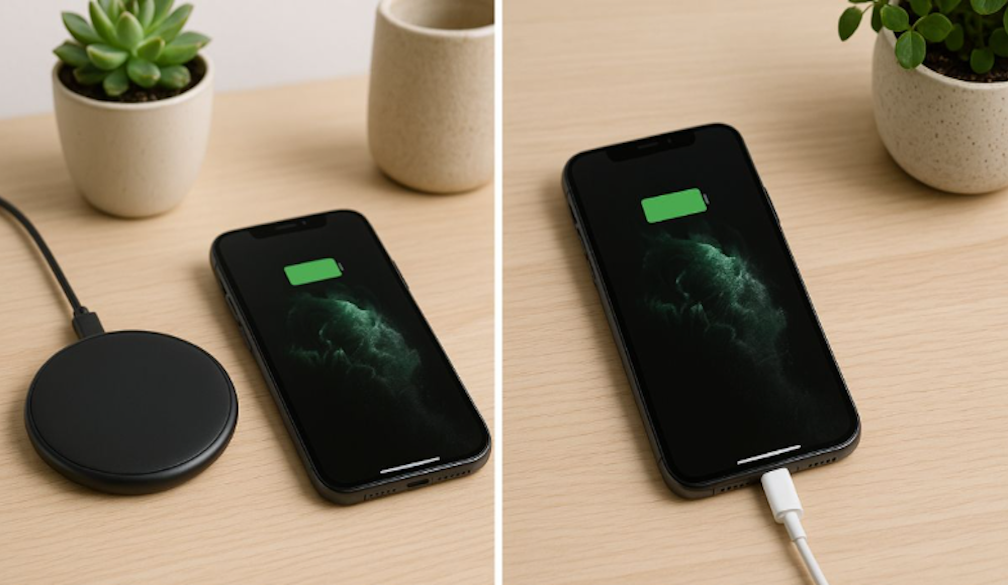
Imagine you're sending a very important message on your phone. You finish typing the last word your phone screen suddenly becomes blank. Low battery strikes again! You scramble for a charger, but the cable is nowhere to be found, or worse, it's broken. Maybe it’s time to go wireless.
But is wireless charging better than the traditional wired method? Users face confusion when trying to determine which evolution path best meets their requirements between these two options. Let’s break down the variations and assist you in selecting the proper alternative.
Wired Charging: The Reliable Powerhouse
Wired charging exists as a mobile technology charging method that began in its earliest stages. The charger combines a power source with a cable connection that maintains both efficiency and stability during the energy transfer.
Pros of Wired Charging
Fast charging with wired chargers outperforms the charging speed of wireless charging systems that users typically use. Modern technology has empowered devices to charge much faster through USB-C Power Delivery and Quick Charge standards.
The unbroken power path reduces energy wastage that makes it highly effective. Most users find wired chargers accessible because they are both affordable to purchase and easy to find around the market.
Cons of Wired Charging
Wired charging systems experience their main problem in the form of deteriorating cables. The repeated connection and disconnection of cables throughout time will eventually result in cable degradation until they break.
The inability to move freely while using your device with wires represents one of the major problems. Using your phone while charging becomes difficult because you must remain connected to a power supply.
Wireless Charging: The Future of Convenience
The process of wireless energy transfer utilizes electromagnetic induction for this operation. Users no longer need cables for charging as they can simply set their phones on a charging pad for automatic power transfer.
Pros of Wireless Charging
Wireless charging stands out as the most appealing feature because it provides users with hassle-free operation. You can avoid cable tangling because placing your phone on any charging station automatically begins its power-up cycle.
The absence of cables during charging lets your phone port stay in durable condition longer without disruption. The untethered power supply creates a tidy environment that draws people toward using it at their workplace and beside their beds for charging.
Cons of Wireless Charging
The medium of wireless charging results in slower charge speeds than those offered by wired charging. Wireless chargers normally provide power levels ranging from 5W to 15W, but wired fast chargers exceed this by delivering power up to 100W or above.
Blocks some of the released energy during wireless transmission which causes subpar energy efficiency in charging systems. A wireless charging pad requires your phone to stay on it actively to operate so usage is restricted when the device charges.
Speed and Performance: Which Charges Faster?
For speedy charging, a wired charger is the superior selection. Both high-speed wired chargers and wireless chargers exist, yet the former can charge devices within one hour while the latter charges much slower. High-end wireless chargers attempt to compete with wired connection speed but still fall behind wired efficiency.
Cost and Accessibility
Wired chargers have numerous options for purchase on the market and cost less than wireless chargers. Wireless charging technology only works with specific phones which have integrated wireless capabilities but wired chargers match any electronic device on the market. Universal availability for wireless chargers remains limited but their prices typically exceed those of standard wired chargers.
Battery Health and Longevity
Heat becomes a byproduct during wireless as well as wired charging because it negatively impacts the lifespan of the battery in the long run. The speed of both wired and wireless charging produces temperature changes in batteries that can harm their endurance when insufficient control methods are used. The lifespan of your battery remains optimal when you maintain trustworthy chargers while excluding severe temperature environments.
Which One Should You Choose?
Your selection of a charger depends on personal life preferences and daily routines. You should choose a wired charger if speed and efficiency of charging are essential for you. The decision between wireless charging and wired charging should be based on whether convenience features outweigh the need for fast charging or not.
Choose Wired Charging If:
- You need your device to charge as quickly as possible.
- You want a cost-effective and widely available solution.
- You use your phone frequently while charging.
Choose Wireless Charging If:
- You prefer a clutter-free setup without dealing with cables.
- You don’t mind slower charging speeds for the sake of convenience.
- Your device supports wireless charging, and you want to extend its port lifespan.
Conclusion
Wireless and wired charging systems offer different uses which are both supported and restricted by specific traits. The use of wired chargers delivers superior speed performance at an affordable cost alongside high efficiency while wireless chargers combine contemporary design with ease of use.
According to your daily schedule, you should select the best charging solution. Having a reliable charger through any method you select gives you peace of mind that your device battery will never run out when you need it most.