Why does my back get so sore when I'm sick? The connection between immunity and pain
- Written by: Joshua Pate, Senior Lecturer in Physiotherapy, University of Technology Sydney
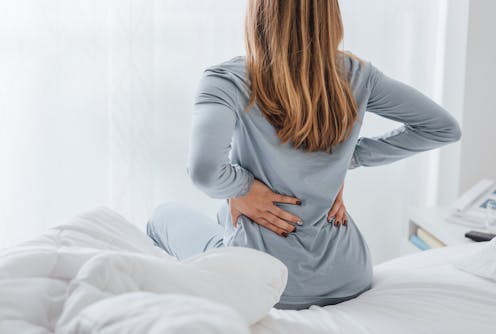
Have you ever wondered why your back aches when you’re down with the flu or a cold? Or COVID?
This discomfort, common during many illnesses, is not just a random symptom. It’s a result of complex interactions between your immune system and your brain called the “neuroimmune synapse[1]”.
A fascinating and yet-to-be-understood consequence of this conversation between the immune and brain systems during sickness is that it is particularly noticeable in the lower back[2]. This is thought to be one of the body’s most sensitive regions to neuroimmune threats.
Read more: Turning down the volume of pain – how to retrain your brain when you get sensitised[3]
Immunology basics
Our immune system is a double-edged sword. Yes, it fights off infections for us – but it also makes us acutely aware of the job it is doing.
When our body detects an infection, our immune system releases molecules including signalling proteins called cytokines[4]. These proteins coordinate our immune system to fight off the infection and talk to our brain and spinal cord to change our behaviour[5] and physiology.
This can result in symptoms like fatigue, loss of appetite, fever and increased sensitivity to pain. Classically, we think of this as a beneficial behavioural change to help us conserve energy to fight off the infection. It’s why we often feel the need to rest and withdraw from our usual activities when we’re sick – and also why we are grumpier than usual.
Invisibly small changes
Part of this self-protective response is a change in how we perceive threats, including sensory stimuli.
When we are sick, touch can become painful and muscles can ache. Many changes in behaviour and sensory systems are believed[6] to have origins at the nanoscale. When molecular changes occur in part of the brain linked to cognition or mood, we think and feel differently. If these neuroimmune synapse changes happen in the sensory processing regions of the brain and spinal cord, we feel more pain.
Such sensory changes, known as allodynia and hyperalgesia[7], can lead to heightened pain sensitivity, even in areas not directly affected by the infection – such as the lower back[8].
Immune memories
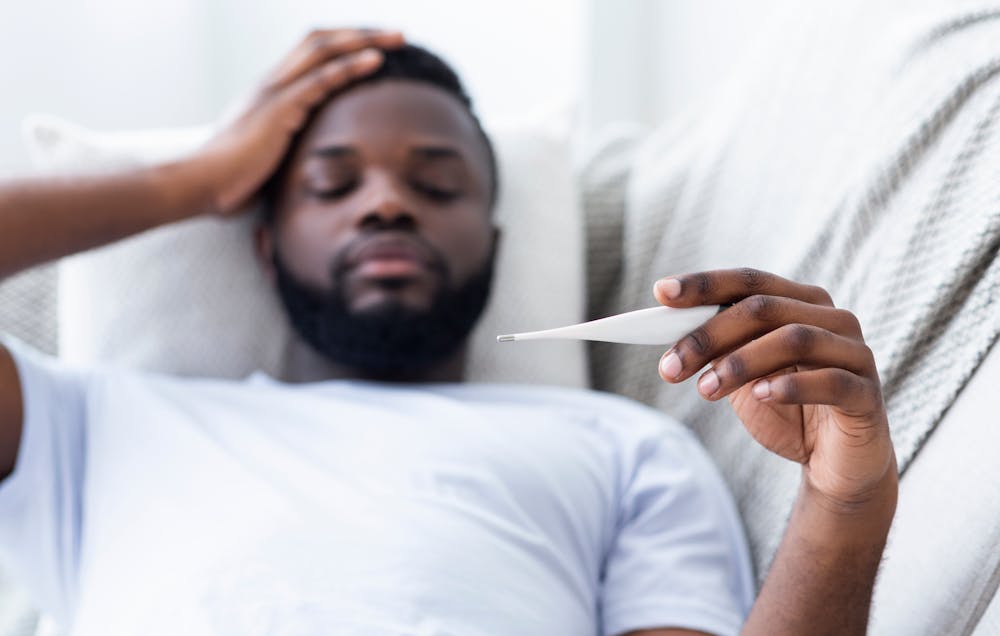
This immune response happens with a range of bacterial infections and viruses like COVID or the flu. In fact, the sick feeling we sometimes get after a vaccination is the good work our immune system is doing to contribute to a protective immune memory[10].
Some of that immune-cellular conversation also alerts our brains that we are sick, or makes us think we are.
After some viral infections, the sick feeling persists longer than the virus. We are seeing a long-term response to COVID in some people, termed long COVID[11].
Women, who generally have a stronger immune response[12] than men, may be more likely to experience pain symptoms[13]. Their heightened immune response (while beneficial in resisting infections) also predisposes women to a higher risk of inflammatory conditions like autoimmune diseases[14].
Read more: You can't get influenza from a flu shot – here's how it works[15]
When to worry and what to do
If the pain is severe, persistent, or accompanied by other concerning symptoms, seek medical attention. Mild to moderate pain is a common symptom during illness and we often notice this in the lower back. The good news is it usually subsides as the infection clears and the sickness resolves.
While treating the underlying infection is crucial, there are also ways to dial down sickness-induced neuroimmune pain.
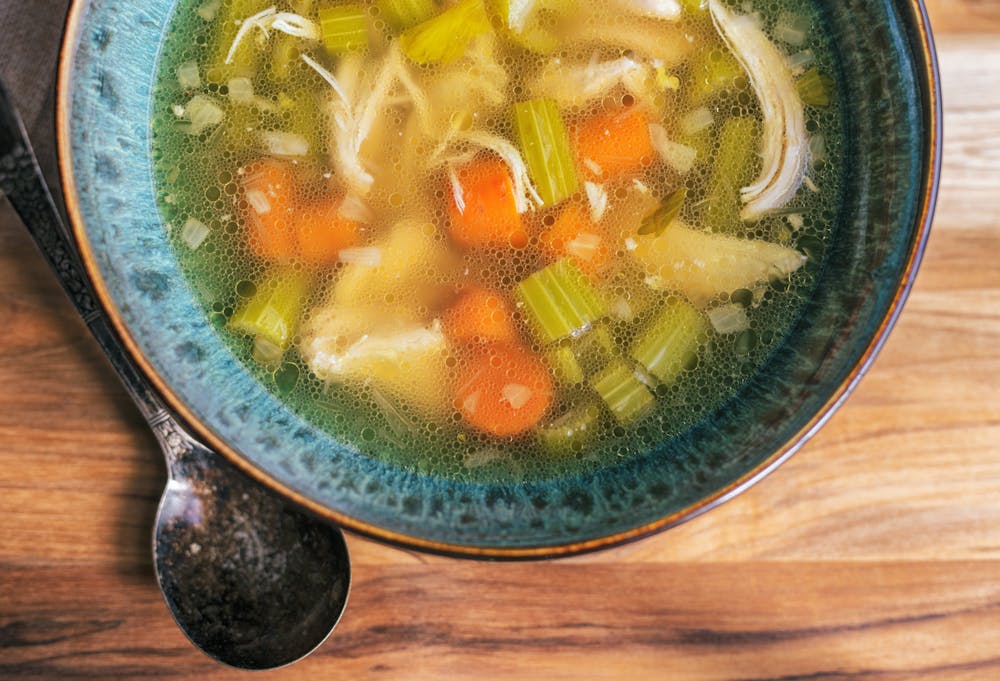 Grandma was right. Eat your soup.
Shutterstock[16]
Grandma was right. Eat your soup.
Shutterstock[16]
Maintaining a diverse microbiome (the collection of microorganisms living in and on your body) by eating well and getting outside[17] can help. Getting quality sleep, staying hydrated and minimising inflammation helps too[18].
Amazingly, there is research[19] suggesting your grandmother’s traditional chicken broth recipe decreases the immune signals at the neuroimmune synapse.
Scientists are also showing[20] mindfulness meditation, cold water therapy and controlled breathing can drive profound cellular and molecular changes to help activate bodily systems like the autonomic nervous system and alter the immune response. These practices might not only help manage pain but also add an anti-inflammatory component to the immune response, reducing the severity and duration of sickness.
Heat treatment (with a pack or hot water bottle) might provide some relief[21] due to increased circulation. Over-the-counter pain relief maybe also be helpful but seek advice if you are taking other medications.
Read more: Man flu is real, but women get more autoimmune diseases and allergies[22]
All in the mind?
Is this all mind over matter? A little of yes and a lot of no.
The little of yes comes from research[23] supporting the idea that if you expect your breathing, meditation and cold bath therapy to work, it may well make a difference at the cellular and molecular level.
But by understanding the mechanisms of back pain during illness and by using some simple strategies, there is hope to manage this pain effectively. Always remember to seek medical help if your symptoms are severe or persist longer than expected. Your health and comfort are paramount.
References
- ^ neuroimmune synapse (www.ncbi.nlm.nih.gov)
- ^ lower back (academic.oup.com)
- ^ Turning down the volume of pain – how to retrain your brain when you get sensitised (theconversation.com)
- ^ cytokines (www.researchgate.net)
- ^ change our behaviour (www.ncbi.nlm.nih.gov)
- ^ believed (doi.org)
- ^ allodynia and hyperalgesia (www.iasp-pain.org)
- ^ such as the lower back (www.sciencedirect.com)
- ^ Shutterstock (www.shutterstock.com)
- ^ a protective immune memory (theconversation.com)
- ^ long COVID (theconversation.com)
- ^ stronger immune response (www.nature.com)
- ^ experience pain symptoms (www.ncbi.nlm.nih.gov)
- ^ autoimmune diseases (www.ncbi.nlm.nih.gov)
- ^ You can't get influenza from a flu shot – here's how it works (theconversation.com)
- ^ Shutterstock (www.shutterstock.com)
- ^ eating well and getting outside (pubmed.ncbi.nlm.nih.gov)
- ^ helps too (karger.com)
- ^ research (pubmed.ncbi.nlm.nih.gov)
- ^ showing (pubmed.ncbi.nlm.nih.gov)
- ^ provide some relief (www.ncbi.nlm.nih.gov)
- ^ Man flu is real, but women get more autoimmune diseases and allergies (theconversation.com)
- ^ research (pubmed.ncbi.nlm.nih.gov)