The Times Australia
Google AI
The Times World News

.

Georgia Blain’s haunting final stories reveal the fragile moments that shape us

  • Written by Camilla Nelson, Associate Professor in Media, University of Notre Dame Australia
Georgia Blain’s haunting final stories reveal the fragile moments that shape us

I first met Georgia Blain at The Basement. This was back in the 1990s, when the iconic underground jazz venue near Sydney’s Circular Quay still drew a vibrant, edgy crowd. We were young, in our late 20s, and had been invited to read for an event hosted by the Sydney Writers’ Festival; there to be the “bright young things”.

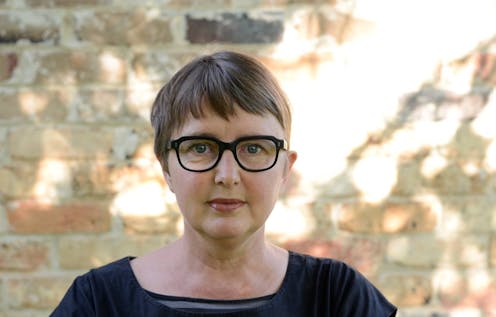
I look back and cringe at my awkward younger self, but I can see Georgia very clearly. Her pixie hairdo; her skin luminous in the semi-darkness. Georgia had a way of talking to you that was totally focused in the moment.

She read from her first novel, Closed for Winter[1] – a fictional exploration of her grief at the loss of her brother to schizophrenia and drug addiction[2] at an early age. It was “material”, an emotional fabric, that Georgia would be drawn back to, again and again.

I can’t seem to find the passage in the book, but I remember how the words felt. There’s a kind of stillness at the centre of Georgia’s writing; a grief, an absence around which the characters swirl – in scenes always shapely, poised, sharply observed and elegantly suspenseful.

And so, it was with a small shock that I picked up and read the posthumously published We All Lived in Bondi Then[3], the “new” collection of short stories Georgia wrote between 2012 and 2015, before her death from cancer in December 2016.

The voice is familiar, elegiac, but clear-eyed. There was never any artifice, melodrama or sentimentality in Georgia or her work.

Read more: Goodbye Georgia Blain: a brave and true chronicler of life[4]

Familiar preoccupations

The opening story, Australia Square, is frankly magnificent, weaving together Georgia’s familiar themes and preoccupations. A baby boy goes missing, then mysteriously reappears. Years later, his sister looks back on a childish mistake – the dropping of a stuffed toy – and is gripped by the idea that if just this one thing could be corrected, then perhaps the devastating aftermath, the loss of the baby, her parents’ divorce, the breakdown of her family, her brother’s psychotic episodes, would not have followed.

The thought is all the more poignant because the reader suspects the future has a way of finding you, regardless.

In Dear Professor Brewster, a daughter grapples with the onset and inexorable progress of her mother’s Alzheimer’s disease. The daughter’s finely wrought anguish is punctuated by the letters she writes to her mother’s treating doctor, who – bound by a code of medical ethics – sends only inscrutable, perfunctory replies.

Among the haunting stories in the collection, Ship to Shore features a mother paralysed with grief following the death of her four-year-old son. She embarks on a desperate journey down south, her visceral pain exquisitely rendered by the boom of artillery fire, as gunships practise manoeuvres on a nearby naval base.
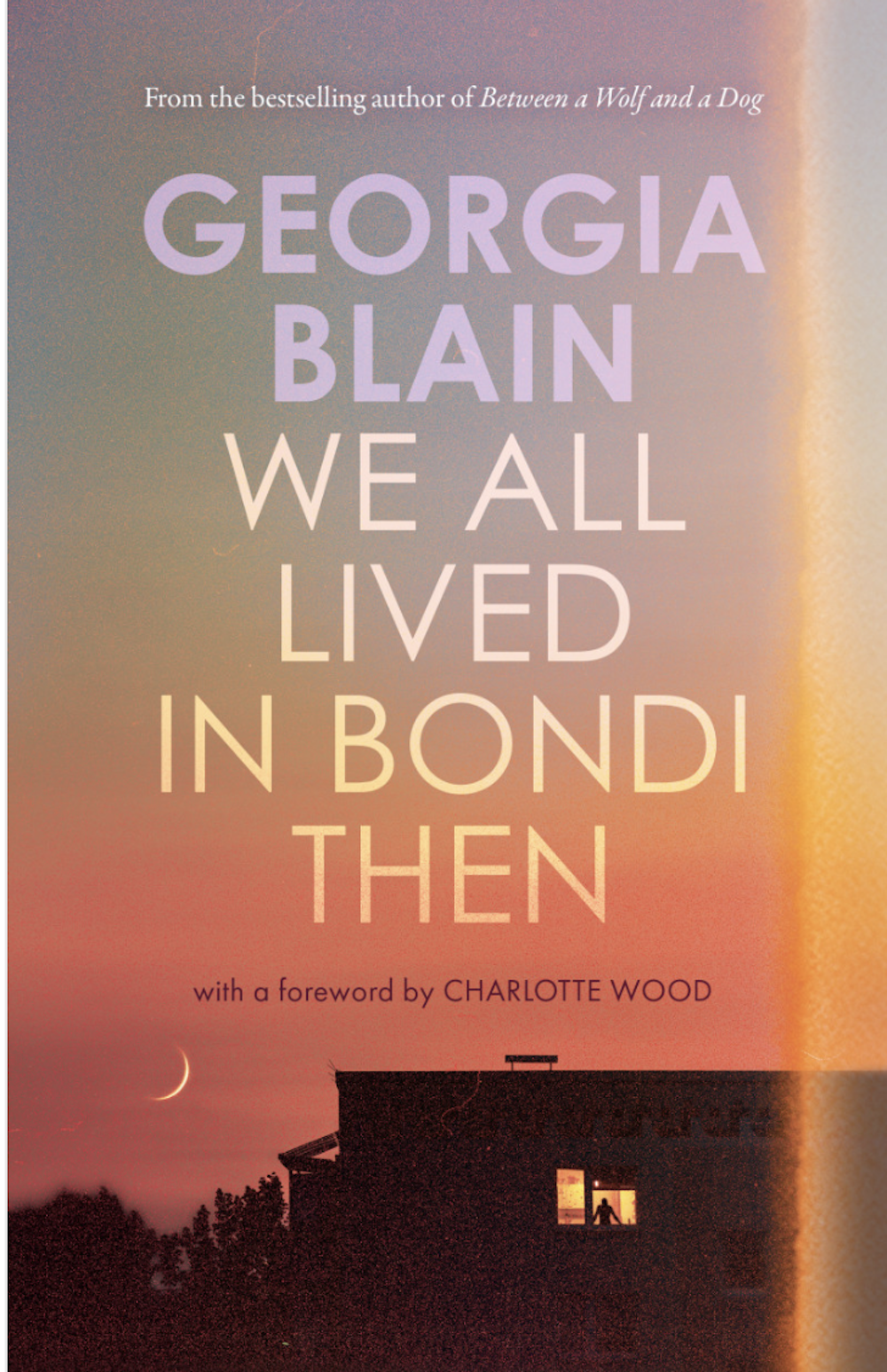
The cover of We All Lived in Bondi Then
Goodreads The stories in the collection are mostly written from the vantage of middle age, looking back on a life that seems to turn on some impossibly fragile occurrence, a chance encounter, or small mistake. The characters that flit through the pages – the would-be actors, artists and photographers, young and ageing singers, and environmental campaigners who represent the flotsam and jetsam of inner-city Sydney life – form a familiar generational milieu. The characters live in Bondi flats “two up, two down”, or dark Marrickville semis, filled with salvaged street furniture, “sagging club lounges” and “glass-topped deco coffee tables”. They dress in op shop suits with shot-silk shirts, and other recycled discoveries. It’s hard not to see the ghosts of real traumas here: the death of Georgia’s brother, her mother’s Alzheimer’s, their complicated family relationships. But as Georgia’s friend the novelist Charlotte Wood writes in her exquisite introduction to the work, there’s a world of difference between writing “close to home” and “writing memoir”. These nuanced stories contain revelations for everyone. This is something Georgia’s friend the writer James Bradley, quoted in the introduction, identified in Georgia’s most powerful works – from Births, Deaths and Marriages[5] to Between a Wolf and a Dog[6] – as a sense of being “simultaneously more personal and more expansive”. Read more: Belvoir's Tell Me I'm Here looks at the impact of mental illness on the whole family. It is a wrenching and beautiful work[7] When dreams were huge Some stories in the collection seem to strike a note of nostalgia, evoking shimmering visions of younger selves at a time when dreams were huge and life felt unlimited – always up ahead, as the narrator in Still Breathing says, “the self that I was to become beckoning, waiting”. But these compassionately observed stories also show the reader that there is a sort of desperate awfulness that comes from being young, what Wood, in her introduction, calls the “brutal clumsiness of youth”. This is us before life throws up its damage, and knocks us flat, or takes the edges off. Characters constantly try to outrun the damage, like the mother in Last Days, whose fear that she has lost herself in the wake of motherhood, materialises as an extended suburban electrical blackout. At the end of the story, she gets into a car, and drives, trying to locate the edge of the darkness. “Just one more street,” the narrator tells herself. But the streets fly by, and “the blackness stretches forever”. The edge of the darkness, rather like the metaphor of the line in Still Breathing, is an illusion. As the narrator in Still Breathing says, It is strange how often we long for life to move forward; I just have to get through this, we think, as though the past, with all its fears and fuck-ups and anxieties, can be completely left behind, neat, contained, never spilling over the line we imagine is waiting for us. And yet the past is always there, hovering at the edge, teasing us, reappearing when we least expect it … I had been a little scared of picking up this “new” collection, almost eight years after Georgia’s death. Like the narrator in Still Breathing, I could sense the memories, with all their “fears and fuck-ups and anxieties”, that might be waiting. But I was wrong. What Georgia’s work offers the reader is a clear-eyed, calm compassion, a capacity to live with, and alongside, damage, trauma and unspeakable loss, and a way of staying human. References^ Closed for Winter (www.allenandunwin.com)^ the loss of her brother to schizophrenia and drug addiction (theconversation.com)^ We All Lived in Bondi Then (scribepublications.com.au)^ Goodbye Georgia Blain: a brave and true chronicler of life (theconversation.com)^ Births, Deaths and Marriages (www.penguin.com.au)^ Between a Wolf and a Dog (scribepublications.com.au)^ Belvoir's Tell Me I'm Here looks at the impact of mental illness on the whole family. It is a wrenching and beautiful work (theconversation.com)

Read more https://theconversation.com/the-future-has-a-way-of-finding-you-georgia-blains-haunting-final-stories-reveal-the-fragile-moments-that-shape-us-222760

Times Magazine

AI is failing ‘Humanity’s Last Exam’. So what does that mean for machine intelligence?

How do you translate ancient Palmyrene script from a Roman tombstone? How many paired tendons ...

Does Cloud Accounting Provide Adequate Security for Australian Businesses?

Today, many Australian businesses rely on cloud accounting platforms to manage their finances. Bec...

Freak Weather Spikes ‘Allergic Disease’ and Eczema As Temperatures Dip

“Allergic disease” and eczema cases are spiking due to the current freak weather as the Bureau o...

IPECS Phone System in 2026: The Future of Smart Business Communication

By 2026, business communication is no longer just about making and receiving calls. It’s about speed...

With Nvidia’s second-best AI chips headed for China, the US shifts priorities from security to trade

This week, US President Donald Trump approved previously banned exports[1] of Nvidia’s powerful ...

Navman MiVue™ True 4K PRO Surround honest review

If you drive a car, you should have a dashcam. Need convincing? All I ask that you do is search fo...

The Times Features

Do You Need a Building & Pest Inspection for New Homes in Melbourne?

Many buyers assume that a brand-new home does not need an inspection. After all, everything is new...

A Step-by-Step Guide to Planning Your Office Move in Perth

Planning an office relocation can be a complex task, especially when business operations need to con...

What’s behind the surge in the price of gold and silver?

Gold and silver don’t usually move like meme stocks. They grind. They trend. They react to inflati...

State of Play: Nationals vs Liberals

The State of Play with the National Party and How Things Stand with the Liberal Party Australia’s...

SMEs face growing payroll challenges one year in on wage theft reforms

A year after wage theft reforms came into effect, Australian SMEs are confronting a new reality. P...

Evil Ray declares war on the sun

Australians love the sun. The sun doesn't love them back. Melanoma takes over 1,300 Australian liv...

Resolutions for Renovations? What to do before renovating in 2026

Rolling into the New Year means many Aussies have fresh plans for their homes with renovat...

Designing an Eco Conscious Kitchen That Lasts

Sustainable kitchens are no longer a passing trend in Australia. They reflect a growing shift towa...

Why Sydney Entrepreneur Aleesha Naxakis is Trading the Boardroom for a Purpose-Driven Crown

Roselands local Aleesha Naxakis is on a mission to prove that life is a gift...