Government’s focus pivots to economic empowerment for Indigenous Australians in Garma speech
- Written by: Michelle Grattan, Professorial Fellow, University of Canberra
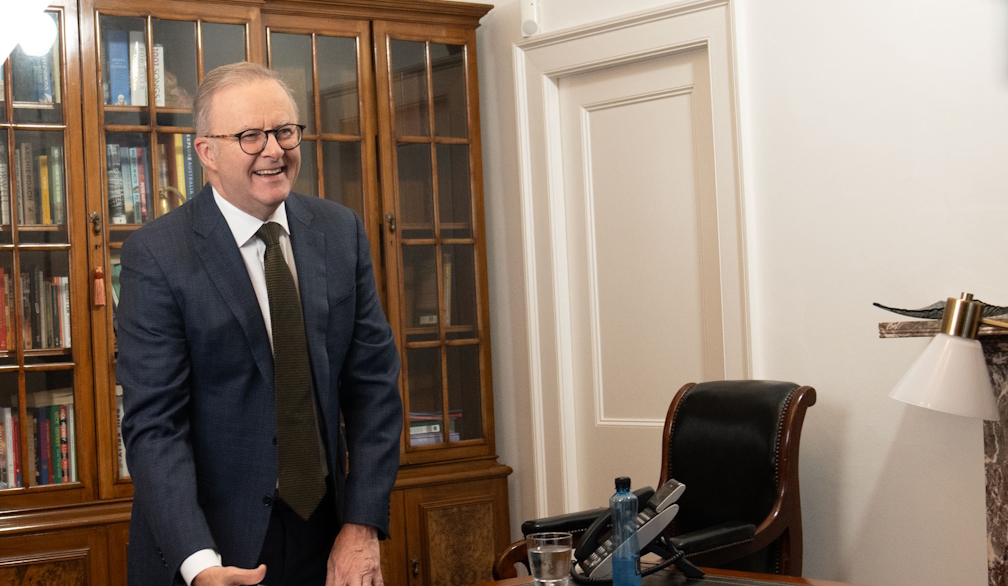
Prime Minister Anthony Albanese will switch the government’s focus in Indigenous affairs policy towards the economic empowerment of First Nations communities, in a speech at the Garma Festival in Arnhem Land on Saturday.
Addressing the festival nearly a year after the Voice referendum crashed, Albanese will say: “I have not returned to Garma today to talk about what might have been. I have not come back to this place of fire, to rake through the ashes. I am here because my optimism for a better future still burns.”
“We can be a country where Aboriginal and Torres Strait islander people have power over their destiny.”
The government’s new economic emphasis comes as many Indigenous people remain upset over the referendum’s failure. This weekend’s festival coincides with the appointment of Malarndirri McCarthy as the new Minister for Indigenous Australians, and the release this week of the latest Closing the Gap report, that showed several areas, including indigenous incarceration, going backwards. .
In his speech, released ahead of delivery, Albanese looks to global changes, specifically the energy revolution, as providing the opportunities for Australia’s First Nations people to prosper.
He says building “true and lasting self-determination requires economic security” for Indigenous people – security that exists “outside of government decisions, and endures beyond them”.
The changes in the global economy are making this possible, he says..
“Growing global demand for renewable energy, critical minerals and rare earths represents an unprecedented opportunity for our nation and for Northern Australia.”
The north has so many of the resources the world needs to transform to clean energy, Albanese says, and so much of the space and sunlight for Australia to be a renewable energy superpower.
The global economy is undergoing the biggest change since the industrial revolution, he says.
“And it also represents the best chance Australia has ever had to bring genuine self-determination and lasting economic empowerment to remote communities.
"New clean energy projects, new defence and security projects, new processing and refining facilities can all unlock new jobs and prosperity for Indigenous communities.”
Partnering from the start with locals means “we can avoid the exploitation and injustices of the past,” the Prime Minister says.
“And we can tackle the poverty and lack of opportunity that has seen disadvantage entrenched in these parts of our country over generations.
"Together, we can seize this moment to build a better future on a simple principle. The principle that Aboriginal and Torres Strait Islander people deserve a real say in the economic development of the land you call home. And you deserve your fair share of the benefits that flow from it.
"This is about so much more than consulting communities in the service of cultural or heritage considerations, as important as that remains.”
Indigenous people “are more than curators or custodians, you are the traditional owners, who have cared for land and waters for 60,000 years and more.
"And we want you to have ownership of your future – built on a foundation of economic empowerment.
"This is about good jobs that change lives and strengthen communities - that provide a sense of pride and purpose, hope and aspiration. New careers in clean energy, construction, the care economy, technology, infrastructure and resources.
"These are creators of intergenerational opportunity.”
To promote delivery and accountabilty the goverbment is forming a First Nations Economic Partnership with the Coalition of Peaks, which represents a wide range of Indigenous organisations.
Tying the approach into the same principles as in the government’s Future Made in Australia policy, Albanese says: “We want government investment to drive engagement between businesses and communities, maximising local jobs and long-term benefit.
"And we want to see the same commitment in the First Nations Clean Energy Strategy we are developing with the states and territories.
"We want projects generating renewable energy on country, to bring new economic power to communities.”
Some needed changes were practical rather than political, such as helping Indigenous bodies and investors to connect.
“That’s why we are partnering with the First Nations Heritage Protection Alliance to create a central point of contact in communities to connect traditional owners and investors.”
Albanese was vague on the remaining issues of the Uluru Statement from the Heart.
He said the government remained committed to Makarrata which means “a coming together after a struggle.”
“And we will continue to engage in good faith with leaders and communities to decide what the next steps should be at a national level.”
Work on treaty and truth telling is being left to the states and territories at present.