What winter’s weird weather means for the warm months ahead
- Written by: David Bowman, Professor of Pyrogeography and Fire Science, University of Tasmania
Heavy winds struck south-east Australia over the weekend as a series of cold fronts moved across the continent. It followed a high fire danger[1] in Sydney and other parts of New South Wales last week, and a fire in south-west Sydney[2] that threatened homes.
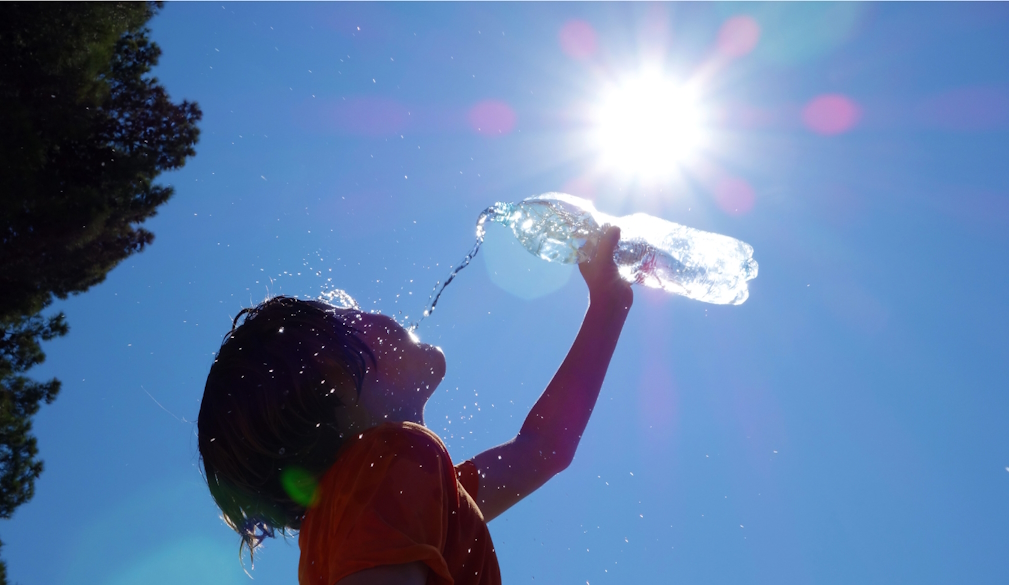
The severe weather rounds out a weird winter across Australia. The nation’s hottest ever winter temperature was recorded[3] when Yampi Sound in Western Australia reached 41.6C on Tuesday. Elsewhere across Australia, winter temperatures have been way above average[4].
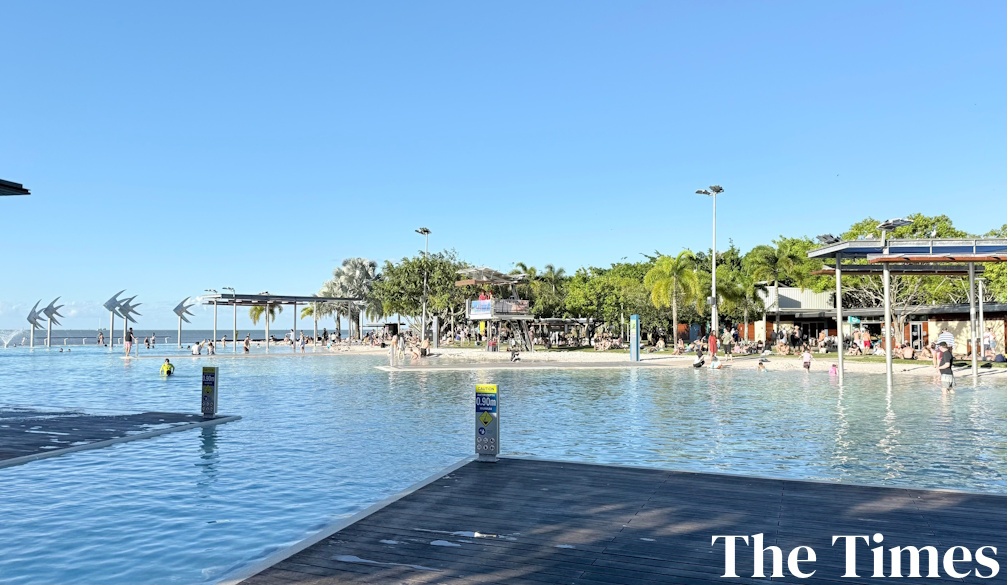
We can look to the positives: spring flowers are blooming early[5], and people have donned t-shirts and hit the beach[6]. But there’s a frightening undercurrent to this weather.
Earth’s climate has become dangerously unstable[7], and it’s only a matter of time before we get the bad combination of hot and dry weather, strong winds and a spark. None of this should come as a surprise. The sooner we stop expecting Australia’s weather to be “normal”, the sooner we can prepare for life in a wild climate.
The green is deceiving
The landscape around Sydney – and in fact, across much of south-east Australia – is very green at the moment. That’s because we’ve had a couple of years of good rains which triggered an explosion of vegetation growth.
The below NASA satellite image reveals the picture in stark detail. It’s certainly lush out there at the moment.
But the problem with climate change is that weather conditions can turn on a dime. This August was a case in point. At month’s end, much of Australia was hit by a record-breaking heatwave and damaging winds[8] – conditions that can dry out a green landscape with devastating efficiency, turning it into fuel for a bushfire.
The dangerous fire weather that struck Sydney this week came as a surprise to many. But in reality, these abnormal conditions are the new normal.
We must open our minds to this, if we want to be prepared.
A climate off the rails
The year 2023 was Earth’s hottest on record[9]. And 2024 looks likely[10] to be hotter still.
In Australia, the last 12 months have provided all the evidence we need that our climate is wobbling on its rails.
In October 2023, Victoria’s Gippsland region suffered unseasonably early bushfires, then soon after battled heavy rain and flooding[11].
And Tasmania, where I live, has been gripped by drought[12]. This February was Hobart’s third driest in 143 years. But over the weekend we were hammered by a deluge of rain and wind[13].
This climate instability is setting up bad fire conditions. Not everywhere in south-east Australia will be hit by fire, but it will happen somewhere. It could be the hinterlands or the coast. It will depend on how our erratic climate behaves in the coming months.
Let’s stick with the Tasmania example. Sure, the surface soils are now nicely saturated. But that will lead to a burst of grass and other vegetation in spring. If the dry weather returns and the temperatures heat up in summer, the fine fuels will dry out and become dangerously combustible.
All we need then is a windy day and a spark, and a nightmare fire will soon be racing across the landscape.
Canada on fire
Of course, Australia is not the only country facing climate instability and a worsening fire risk.
Canada suffered a catastrophic wildfire season in 2023 – one of the most severe on record. It burnt almost 15 million hectares and forced the evacuation of 232,000 people.
Smoke produced by the fires affected communities up to 1,000 km away, such as in southern Canada and on the east coast of the United States.
A recent paper[14] in the journal Nature Communications outlined why. It pinpointed early snowmelt, early-season drought conditions and intense heat. In fact, the average temperature in Canada from May to October last year was 2.2°C higher than the 30-year average.
The researchers said human-caused climate change exacerbated the fire’s effects. It went on:
The disproportionate effect a few days of extreme weather can have on the total area burned is also evident in this fire season, leading to worrisome prospects given projected future conditions.
Normal no longer exists
It’s always been difficult to forecast fire seasons in Australia, due to our natural climate variability.
But now we are seeing climate instability layering over itself[15]: background dryness, wet seasons bringing a proliferation of fuels, and above-average temperatures.
Eventually we’ll get unlucky and experience extremely strong winds thrown into the mix. That’s when catastrophic fires are most likely to occur.
As we saw in the Black Summer of 2019–20[16], and again in Canada last year, some fires are so intense they completely overwhelm fire suppression strategies.
Under climate change, the likelihood of getting a bad combination of weather conditions is increasing. So what’s the remedy?
Australia really must start making our communities more resilient. Serious and sustained adaptation is needed. As my research has outlined[17], this requires the careful integration of:
- community education programs
- research and development to design fire-safe homes, gardens, communities and bushland
- incentives and penalties to ensure adaptation measures are implemented.
As this winter has shown, Australia’s climate is entering a different phase. It’s time to give up on “normal” weather. The game is changing and we have to adapt.
References
- ^ high fire danger (www.9news.com.au)
- ^ a fire in south-west Sydney (www.abc.net.au)
- ^ hottest ever winter temperature was recorded (www.theguardian.com)
- ^ way above average (www.theguardian.com)
- ^ flowers are blooming early (www.theguardian.com)
- ^ hit the beach (www.smh.com.au)
- ^ unstable (science.nasa.gov)
- ^ damaging winds (www.bom.gov.au)
- ^ hottest on record (www.climate.gov)
- ^ 2024 looks likely (www.carbonbrief.org)
- ^ heavy rain and flooding (www.abc.net.au)
- ^ has been gripped by drought (www.abc.net.au)
- ^ deluge of rain and wind (www.abc.net.au)
- ^ recent paper (www.nature.com)
- ^ layering over itself (www.csiro.au)
- ^ Black Summer of 2019–20 (theconversation.com)
- ^ research has outlined (www.science.org)