Climate Change Authority head Matt Kean says ‘put more solar panels on commercial rooftops’
- Written by: Michelle Grattan, Professorial Fellow, University of Canberra
The just-ended COP-29 in Baku, and the election of Donald Trump, have put the global response to climate change in the spotlight. Meanwhile back home, Climate Change Minister Chris Bowen this week reported Australia is on track to meet its 2030 target to reduce emissions as part of the Paris Climate Agreement.
But the government won’t say whether it will reveal its 2035 target before the election. It points out it is awaiting advice from the Climate Change Authority. The head of that authority, former New South Wales Liberal treasurer Matt Kean, joins the podcast to talk about COP, Australia’s energy transition, and the challenge of preparing that advice on the 2035 target.
Kean says COP left him more encouraged than he’d expected:
I arrived at COP incredibly pessimistic. It was on the back of Trump’s election victory where he basically called climate change a hoax. He said his energy policy was going to be “drill, baby, drill”. And it was clear that there was going to be an absence of American leadership in the climate discussion over the next four years. So, I arrived with not high hopes.
But I left optimistic and positive, and the reason for that is that this is the world’s most important climate conference. It’s the world’s biggest climate conference. It brings together people from all over the globe, be it governments at the national level or sub-national level, businesses, private enterprise, NGOs. And the message that I received from all those actors is, yes, there is a setback, but the effort required and the determination to continue the trajectory that we were on was very, very clear.
It’s an opportunity to collaborate and come up with new ways to solve this challenge. I mean, the world coming together in a global effort to limit global warming by 1.5 degrees above pre-industrial levels is one of the great challenges of our times. No country alone is going to solve it, and my message to your listeners is this: the fight for a cleaner, safer and better planet by tackling dangerous climate change is bigger than one election cycle in one country at one point in time.
Australia had hoped to get the nod during COP to host (together with Pacific countries) the 2026 COP but a decision has been deferred until June. Kean describes where things are up to and why it’s an important event not just for Australia’s reputation but also for its economy:
I was led to believe that there was a strong indication that other countries might pull out of the race. But clearly that didn’t happen. We arrived in Baku to hear the president of Turkey making a strong and forceful argument as to why Turkey should be the host of that COP. And I think that caught a few people by surprise, to be honest.
But […] hopefully, Australia will be chosen as the country that can host this world-class huge event which will bring lots of economic benefits.
Over 70,000 people descended on Baku. So, regardless of the importance of bringing people together to collaborate and try and solve this challenge, it is a huge economic boon for the city and the country that hosts it. I mean, I can’t think of many events that could attract 70,000 people to Australian shores.
On the Climate Change Authority’s progress report, released this week, Kean highlights a key opportunity for new renewable energy capacity:
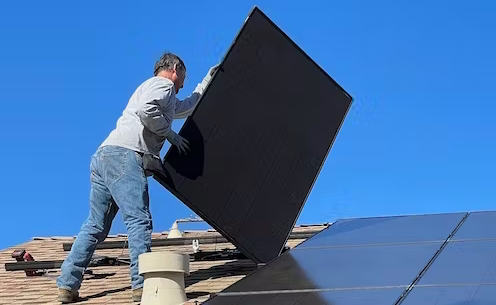
Take, for example, one of the recommendations around using more business rooftops to meet our energy needs. Australia has the potential for an extra 28GW of solar capacity using the commercial and industrial rooftops of Australia. That’s bigger than the size of the New South Wales energy system alone.
[The Australian Energy Market Operator] predicts only 5% of the commercial and industrial customer demand will be met by rooftop solar and batteries and that’s compared to 50% for households. So we’ve got a huge opportunity to install more capacity into the grid, ensure that our system is more reliable and able to manage the exit of these unreliable coal fired power stations without adding a huge cost to consumers.
On when Australians will learn about our 2035 targets, and his authority’s advice on them, Kean says Australia will need to submit its targets before next year’s COP, but is coy about when the authority’s advice will be coming:
Let me firstly say what matters most is the quality of the target and the strength of the evidence and analysis that underpin it. So we want to give the Australian people confidence that Australia’s next target is ambitious, achievable and in our national interest.
As far as we’re aware, all countries intend to submit their next targets before the next climate conference in 2025. We will provide our advice in plenty of time for Australia to submit before then.
I’m not going to be rushed by domestic political timetables. I’m an independent voice in this process and as I said, what matters most is the quality of the target and the strength of the evidence and analysis that underpin it.