Can you afford a private school? Average fees for Year 12 are at least $15,000
- Written by: Emma Rowe, Associate Professor in Education, Deakin University
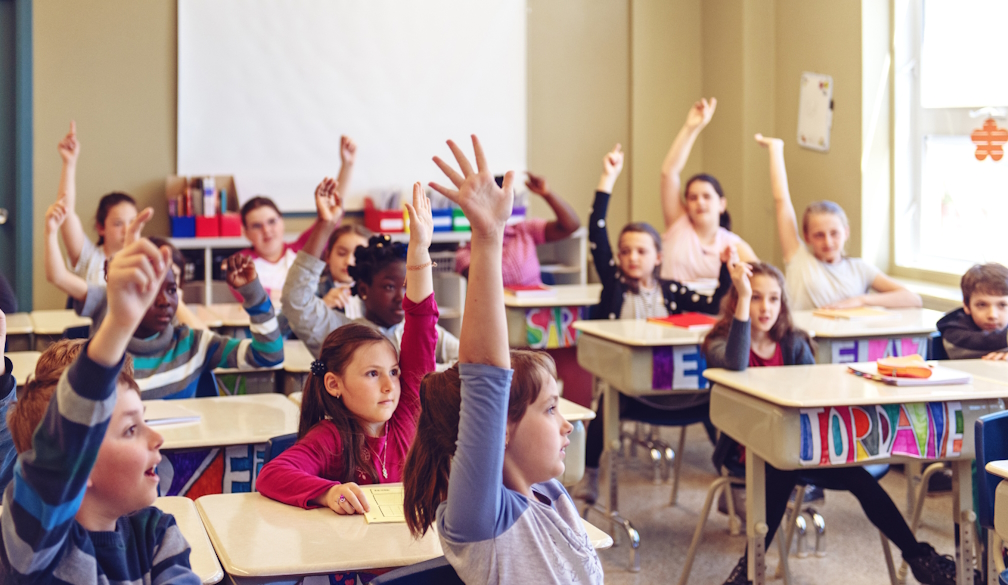
This week, updated figures[1] once again showed an increasing number of Australian families are choosing to send their children to private schools.
Just over 63% of Australian students are enrolled in government schools. Almost 20% are in Catholic schools and almost 17% go to independent schools, according to Australian Bureau of Statistics[2].
How much is it costing parents?
While headlines often focus on the most expensive schools[3], there is a huge range of private schools operating in Australia.
In our new analysis, which is not peer-reviewed, we looked at private school fees in New South Wales and Victoria (the two most populous states).
Read more: More Australian families are choosing private schools – we need to understand why[4]
Fees for Year 12
We looked only at independent schools. The non-government school sector is made up of Catholic and independent schools, but Catholic private schools typically charge lower fees and this can skew the data on the sector.
The tuition fees we refer to are based on what is publicly available through each school’s website.
We collected all available data for Year 12 tuition fees in every independent school in NSW and Victoria in 2021 and 2024. We chose to focus on Year 12, as this is typically the most expensive year at school.
-
In NSW, we found fee information for 369 schools (77% of independent schools).
-
In Victoria we found fee information for 138 schools (92% of independent schools).
Read more: Are public schools really 'free'? Families can pay hundreds of dollars in voluntary fees[6]
What is the average tuition fee?
In 2024, the average tuition fee for a Year 12 student in NSW was A$15,674 and in Victoria it was $20,923.
This is in keeping with other analyses[7] showing Victoria is the most expensive state for school fees in Australia.
These figures suggest while many schools are far from the headlines of “$50,000 fees[8]”, many families are still paying substantial amounts for a private education – particularly if they have more than one child.
However, there were significant variations in tuition fees between schools. In NSW, 12% of schools in our sample charged under $5,000 per year per student. In Victoria, 9% charged less than $5,000.
One alternative school in NSW charged just $100 per student per year. This is less than parents typically pay out of their own pocket at the average public school[9].
This shows us there some cheaper options available, depending on where families live although they are certainly not the majority.
At the other end of the sample, The Scots College in NSW and Geelong Grammar School in Victoria charged the highest tuition fees in their respective states for 2024. Geelong Grammar charged $49,720 for Year 12; Scots charged $46,920.
There are other costs
While we only looked at tuition fees, families might also have to pay levies for infrastructure or technology.
There are also extra charges for activities such as camps, excursions and incursions, as well as fees for uniforms, school buses, and special subjects such as music and sport.
For the majority of independent schools, parents are asked to pay to enrol or go on the waiting list. The average application fee in Victoria was $156 and in NSW was $197. These fees widely differed between schools, ranging from zero to $650.
How much are fees growing?
Fees keep climbing each year, and media reports tell us some school fees[10] have already increased for 2025.
Our analysis found in Victoria, tuition fees in independent schools increased by an average of 15% from 2021 to 2024 – roughly 3.75% each year. In NSW, fees increased by 13% from 2021 to 2024, or about 3.25% per year.
In media coverage, individual schools have blamed fee increases on inflation[11], “operational costs”, rising staff costs, and a drop in federal funding[12].
Will fees keep rising?
In some OECD countries[13], if private schools receive government funding, there are conditions placed on what they can charge for tuition.
This is not the case in Australia, where the system is unregulated and uncapped.
Unless this policy approach changes, we can expect private schools to keep increasing fees, as long as there are families willing and able to pay them.
References
- ^ updated figures (www.theguardian.com)
- ^ Australian Bureau of Statistics (www.abs.gov.au)
- ^ most expensive schools (www.afr.com)
- ^ More Australian families are choosing private schools – we need to understand why (theconversation.com)
- ^ DGLimages/Shutterstock (www.shutterstock.com)
- ^ Are public schools really 'free'? Families can pay hundreds of dollars in voluntary fees (theconversation.com)
- ^ other analyses (www.theage.com.au)
- ^ $50,000 fees (www.smh.com.au)
- ^ the average public school (theconversation.com)
- ^ media reports tell us some school fees (www.afr.com)
- ^ inflation (www.abc.net.au)
- ^ drop in federal funding (www.afr.com)
- ^ some OECD countries (theconversation.com)