Government aims to pass political donation and spending caps within a fortnight after in-principle deal with opposition
- Written by: Michelle Grattan, Professorial Fellow, University of Canberra
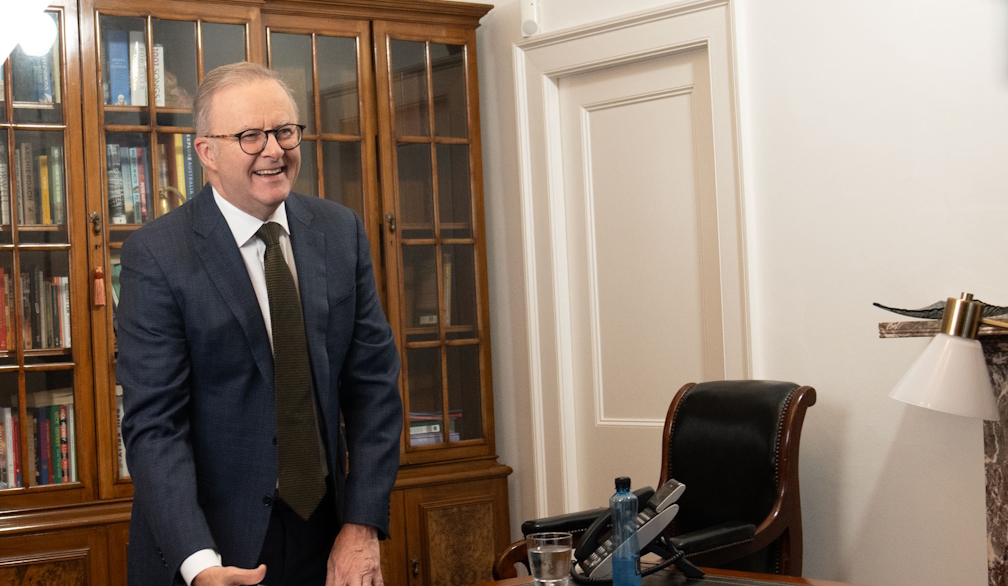
The Albanese government aims to rush through legislation within a fortnight for political donation and spending caps, after in-principle support from the opposition.
The new regime, to be unveiled by Special Minister of State Don Farrell on Friday, would impose a $20,000 “gift cap” on what any recipient could obtain from a particular donor in one calendar year.
The cap on the total amount a donor could give in a year, covering multiple recipients, is expected to be more than $600,000.
That cap is set high, both to stop donors getting around it and to head off a successful High Court challenge on the grounds of limiting freedom of communication.
There would be multiple spending caps for election campaigns.
These include a national $90 million cap per party, state caps for senate campaigns which would vary between states, and a $800,000 cap per candidate in an individual seat.
The regime will also lower the threshold for publicly declaring donations, and provide for real-time – or close to real-time – disclosure of donations.
The threshold for disclosure – currently $16,900 (which is indexed) – would come down to $1,000. Indexation would only be applied once after each election.
Between elections, donations would have to be disclosed monthly, and would be published by the Australian Electoral Commission.
During campaigns, there would be weekly disclosure. In the final week, it would be daily, and that would continue for a week after the election to limit the opportunity for the requirement to be circumvented.
The changes will include an increase in the public subsidy to $5 a vote. It is now $3.346 per eligible vote[1].
Also, there will be some modest funding for “administration” for parties and independent parliamentarians – $30,000 for members and $15,000 for senators.
Penalties for non-compliance with the new provisions will be substantial.
The legislation will be introduced to the House of Representatives early next week, and put through by week’s end. It will be debated in the Senate the following week – the final parliamentary week this year.
If passed, the new rules will not come into effect until July 1 2026, with a six-month transition period to allow the AEC and political parties to prepare themselves before the full regime starts in 2027.
The package will also include provision for truth in advertising, based on the South Australian model. But Farrell does not have enough support to get this through and it won’t be passed with the other measures. It is strongly opposed by the AEC (which doesn’t want to have to police such a regime) as well as by the opposition.
Labor has long been committed to donation and spending reform but has been particularly galvanised by the huge spending of Clive Palmer, who outlaid $123 million at the last election.
Farrell said: “Years of inquiries and evidence from multiple elections show us that the biggest weakness to our electoral system is big money influencing our political system.
"Over the last decade we have seen billionaires repeatedly attempt to sway our elections, not through policy or participation, but through money and misinformation.
"This significant package of reforms has been drafted to tackle big money in our electoral system and protect our democracy into the future.”
References
- ^ $3.346 per eligible vote (www.aec.gov.au)