Labor and Coalition dismissed security risks over the Port of Darwin for years. What’s changed?
- Written by: James Laurenceson, Director and Professor, Australia-China Relations Institute (UTS:ACRI), University of Technology Sydney
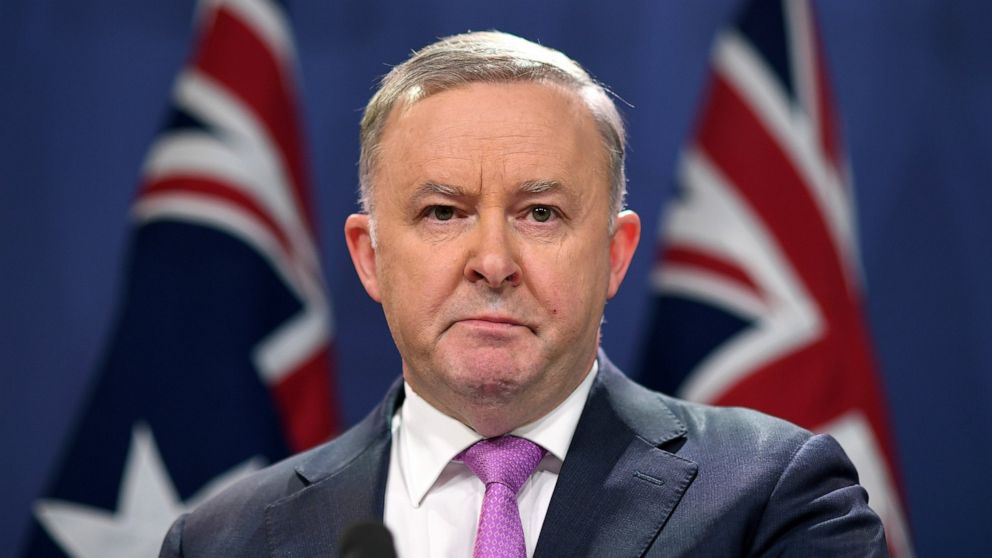
Prime Minister Anthony Albanese and Opposition Leader Peter Dutton have both committed to stripping a Chinese company, Landbridge, of the lease to operate Darwin Port[1]. Landbridge paid A$506 million for the 99-year lease from the Northern Territory government in October 2015.
In Australia’s political system, democratically elected representatives like Albanese and Dutton have the power to make such decisions. Still, Australians would hope and expect these decisions were driven by the best available advice, not domestic political sparring ahead of a federal election.
This is particularly so when such a move would likely elevate fears among foreign investors around sovereign risk.
Defence Minister Richard Marles has refused to say[2] if security agencies are recommending Australia retake control of the port, nor has the Coalition provided a reason for its new stance.
Media reports often cite “defence experts[3]” who claim Chinese ownership of the lease involves unacceptable risks.
However, it has been the long-standing and consistent advice of Australia’s most senior national security officials that this is not the case.
Earlier concerns batted away
Landbridge did not need Canberra’s approval when it secured the port lease in 2015. Nonetheless, the company notified the Foreign Investment Review Board[4] of its interest in submitting a competitive bid for the lease four months before the deal was sealed.
The Department of Defence and the Australian Security Intelligence Organisation (ASIO) “examined it thoroughly[5]”. The then-secretary of the Department of Defence, Dennis Richardson, said:
We are at one in agreeing that this was not an investment that should be opposed on defence or security grounds.
Richardson told[6] Senate Estimates in 2015 he was “not aware of any concerns” among the senior leadership in the Australian Defence Forces (ADF), either.
The chief of the ADF, Mark Binskin, said in the same hearing:
If [ship] movements are the issue, I can sit at the fish and chip shop on the wharf […] and watch ships come and go, regardless of who owns it.
Some analysts raised concerns after the sale, but these were borderline ridiculed by officials with access to the most highly classified national security information.
Analysts at the Australian Strategic Policy Institute, for example, warned that a Chinese company holding the lease “could facilitate intelligence collection[7]” of ADF operations and US Marine deployments.
Richardson said it was “amateur hour[8]” to suggest Chinese spies could use the port for this purpose. He added: “It’s as though people have never heard of overhead imagery” from spy satellites.
Analysts also suggested[9] China could acquire valuable knowledge of the types of signals an Australian or US warship would “emit through a variety of sensors and systems”. Richardson dismissed this as “absurd[10]”.
Even more ludicrous were claims the port deal would provide the People’s Liberation Army-Navy (PLA-N) with “facilitated access to Australia[11]”.
Richardson labelled this as “alarmist nonsense[12]”. Any visits by foreign naval vessels cannot be approved by a commercial port operator, he said. They must be signed off on by the Department of Defence.
Analysts also contended that Landbridge’s chairman, Ye Cheng, was a “senior Communist Party official[13]” and the company was a “commercial front intimately tied to state-owned operations, the party and the PLA[14]”.
This was debunked by a Chinese law and corporate governance expert[15].
Tellingly, when Landbridge found itself in financial difficulty in 2017, it was forced to borrow in high-interest rate debt markets[16]. This is common for privately owned Chinese firms, but not those with close state and party connections. They would be able to access subsidised loans from state-owned banks.
Successive reviews have reaffirmed the decision
When Foreign Minister Julie Bishop was asked in 2018 whether she had any lingering security fears about the Darwin Port lease, she replied the Department of Defence “had no concerns […] and that is still the case[17]”.
As the China-Australia relationship deteriorated in the ensuing years, the Morrison government reviewed the deal in 2021[18]. It found there were still no national security grounds sufficient to overturn the lease.
Yet another review by the Albanese government just 18 months ago also deemed it “not necessary to vary or cancel the lease”. It concluded[19]:
there is a robust regulatory system in place to manage risks to critical infrastructure, including the Port of Darwin.
In announcing his pledge to reacquire the Darwin Port last weekend, Dutton alluded to “advice of the intelligence agencies[20]”, pointing to a deterioration in Australia’s strategic circumstances.
However, the Coalition had apparently not yet received an intelligence briefing on any security risks specifically connected to the Port of Darwin when Dutton made this pledge. Opposition leaders only made a request[21] for the national security advice underpinning Albanese’s promise to reacquire the port in a letter to the government on Monday.
The reality is that if Albanese and Dutton now suddenly and genuinely believed that Darwin might need to serve as a staging post for military conflict with China, forcing the sale of a few commercial wharves currently operated by a Chinese company would be a woefully inadequate response.
They would instead be committing to a massive infrastructure upgrade, most likely in the form of an entirely new port facility. Planning for such a facility was already being mooted in 2019[22].
The fact that they aren’t says a lot.
References
- ^ lease to operate Darwin Port (www.abc.net.au)
- ^ refused to say (www.abc.net.au)
- ^ defence experts (www.smh.com.au)
- ^ notified the Foreign Investment Review Board (www.aph.gov.au)
- ^ examined it thoroughly (www.theaustralian.com.au)
- ^ told (parlinfo.aph.gov.au)
- ^ could facilitate intelligence collection (www.afr.com)
- ^ amateur hour (www.theaustralian.com.au)
- ^ suggested (www.theguardian.com)
- ^ absurd (parlinfo.aph.gov.au)
- ^ facilitated access to Australia (www.abc.net.au)
- ^ alarmist nonsense (parlinfo.aph.gov.au)
- ^ senior Communist Party official (www.theaustralian.com.au)
- ^ commercial front intimately tied to state-owned operations, the party and the PLA (www.aspistrategist.org.au)
- ^ Chinese law and corporate governance expert (www.uts.edu.au)
- ^ forced to borrow in high-interest rate debt markets (www.afr.com)
- ^ had no concerns […] and that is still the case (www.foreignminister.gov.au)
- ^ the Morrison government reviewed the deal in 2021 (www.theaustralian.com.au)
- ^ concluded (www.pmc.gov.au)
- ^ advice of the intelligence agencies (peterdutton.com.au)
- ^ request (www.theaustralian.com.au)
- ^ being mooted in 2019 (www.abc.net.au)