Labor made plenty of promises at the last election. Did they deliver?
- Written by: Frank Rindert Algra-Maschio, PhD Candidate, Social and Political Sciences, Monash University
Election promises are a mainstay of contemporary politics. Governments cite kept commitments as proof they can be trusted, while oppositions pounce on any failure to deliver.
But beyond the politics, campaign pledges are also central to representative democracy. They telegraph what to expect from a party in government and create a moral obligation for it to follow through.
Democratic governments across the globe fulfil, on average, roughly two-thirds of their promises[1], but most voters believe it is far fewer. Since voters will punish governments[2] for breaking promises, it’s vital they have accurate information on their government’s record.
We set out to provide Australians with that information through RMIT’s Election Promise Tracker[3]. We assessed 66 major promises made by Labor before the last election.
By presenting evidence through an interactive timeline that follows all the twists and turns since 2022, the tracker allows voters to form their own judgements during the 2025 campaign.
Tracking election promises
Our team compiled a long list of promises during the last election campaign by scouring public statements made by both major parties.
For this, we kept to the definition of an “election promise” used by the Comparative Pledges Project[4], a research network that employs a common approach to studying promises.
After the election, we narrowed Labor’s list to 66 promises — based on newsworthiness, coverage of policy areas and, later, feedback from the audience of ABC News.
The tracker was originally launched as a project of RMIT ABC Fact Check, and it applies a methodology of fact-check journalism[5] that prioritises impartiality and transparency.
We laid out, from the start, the criteria by which we would eventually assess each promise, to ensure only those that could be assessed by the end of the electoral term were included.
Three years on, we determined whether those criteria had been met, marking promises as “delivered”, “thwarted” or “broken”. In a few cases, some remain “in progress” or “stalled”.
Mostly good news for the government
Overall, the government delivered at least 46 of the promises (roughly 70%) we tracked. Many of these are in areas typically seen as Labor strengths[6].
These include key promises in health and aged care, such as funding pay rises for aged care workers, requiring aged care homes to keep a registered nurse on site 24/7, and mandating minimum “care minutes” for their residents.
On education, employment and social services, the government boosted childcare subsidies and increased workplace protections for gig workers. It also delivered funding for 450,000 fee-free TAFE places and for the states to hire 500 support workers for women in crisis.
Integrity was a key theme of the 2022 election, and the government has since followed through on establishing an anti-corruption commission, delivering a royal commission into Robodebt and implementing all the recommendations of the Respect@Work report that fell within its remit.
And on the all-important cost of living, Labor cut the maximum price for Pharmaceutical Benefits Scheme (PBS) scripts, boosted payments for disabled veterans, increased the low-and-middle income tax offset by $420 and – following a Senate standoff with the Greens and Coalition — established a $10 billion Housing Australia Future Fund.
And some bad news
But it was not all smooth sailing for the government. It failed to deliver on at least 14 pledges (roughly 20%), including a promise to increase real wages[7] above pre-election levels. It’s pledged to address real wages[8] through a submission to the Fair Work Commission this time around.
Arguably, it was unlucky on defence spending. Despite injecting $10 billion over its first three years, Labor is poised to miss its target of spending “at least” 2% of gross domestic product on defence, due to an uptick in GDP.
In other cases, the government never really got close. After promising to deliver 450 gigalitres of environmental water under the Murray Darling Basin Plan, it only managed 27.5GL.
And some deadlines were simply missed, with the government belatedly establishing 50 urgent care clinics and introducing a new Pacific Engagement Visa.
Among the most controversial issues was Labor’s restructuring of the stage three tax cuts, having previously pledged to implement the cuts exactly as the Coalition had formulated them. But polling showed voters may forgive the “breaking” of a pledge if they agree with the outcome[9].
The government also retreated from its promise to establish a Makarrata Commission following the defeated Voice referendum, providing an example of how changed political circumstances can come to haunt promises made years earlier.
Not always an easy answer
Despite the best intentions, some promises don’t fit neatly into the “delivered” or “broken” binary.
For example, Labor promised Australia would make a joint bid with Pacific Island countries to host a United Nations climate conference. But the government can’t formally submit a bid unless Turkey bows out of the race, meaning this pledge has been “thwarted”.
And it remains to be seen whether households will receive a much-touted $275 cut to their annual electricity bill (on 2021 levels) by mid-2025. The necessary data won’t arrive until after the election, and Labor’s energy rebates have complicated the picture.
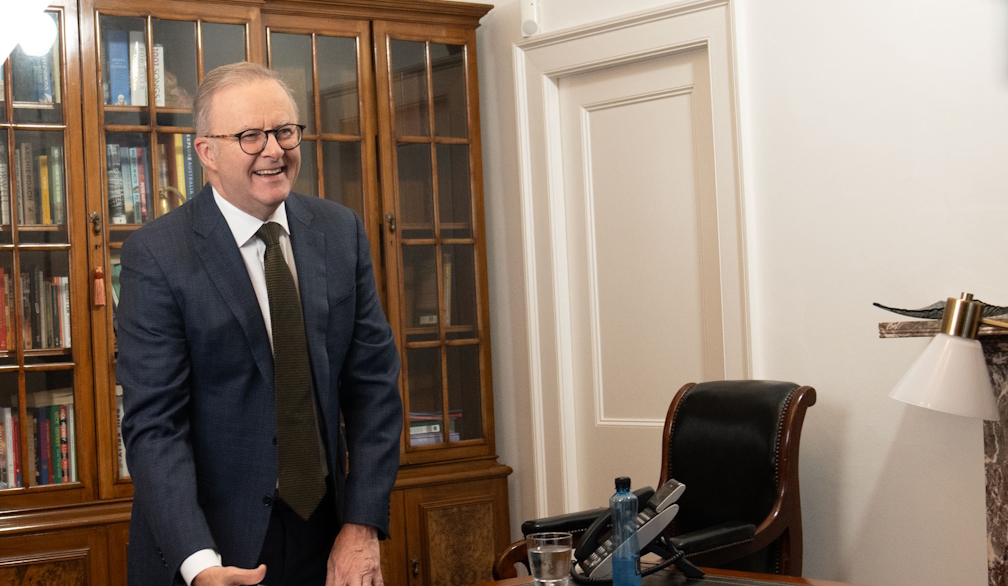
Prime Minister Anthony Albanese may not have delivered on “every single thing[10]” he promised, but of the promises we tracked, far more were kept than broken.
This suggests the Albanese government has performed on a fairly level footing with other comparative countries, as well as with the Gillard Labor government[11].
But voters will have different views on which promises are most important[12], so as ever, it’s the details that matter.
References
- ^ roughly two-thirds of their promises (onlinelibrary.wiley.com)
- ^ voters will punish governments (ejpr.onlinelibrary.wiley.com)
- ^ Election Promise Tracker (www.rmit.edu.au)
- ^ Comparative Pledges Project (comparativepledges.net)
- ^ methodology of fact-check journalism (www.tandfonline.com)
- ^ typically seen as Labor strengths (australianelectionstudy.org)
- ^ increase real wages (jimchalmers.org)
- ^ address real wages (theconversation.com)
- ^ if they agree with the outcome (au.yougov.com)
- ^ every single thing (parlinfo.aph.gov.au)
- ^ the Gillard Labor government (theconversation.com)
- ^ are most important (journals.sagepub.com)