Private tutoring for school kids is ‘booming’. But this poses risks for students
- Written by: Ben Zunica, Lecturer in Mathematics Education, University of Sydney
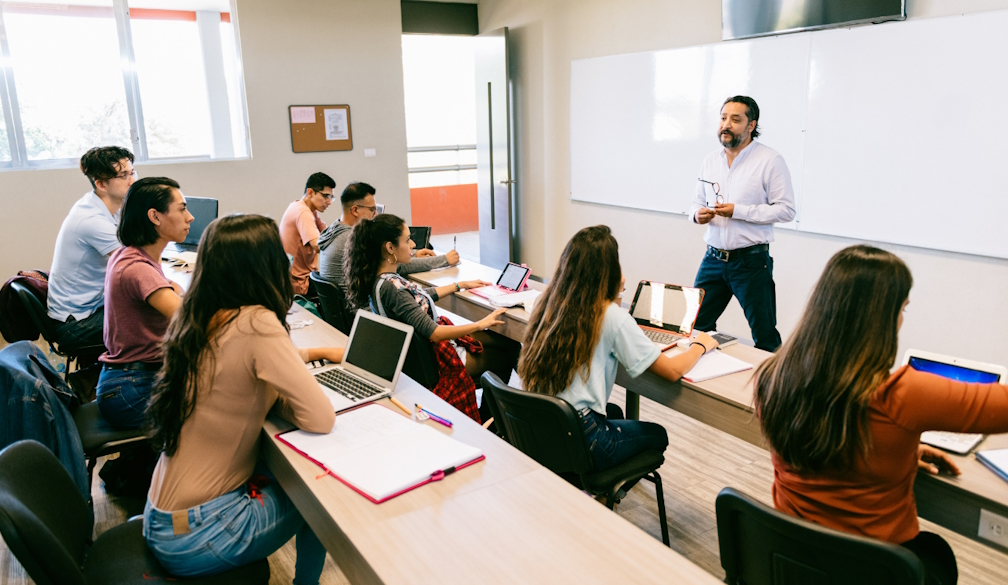
Private tutoring for Australian school students is reported[1] to be a “booming”, billion-dollar[2] industry.
It’s estimated[3] one in six students get private tutoring at some point in their schooling. In some pockets – such as Sydney – this rises to one in four students.
In our new research[4] we highlight how there is little to no concrete state or federal regulation of tutoring in Australia.
This poses risks for parents, students and the broader school system.
How many students are tutored?
One of the biggest issues around the Australian tutoring industry is a lack of accurate data.
We only have estimates about the number of students and tutors and whether tutoring is done one-to-one, in small groups or larger classroom groups.
Tutoring tends to be for high school students, but an increasing proportion of primary students[5] are being tutored. The number of tutors is thought to range from 45,000[6] to 80,000[7].
This means we do not know the exact size and nature of the industry, which we need to make appropriate policies and safeguards around it.
Tutors can set their own rules
Students usually go to tutoring for one of two reasons. This is to bridge learning gaps and keep up with their classes or to get ahead, often in preparation for important exams, such as in Year 12 or for entry to selective schools[8].
But what kind of tuition are they receiving? Is it good quality? Is it matched to the school curriculum? It’s hard to say as there is no regulation of the tutoring industry at any level of government in Australia.
The tutoring industry differs from schools, where teachers and the curriculum go through strict accreditation processes.
This means tutoring companies and individual operators set their own rules. Apart from state governments advice (for example, New South Wales[9] and Queensland[10]), parents are largely left to navigate the system alone.
But whether students spend one hour or several hours a week with a tutor, families should be confident both in the safety of their child and the academic quality of their tutor.
Are kids safe?
The risks are not theoretical. Child protection is a primary concern, especially with the growth in online tutoring[11]. Research shows predators may seek to exploit young people[12] in online forums in general.
Tutors are also not required to follow any curriculum or to have any qualification in the content they are tutoring.
Without regulation, families have little recourse if they wish to complain about a poor-quality service. Tutoring businesses can also make claims of quality without evidence, that prey on parents’ worries about their child’s education.
Is tutoring fair?
Tutoring can be expensive, with reports it can cost thousands[13] of dollars per year. So this means tutoring advantages wealthier families who can afford the fees, over those who cannot afford them.
This sets up inequities in classrooms and the broader community.
Teachers’ work can also be undermined when tutoring follows a different curriculum or teaching method. Students can become confused, frustrated or disengaged[14] when they have already been taught the content by a tutor.
Teachers don’t just deliver content. They have been trained to develop students’ conceptual understandings and tailor their approaches to different levels and learning styles.
If tutoring is increasingly used to fill perceived gaps in mainstream schooling, then schooling risks becoming only one part of a fragmented and inequitable education system.
What do we do now?
We are not opposed to tutoring as an activity that can help young people[15]. However, Australia needs to reconsider its approach to this industry and its impact on young people.
Regulating the tutoring industry will be highly complex – as our paper shows[16], countries such as China, Japan and the United Arab Emirates have encountered many challenges trying to do so. For example, China banned[17] after-school private tutoring for primary and younger higher school students in 2021 in part to promote social equality. But this drove the industry underground.
When regulating the system, governments also need to accommodate varied stakeholders – students, parents, teachers, tutors and the broader educational system – huge numbers of people and a lack of quality data.
In our upcoming research paper we will look at how we could better regulate tutoring in Australia.
References
- ^ reported (www.smh.com.au)
- ^ billion-dollar (educationdaily.au)
- ^ estimated (www.smh.com.au)
- ^ new research (doi.org)
- ^ increasing proportion of primary students (educationdaily.au)
- ^ 45,000 (www.jobsandskills.gov.au)
- ^ 80,000 (www.sbs.com.au)
- ^ selective schools (www.smh.com.au)
- ^ New South Wales (www.nsw.gov.au)
- ^ Queensland (www.qld.gov.au)
- ^ growth in online tutoring (www.apextuitionaustralia.com)
- ^ exploit young people (link.springer.com)
- ^ cost thousands (www.smh.com.au)
- ^ confused, frustrated or disengaged (www.journals.uchicago.edu)
- ^ can help young people (www.nber.org)
- ^ paper shows (doi.org)
- ^ China banned (www.sbs.com.au)