

New Zealand's tax system is under the spotlight (again). What needs to change to make it fair?
- Written by: Lisa Marriott, Professor of Taxation, Te Herenga Waka — Victoria University of Wellington
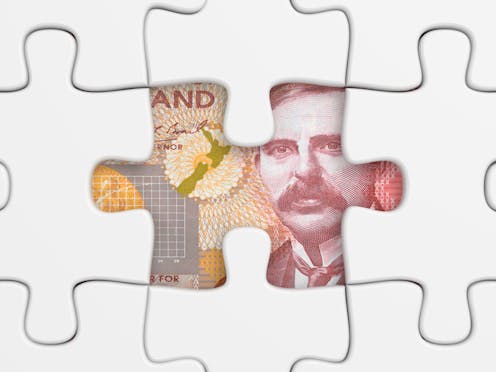
Aotearoa New Zealand’s new Prime Minister, Chris Hipkins, has said we should look at ways to make the tax system fairer[1]. Finance associate minister David Parker made a similar point almost a year ago[2], though there was little real action after his comments.
Generally, people don’t object to fairness. The problem is that we don’t all agree on what fairness looks like – especially when it comes to tax.
Nonetheless, several commentators[3] and politicians have outlined what they believe to be the ideal structure of a fairer tax system.
Tax everyone, or tax those who earn the most?
Some of these ideas include reducing income tax rates and increasing the goods and services tax (GST).
Whether you think either of these is fair will depend on whether you see fairness as everyone paying the same via GST – or people paying differently according to their ability to pay through income tax.
Of course, a tax system generally has components of both.
A GST could be considered fair as everyone who buys the same good or service pays the same amount of tax.
But a GST cannot take into account ability to pay. Higher income earners generally pay more GST overall, as they can afford to buy more goods and services. However, they pay less GST as a proportion of their income[4].
Increasing GST to fund lower income taxes would have the greatest impact on those who have the least income.
The current economic environment is also a factor. At a time when inflation is over 7%[5], is it fair to increase the tax on almost every good or service that will be consumed?
Targeting wealth
By way of contrast, if you believe fairness results from ability to pay, then Cameron Bagrie’s suggestion of a wealth tax is relevant[6].
Data from Stats NZ[7] shows that household wealth inequality in New Zealand is significantly greater than income inequality. The richest 20% of households own around 184 times the median household wealth of the lowest 20%: NZ$2,024,000 vs NZ$11,000. The median net worth is $397,000.
As the top 10% of New Zealand households hold around 50% of New Zealand’s total household net worth, there is a strong argument that taxing some of this wealth is fair.
Read more: The Groundswell protest claimed regulation and taxes are unfair to farmers – the economic numbers tell a different story[8]
Bagrie also suggests reducing income taxes. No one would argue that there hasn’t been a certain level of bracket creep[9] in recent years. But whether reductions in income taxes are fair depends on how they are reduced and, again, your views on fairness.
When the lowest income tax rate is reduced, this benefits not only the lowest income earners, but all other income earners. When middle or higher income tax rates are reduced, only those who have middle or high income benefit – low income earners miss out.
That said, income inequality is less pronounced than wealth inequality. Data from Stat NZ[10] shows that, as at June 2021, the highest 20% annual household median income was around four times that of the lowest 20%. This also supports an argument for focusing on wealth taxes.
A further argument for a wealth tax comes from the suggestion that the wealthy pay a small proportion of their total income[11] in tax. This is because we comprehensively tax income in NZ but we do not comprehensively tax wealth. Is it fair that 42% of millionaires pay tax rates below those of the lowest income earners?
Capital gains under the spotlight
Taxes become particularly politicised in election years, but perhaps none more so than the suggestion of wealth taxes.
So, what are wealth taxes? These are taxes on assets, such as land or shares.
A capital gains tax[12] is a wealth tax, as is an inheritance tax or a land tax. The different terminology refers to what is specifically included in the tax.
Read more: Government funds are not 'taxpayer money' — media and politicians should stop confusing the two[13]
One of the benefits of wealth taxes is they can be flexible by way of what is included or excluded. This flexibility means some assets can be excluded if there are good policy reasons to do so, such as productive land or owner-occupied homes.
Fairness might be just collecting what’s due
The challenge for any proposed tax reduction is how it will be paid for.
If we want to think more broadly around tax and fairness, we could invest more resources into collecting tax that is due.
Inland Revenue wrote off $688 million of tax[14] debt in the year to 30 June 2022 and $812 million in the previous year.
This write off is not the result of tax evasion or fraud. This happens when people, such as those who are self-employed, have earned the income but do not pay the tax that is due.
Non-payment of tax is not an option for a wage or salary earner: is it fair that this is an “option” available to others? Greater investment in debt collection is another way of increasing fairness in the tax system.
Whatever your perspective on what a fair tax system looks like – whether it be increased GST, changes to income tax, or targeted wealth tax – one thing is certain. Tax is going to be a 2023 election year issue and we’re all going to be talking about it in the months to come.
References
- ^ tax system fairer (www.newshub.co.nz)
- ^ similar point almost a year ago (thespinoff.co.nz)
- ^ several commentators (www.newshub.co.nz)
- ^ proportion of their income (www.nzherald.co.nz)
- ^ inflation is over 7% (www.stats.govt.nz)
- ^ wealth tax is relevant (www.newshub.co.nz)
- ^ Stats NZ (www.stats.govt.nz)
- ^ The Groundswell protest claimed regulation and taxes are unfair to farmers – the economic numbers tell a different story (theconversation.com)
- ^ bracket creep (theconversation.com)
- ^ Stat NZ (www.stats.govt.nz)
- ^ small proportion of their total income (www.stuff.co.nz)
- ^ capital gains tax (theconversation.com)
- ^ Government funds are not 'taxpayer money' — media and politicians should stop confusing the two (theconversation.com)
- ^ wrote off $688 million of tax (www.ird.govt.nz)
-what-needs-to-change-to-make-it-fair&media=https://www.thetimes.com.au/https://images.theconversation.com/files/506949/original/file-20230129-18-c3nesz.jpg?ixlib=rb-1.1.0&q=45&auto=format&w=496&fit=clip&description=New%20Zealand's%20tax%20system%20is%20under%20the%20spotlight%20(again).%20What%20needs%20to%20change%20to%20make%20it%20fair? "Pin It")