Singapore develops Asia’s first AI-based mobile app for shark and ray fin identification to combat illegal wildlife trade
- Singapore National Parks Board, Microsoft and Conservation International collaborate to create AI-powered mobile application that visually identifies shark and ray species
- Sharks and rays are in rapid decline.
SINGAPORE - Media OutReach - 8 June 2022 - The Singapore National Parks Board (NParks), Microsoft and Conservation International announced the launch of Fin Finder, Asia's first mobile application that employs artificial intelligence (AI) to visually identify illegally traded shark and ray species.
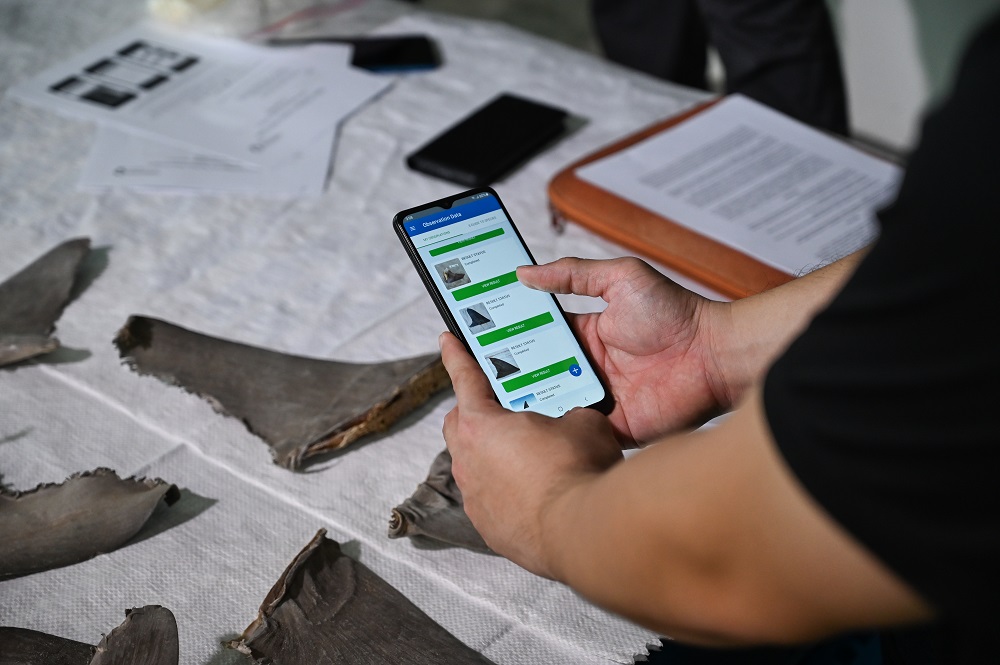
Through the tripartite collaboration, the mobile app was created by a Singapore-led team from Conservation International in consultation with NParks with support from the Microsoft AI for Earth program. The app will be used by officers from the Singapore National Parks Board to combat illegal wildlife trade.
According to the Convention on International Trade in Endangered Species of Wild Fauna and Flora (CITES) Appendix II[1], there are approximately 1,000 species of sharks and rays in the world, of which over 30 species are listed under CITES Appendix II for regulated trade. In Singapore, more than 160,000 kilograms of fins from CITES-listed sharks and rays have entered the borders between 2012 and 2020[2]. The current process requires officers to collect the fins from each shipment for DNA testing to determine its species. This takes an average of up to one week.
Fin Finder optimizes this process by allowing officers to take photos of fins that will be matched against a database of over 15,000 shark and ray fin images via an AI-driven algorithm in the app. In a matter of seconds, the AI-powered app which runs on Microsoft Azure will quickly and accurately provide a visual identification of shark and ray species onsite and empower officers to quickly flag suspicious fin shipments for further DNA testing to stop the illegal trade of shark and ray fins.
Dhanushri Munasinghe, Project Coordinator, Conservation International Singapore said, "Sharks and rays play an important role in maintaining marine ecosystems by keeping other fish populations in check. If stripped from our oceans, there would be dire consequences for ocean health, which would affect us, and our food security. As one of the world's most significant transhipment hubs, Singapore is well positioned to combat illegal wildlife trade. Conservation International, supported by Microsoft and other partners, is excited to support Singapore and the Singapore National Parks Board's leadership in conservation through the creation of Fin Finder".
Dr Adrian Loo, Group Director of Wildlife Management, NParks, said: "When wildlife species are traded illegally, the consequences are far-reaching to many ecosystems, economies and communities around the world. By using advanced technology in the creation of Fin Finder, we can strengthen the enforcement against the illegal trade of sharks and ray species following CITES regulation, and boost Singapore's capabilities in conserving precious biodiversity. The collaboration with Microsoft and Conservation International also reinforce the importance of collective efforts among the public and private sector in combating illegal wildlife trade."
Ivonne Higuero, Secretary-General of CITES, said: "The first step in ensuring international trade complies with CITES regulations comes with the, sometimes difficult, process of identifying the species being traded. Fin Finder is a welcome and innovative addition in the identification of fins and will complement other tools such as iSharkFin. It will give customs and enforcement officers an easy-to-use tool that will contribute to an international trade in CITES-listed species that remains legal, traceable, and sustainable."
Beyond identification of illegally traded shark and ray fins, officers from the Singapore National Parks Board will also use Fin Finder as a single-platform directory of relevant shark and ray species. The app also offers onsite access to reference materials that can be used for validation of CITES-approved permits or shipping documents. This feature is expected to reduce the time and effort spent to on shipment validation, enabling officers to help put a stop to illegal wildlife trade more quickly.
Fin Finder, a complex AI and cloud based mobile application that runs on Microsoft Azure, was created in just nine months to address a pressing need. The project was led by a Singapore-based team that was supported by a highly collaborative consortium of global experts in conservation and technology, with resources, data, and volunteer contributions from Microsoft, Conservation International, the Singapore National Parks Board, Sineurope Pte Ltd, Rumah Foundation, Coastal Natives and Wild Me.
Richard Koh, Chief Technology Officer, Microsoft Singapore, shared, "AI has the potential to solve critical environmental challenges. By taking AI tools out of the lab and putting it into the hands of experts in the field, we can accelerate new solutions for a better world. That's why we are proud to support Fin Finder as it protects global shark and ray populations and preserves our ocean life. By conserving wildlife with help from technology, future generations can enjoy our natural world, as we empower every person and every organization on the planet to achieve more."
Fin Finder is a project in Microsoft AI for Earth, a global program that supports organizations applying responsible AI and cloud computing to address critical environmental issues. The program is part of Microsoft's AI for Good initiative, which aims to solve the world's most challenging problems, from climate change to agriculture, biodiversity and water. To date, AI for Earth has awarded 138 grants to people and businesses in more than 45 countries globally.
Learn more about Fin Finder here and here.
Notes to Editor:
The Convention on International Trade in Endangered Species of Wild Fauna and Flora (CITES) is an international agreement that regulates the international trade of wild animals and plants to ensure that it does not threaten their survival.
About Microsoft
Microsoft (Nasdaq "MSFT" @microsoft) enables digital transformation for the era of an intelligent cloud and an intelligent edge. Its mission is to empower every person and every organization on the planet to achieve more.
#Microsoft
About the National Parks Board
The National Parks Board (NParks) is responsible for enhancing and managing the urban ecosystems of our City in Nature. We are the lead agency for greenery, biodiversity conservation, and wildlife and animal health, welfare and management. We are also working closely with the community to enhance the quality of our living environment.
NParks manages some 400 parks, 3,347 hectares of nature reserves, the Singapore Botanic Gardens, Pulau Ubin and the Sisters' Islands Marine Park. Adding to this is the extensive network of Nature Ways, and the over 300 km Park Connector Network that links major parks, nature areas and residential estates island wide. Every year, we run over 3,500 educational and outreach programmes across our various green spaces.
NParks has developed an urban biodiversity conservation model, which aims to conserve representative ecosystems in land-scarce Singapore. NParks also monitors and coordinates measures to enhance the presence of biodiversity in our urban landscape.
NParks is working closely with partners in the landscape, horticulture, veterinary and animal sectors to increase productivity, and provide training for all levels of the workforce. Enhancing competencies of the industry will support Singapore's vision of being a City in Nature.
For more information, visit www.nparks.gov.sg and www.facebook.com/nparksbuzz
About Conservation International
Conservation International protects nature for the benefit of humanity. Through science, policy, fieldwork, and finance, we spotlight and secure the most important places in nature for the climate, for biodiversity and for people. With offices in 30 countries and projects in more than 100 countries, Conservation International partners with governments, companies, civil society, Indigenous peoples, and local communities to help people and nature thrive together.
In Singapore, Conservation International is a registered charity approved by the Commissioner of Charities bearing Institute of Public Character (IPC) status. Go to Conservation.org for more, and follow our work on Conservation News, Facebook, Twitter, TikTok, Instagram and YouTube.
#ConservationInternational