Older Australians on the tough choices they face as energy costs set to increase
- Written by: Ross Gordon, Professor, Queensland University of Technology
Australian aged care policy[1] and programs[2] are increasingly focused on what’s known as “successful ageing” – helping people feel satisfied, happier and healthier as they age. The goal is not just living longer, but also living better[3].
An essential[4] part of ageing successfully[5] is having enough energy[6] for cooking, heating, cooling, cleaning, and leisure activities.
Being able to use energy in these ways can help[7] prevent ill health[8] or premature death[9], manage illness and chronic disease[10], sustain social relations[11], and support positive mental health[12].
Recent research[13] I led focused on the role domestic energy consumption plays in supporting successful ageing. Over several months, we met with and interviewed 39 householders aged over 60 living in the New South Wales Illawarra region, from varying economic, social and cultural backgrounds, and housing arrangements.
We found clear associations between energy consumption and health and well-being outcomes. Many people told us they avoid using energy – risking even their health and well-being – to reduce costs.
Read more: Australians want insurance against the burden of old age[14]

When you can’t use the clothesline anymore
Carl is a 97-year-old widower who survived the sinking of two battleships during WWII. He now lives alone after his wife died following a long illness.
He recently had a couple of bad falls, which means he can no longer manage to use his clothesline outside to dry his laundry. Carl explains:
I’ve stopped using the outside line because I felt awkward. I’d have to put my stick down and lift things up, then I’d go wobbly. I fell a couple of times […] I have a dryer for emergencies, but I try not to use it because of the electricity costs […] It dries in the kitchen anyway.
To save on energy costs, Carl uses a kitchen pulley system to dry his clothing.
While he is just about able to manage, is he ageing successfully?
Carl’s worries about the cost of energy have led him to risk his health instead of choosing the safer and easier option of the dryer.
Read more: To keep heatwaves at bay, aged care residents deserve better quality homes[15]
Comfort versus cost
We found other participants were rarely putting the heating on. Danielle, a 72-year-old woman who lives with her husband, told us:
My daughter was here last night. She complained about being cold. I gave her a blanket. I offered to put the heater on; I gave her a blanket instead.
Zack, an 89-year-old widower, only offers to put the reverse cycle air conditioner on when he has visitors.
I put it on yesterday afternoon because I knew the daughter was coming. But at times I just got a couple of throw rugs and just sit here and watch the television with that on.
This inability to live at a comfortable temperature was also an issue for Georgie, a 72-year-old woman who lives alone in a small unit. Despite the cold mornings in winter, Georgie has so far avoided buying a reverse cycle air conditioner due to the cost:
It’s really quite cold in here in the winter. In the morning […] I get up really early. I’m up by 5:00 in the morning, and it’s cold. But it [reverse cycle air conditioning] would be expensive to run.
Energy supports health and socialising
Participants also had to consider energy costs associated with essential medical devices such as CPAP machines[16], chairlifts, and blood pressure and blood sugar monitors.
As Daisy, a 72-year-old married woman explains, her husband Joe relies on energy for his CPAP machine:
Really, I mean, that has to come first, the fact that he needs to breathe.
Many older Australians face a difficult choice between using energy to manage their health or face high energy bills they can ill afford.
We also found energy supports well-being; hosting friends for a cup of tea or initiating social connections is tough without energy.
Genevieve, aged 89, explains how her computer helps her keep in touch with family:
There is a little bit of communication between them regularly every time we have a meeting and, you know, little things, so it’s continual. So, I’m doing emails and little reports and little things like that on it.
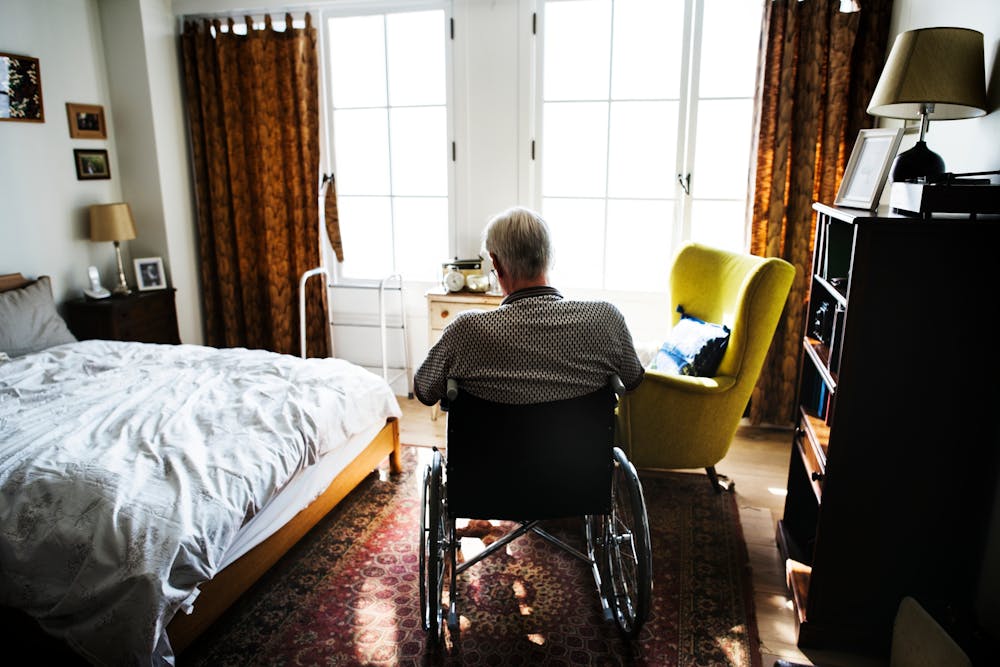 Energy consumption is essential for human health and well-being.
Shutterstock
Energy consumption is essential for human health and well-being.
Shutterstock
Energy policy must consider the needs of older people
Existing Australian energy policy[17] focuses on marketisation[18], productivity, efficiency, security and the clean energy transition, offering little focus on health and well-being.
On the other hand, health policies[19] pay scant attention to the role domestic energy consumption plays.
With energy prices set to increase[20] later this year, billing anxiety[21] lingering[22] and fuel insecurity looming, there’s a risk the health and well-being needs of older Australians are neglected.
What would help?
Our findings underscore the need for health, energy, and housing policy to be integrated to better support older people to age successfully, in homes fit for purpose – without constant worries about high energy bills.
Policies and programs geared towards energy cost savings such as solar installations, insulation and efficient appliances would help. So too would promoting access to higher value energy rebates for those with chronic health conditions.
Health professionals can help by guiding eligible Australians towards their entitlements.
By recognising that energy is a basic human need, essential for health and well-being, we can better support successful ageing.
References
- ^ policy (www.health.gov.au)
- ^ programs (www.health.gov.au)
- ^ living better (www.health.gov.au)
- ^ essential (apps.who.int)
- ^ ageing successfully (linkinghub.elsevier.com)
- ^ enough energy (energyconsumersaustralia.com.au)
- ^ help (www.sciencedirect.com)
- ^ ill health (www.thieme-connect.de)
- ^ premature death (academic.oup.com)
- ^ illness and chronic disease (apps.who.int)
- ^ social relations (www.sciencedirect.com)
- ^ positive mental health (www.who.int)
- ^ Recent research (www.sciencedirect.com)
- ^ Australians want insurance against the burden of old age (theconversation.com)
- ^ To keep heatwaves at bay, aged care residents deserve better quality homes (theconversation.com)
- ^ CPAP machines (www.healthline.com)
- ^ energy policy (www.energy.gov.au)
- ^ marketisation (journals.sagepub.com)
- ^ health policies (www.health.gov.au)
- ^ increase (www.smh.com.au)
- ^ billing anxiety (www.sciencedirect.com)
- ^ lingering (www.tandfonline.com)