Natural systems in Australia are unravelling. If they collapse, human society could too
- Written by: Liz Hanna, Honorary Associate Professor, Australian National University
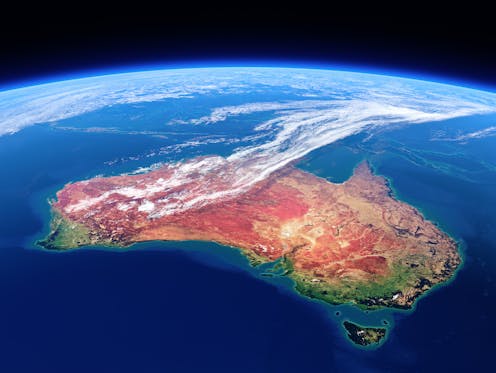
In the long-delayed State of the Environment[1] report released this week, there is one terrifying sentence: “Environmental degradation is now considered a threat to humanity, which could bring about societal collapses.”
Hyperbole? Sadly not.
Climate change has already warmed Australia 1.4℃ and changed rainfall in some regions. Natural ecosystems are already struggling from land clearing, intensive agriculture, soil degradation and poor water management. Climate changes and related sea level rise are making this worse. It’s a mistake to think this won’t affect us.
It can be easy to live in cities and believe you’re somehow walled off from environmental disaster. This is a fiction. Healthy environments provide clean air, clean food, clean water and a safe place to live – all essential to a healthy life.
Our lives will not be easy if we continue eating away at the ecosystems that prop us up. It is no exaggeration to say societal collapse is a possible outcome.
Why is the news so bad?
Every day, we rely on services provided[2] by healthy ecosystems.
The long-delayed report shows the sobering consequences of wilful disregard for environmental protection and focusing on natural resource exploitation. Burning fossil fuels causes climate change and ocean acidification. Land clearing destroys existing ecosystems. Intensive agriculture reduces biodiversity.
Australia’s fragile ecosystems are acutely vulnerable to decades of environmental disregard. Swathes of the continent are increasingly flipping[3] from extreme drought and devastating fires to unprecedented floods under highly variable rainfall patterns. In the last few years, unprecedented bushfires and floods have forced thousands out of their homes. This worsens housing shortages, income insecurity and human health.
Our land temperatures have increased by 1.44°C since 1910[4]. Very high monthly maximum temperatures have increased sixfold[5] over the 60-year period since 1960. These effects have come from a 1.1℃ rise globally. We’re still on track for 3℃[6]. This is highly problematic as humans have limited capacity[7] to withstand heat exposure, and ecosystems suffer in the heat.
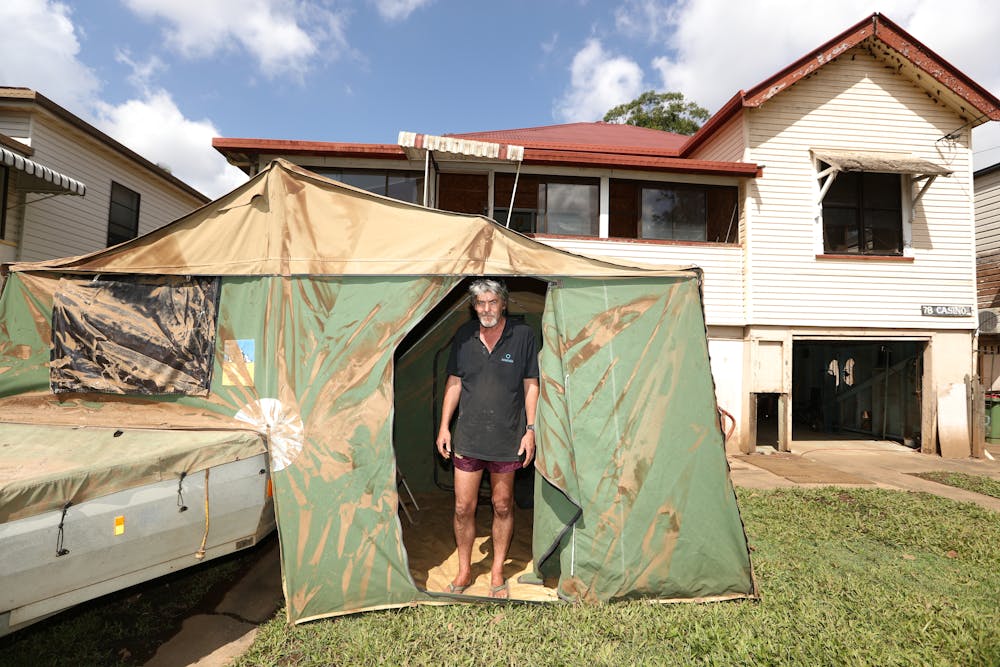 Unprecented floods in Lismore this year left many Australians living in tents and caravans.
Jason O'Brien/AAP
Unprecented floods in Lismore this year left many Australians living in tents and caravans.
Jason O'Brien/AAP
4 things a well-functioning environment does for us
1. Clean food
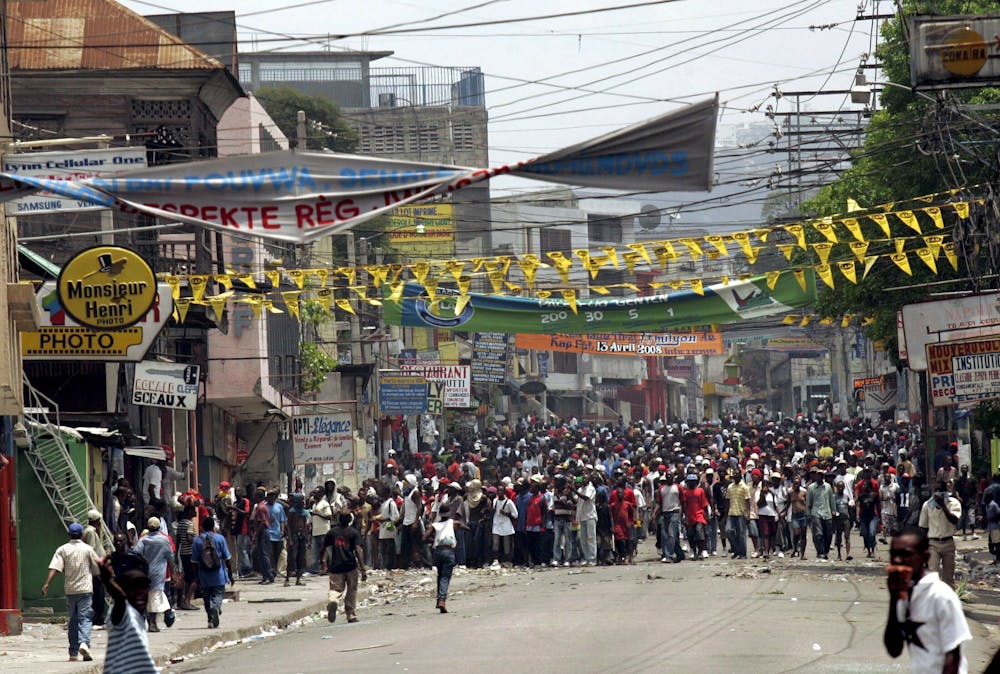
Food systems require intact ecosystems[8] to remain productive, without which crop yields[9] and rural incomes drop. Hunger can ensue. The consequences of food shortages to date in Australia have been small compared with other countries[10]. But with repeated intense droughts, heatwaves, fires and floods these shortages could rapidly escalate. In 2008, we saw riots and social upheaval across multiple continents. A key cause was the global food crisis[11]. This year, food prices have skyrocketed again in the wake of Russia’s invasion[12] of Ukraine.
2. Clean air
Australia has traditionally had some of the cleanest air in the world. But smoke from the megafires over the Black Summer of 2019–2020 [13]caused 417 deaths, as well as thousands of hospital admissions. Health costs were estimated at almost $A2 billion. People lost days at work and at school, and some will have ongoing health problems. Climate change is predicted to steadily worsen our bushfires[14].
3. Adequate clean water
Water is essential for human life, health and activity, and the healthy functioning of ecosystems. As the driest inhabited continent, Australia’s water is one of our most valuable resources. Unfortunately, it is often poorly managed[15]. Many Indigenous communities do not have[16] clean, healthy drinking water, while dozens of non-Indigenous communities had to truck water[17] in during the last drought.
Land clearing disrupts ecosystems, threatens biodiversity and can alter stream flow and water quality. Run-off from agriculture damages aquatic ecosystems and encourages algal blooms and species loss. Again, this isn’t just pain for the environment.
The Murray–Darling Basin is home to more than 2.2 million people and more than four million[18] people depend on these rivers for their water. Already, the basin’s rivers and catchments are rated as poor or very poor.
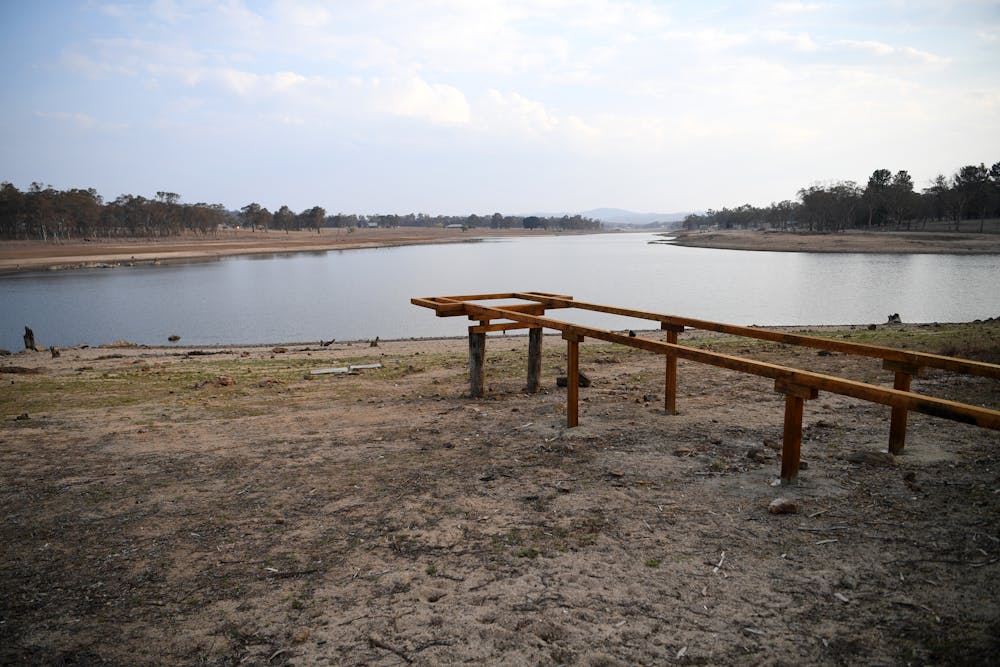 During the last drought, towns like Stanthorpe in Queensland came close to running out of water.
Dan Peled/AAP
During the last drought, towns like Stanthorpe in Queensland came close to running out of water.
Dan Peled/AAP
4. Liveable climate
Climate change is pushing the south-west of Western Australia into a new normal of near-permanent drought[19]. This has already massively reduced[20] the inflows into Perth’s dams, requiring more use of groundwater and desalination. South-eastern Australia is also drying, stressing plants and animals. We’re already seeing agricultural productivity dropping[21]. As parts of Australia dry out, it’s hard to see how drought-prone towns and regions will remain viable.
Read more: This is Australia's most important report on the environment's deteriorating health. We present its grim findings[22]
What will happen if we don’t repair the environment?
Humans can only withstand heat[23] up until a point. After that, exposure to extreme heat leads to damage to tissues and organs, and, eventually damage and death. The same goes for the livestock[24] we rely on, which are at risk of serious health threats from heat. Heat hits weight gain, milk production and reproductive success.
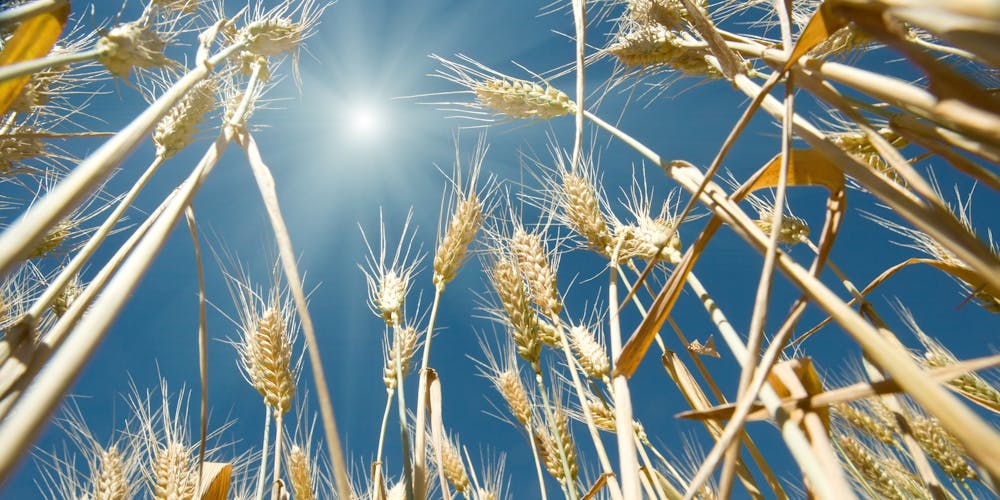 The profitability of crops like wheat has been hit already.
Shutterstock
The profitability of crops like wheat has been hit already.
Shutterstock
The profitability of broadacre crops such as wheat and barley is an estimated 22% less since 2000[25] than it would have been if climate change wasn’t happening. In turn, this is leaving many Australians in rural and regional communities facing worsening incomes and health.
Irrigation water is less reliable, while increases in temperature reduce both quantity and quality of fruit and vegetable crops. The nutritional value[26] of foods also declines under extreme heat.
In short, we can no longer pretend we live in a world walled off from nature. Damaging nature damages humans. Think of the cartoon trope where a character cuts off the tree branch they’re sitting on.
We have created these problems collectively. To avoid social upheaval, we have to repair the damage[27] – together.
The federal government’s newly announced[28] Environmental Protection Agency is a good start. It must be adequately resourced and have powers to enforce compliance.
Beyond that, we urgently need coordinated policies, sound supporting science and effective data systems, prioritised actions, commitment and investment and community support.
Read more: This is Australia's most important report on the environment's deteriorating health. We present its grim findings[29]
References
- ^ State of the Environment (soe.dcceew.gov.au)
- ^ services provided (www.sciencedirect.com)
- ^ increasingly flipping (theconversation.com)
- ^ 1.44°C since 1910 (www.bom.gov.au)
- ^ increased sixfold (www.bom.gov.au)
- ^ on track for 3℃ (www.ipcc.ch)
- ^ humans have limited capacity (www.mdpi.com)
- ^ intact ecosystems (www.fao.org)
- ^ crop yields (www.fao.org)
- ^ other countries (www.wfp.org)
- ^ global food crisis (www.un.org)
- ^ Russia’s invasion (www.wfp.org)
- ^ Black Summer of 2019–2020 (onlinelibrary.wiley.com)
- ^ worsen our bushfires (link.springer.com)
- ^ poorly managed (soe.dcceew.gov.au)
- ^ do not have (soe.dcceew.gov.au)
- ^ truck water (www.abc.net.au)
- ^ four million (www.publish.csiro.au)
- ^ near-permanent drought (soe.dcceew.gov.au)
- ^ massively reduced (www.watercorporation.com.au)
- ^ productivity dropping (www.science.org.au)
- ^ This is Australia's most important report on the environment's deteriorating health. We present its grim findings (theconversation.com)
- ^ withstand heat (www.mdpi.com)
- ^ livestock (www.frontiersin.org)
- ^ 22% less since 2000 (www.science.org.au)
- ^ nutritional value (www.frontiersin.org)
- ^ repair the damage (www.publish.csiro.au)
- ^ newly announced (www.theguardian.com)
- ^ This is Australia's most important report on the environment's deteriorating health. We present its grim findings (theconversation.com)