Testing the stress levels of rescued koalas allows us to tweak their care so more survive in the wild
- Written by: Edward Narayan, Senior Lecturer in Animal Science, The University of Queensland
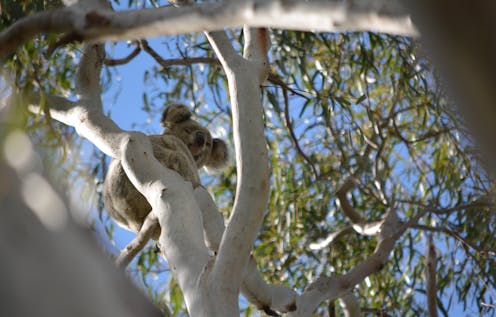
Koalas have adapted to Australia’s rugged terrains. But bushfires[1], land clearing and other extreme threats can mean they suffer prolonged stress – and this has a significant effect[2] on their wellbeing.
Stress can make koalas more vulnerable to disease[3], suppresses their reproduction and can ultimately lead to their death.
My research team, The Stress Lab, has been monitoring koalas and other wildlife across Australia over the past decade. We’ve noted high stress levels in rescued koalas[4], which creates additional challenges for clinical recovery. In fact, chronically stressed and diseased koalas[5] in clinical care are often euthanised, rather than released back in the wild.
In our new paper[6], we gauged the effectiveness of a commercially available stress test kit[7] widely used for more than 100 species worldwide, including humans. We found the test did indeed provided reliable, valuable data on koala stress levels in under two hours.
This is a really positive finding, because it validates an off-the-shelf tool to help save koalas from extinction. We hope our research will help koala rescuers and clinicians better determine whether koalas in care are overly stressed by a particular intervention, and change their care tactic accordingly.
Few rescued koalas survive
Stress isn’t always a bad thing. An animal’s stress physiology helps them survive in the wild, such as by helping them avoid being eaten by predators.
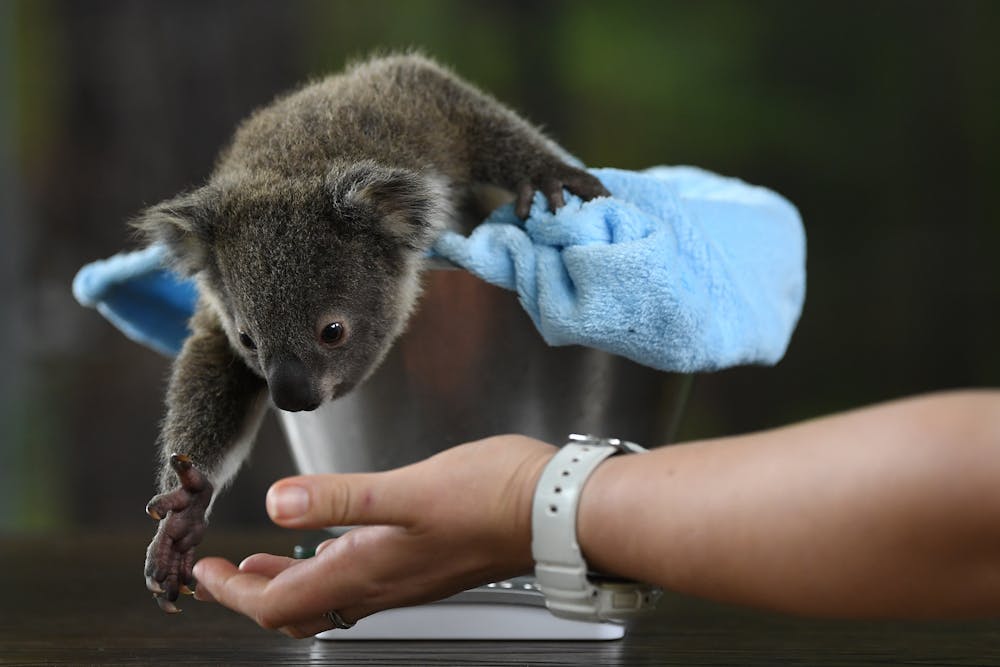
The koala joey’s stress endocrine (hormonal) system is, to a large extent, matured in the womb. While in care, joeys continue to[8] gather vital environmental information, further preparing them for the big outside world.
We can measure stress hormones in their fur and faecal pellets. Stress hormone levels vary between individual koala joeys, signifying that each joey is physiologically and metabolically different.
But too much stress can exacerbate many issues, especially diseases such as chlamydia. This is a huge obstacle for clinicians when koalas enter animal hospitals, and a particularly important challenge to address when so few koalas remain.
Read more: Friday essay: the koala – when it's smart to be slow[9]
Koalas were declared endangered[10] earlier this year and a parliamentary inquiry found that without significant intervention, they could become extinct[11] in New South Wales by 2050.
Each year, especially during summer, hundreds of koalas are rescued across Australia[12], but few survive.
Data from NSW in 2020 showed over 15% of rescued koalas[13] were either euthanised or died in care over a 29 year period. Meanwhile, a 2016 study[14] found over 60% of koalas were euthanised or died in care in southeast Queensland between 2009 and 2014. Only a small proportion are released back to the wild.
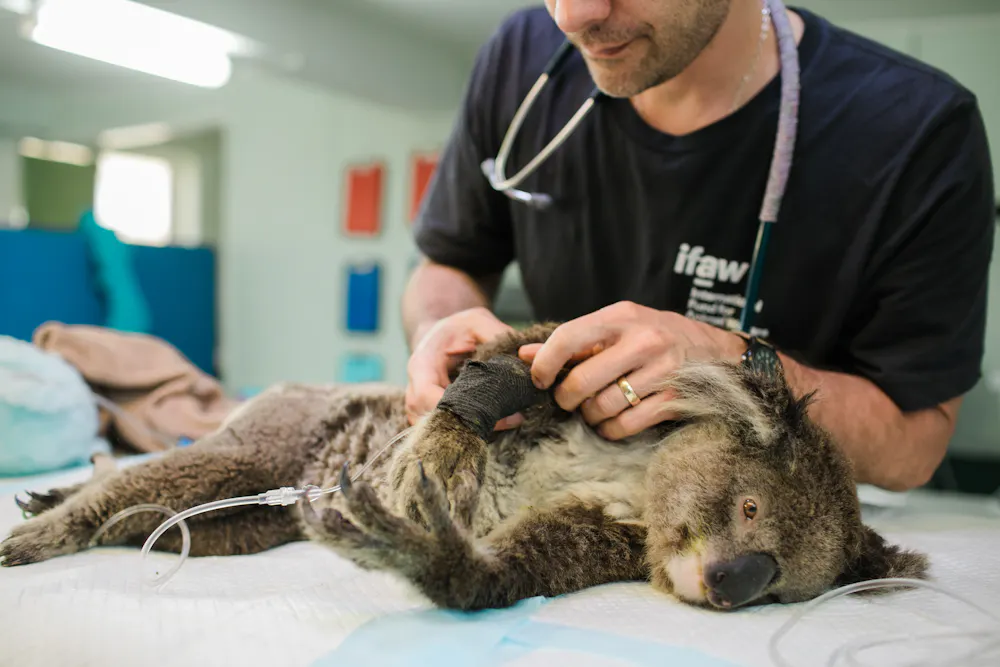 A wildlife carer attends to a koala whose habitats were destroyed in the 2019-2020 bushfires.
AAP Image/Supplied by IFAW
A wildlife carer attends to a koala whose habitats were destroyed in the 2019-2020 bushfires.
AAP Image/Supplied by IFAW
Improving koala care
Our new research aimed to improve clinical care for rescued koalas and their joeys. While the challenge isn’t easy and there’s no quick solution, our findings could significantly boost their welfare and reduce this tragic death rate.
We compared the commercially available cortisol kit with our own, laboriously laboratory-validated in-house stress test[15].
The commercial test[16] works by sending a small faecal pellet to a nearby laboratory, such as within an animal hospital. Once tested, it can provide a result within two hours.
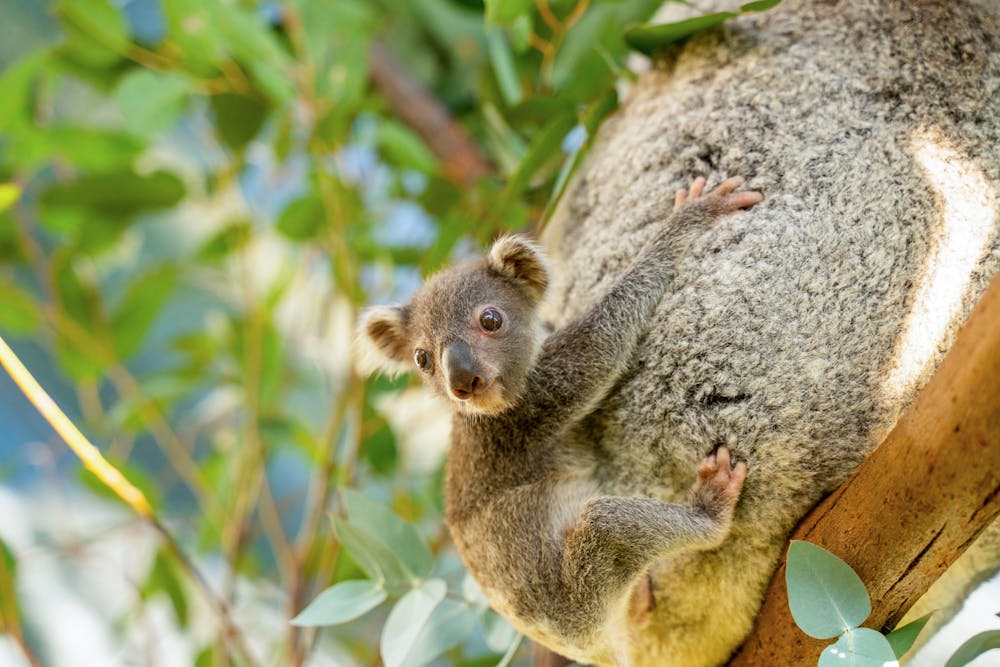 A koala’s stress hormonal system develops in the womb.
AAP Image/Supplied by Wild Life Sydney Zoo
A koala’s stress hormonal system develops in the womb.
AAP Image/Supplied by Wild Life Sydney Zoo
A comparable stress test[17] in humans is a salivary cortisol test for patients with conditions such as fatigue, reduced stress tolerance, depression and sleep disorders.
Corroborating the stress test data with, for instance, prognosis and treatment, offers clinicians critical additional information to understand the stress koalas are experiencing in any given treatment. As a result, clinicians can alter their care.
Stress and cuddling koalas
In any case, a lot of stress in koalas can be reduced by carers understanding wild koala and joey behaviour. For example, it’s important carers do not handle wild koalas unnecessarily.
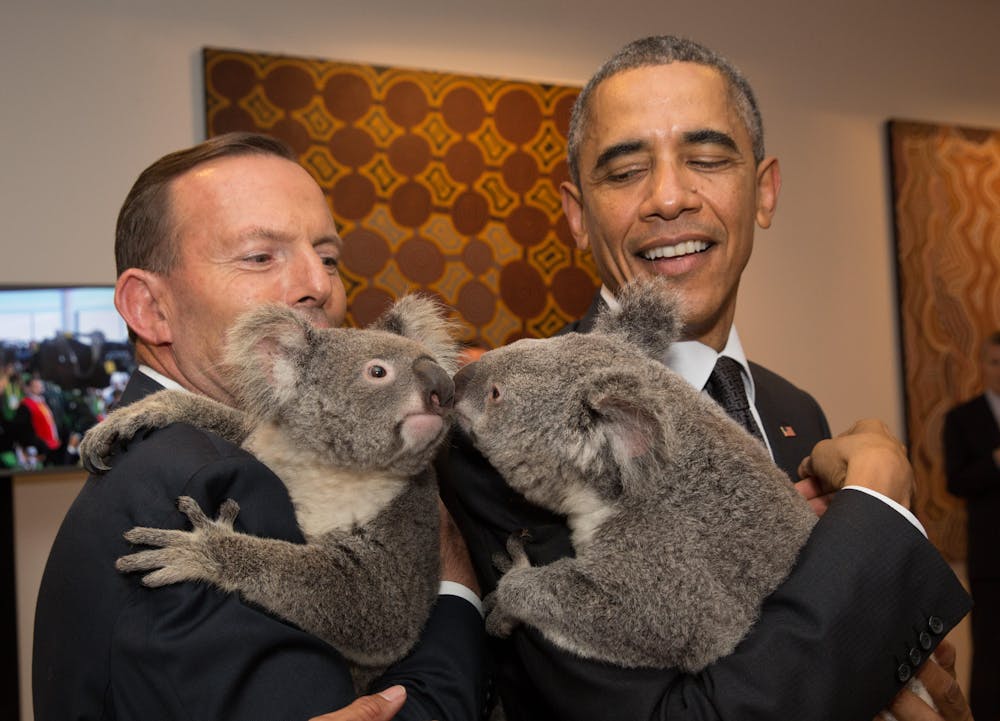 Koalas would prefer you kept your hands to yourself.
AP Photo/G20 Australia, Andrew Taylor
Koalas would prefer you kept your hands to yourself.
AP Photo/G20 Australia, Andrew Taylor
Wild koalas that don’t interact with humans do not like to be handled. Humans are also a source of stress for even well-adapted, captive, zoo koalas.
Koala social behaviour is nothing like humans’. They live in a complex social nexus, and sense their environment through, for instance, their nose[18].
Outside breeding, they don’t need to touch each other, and do not want it from another species. So while they may look cuddly, koalas would prefer you kept your hands to yourself.
We are running against time. Without tackling stress in rescued koalas, the workload burden in clinics[19] will continue to rise. But combining research on stress with education on the needs of wild koalas may kick some conservation goals.
Read more: What does a koala's nose know? A bit about food, and a lot about making friends[20]
References
- ^ bushfires (www.wwf.org.au)
- ^ significant effect (scienceline.org)
- ^ vulnerable to disease (edition.cnn.com)
- ^ rescued koalas (www.mdpi.com)
- ^ chronically stressed and diseased koalas (www.ncbi.nlm.nih.gov)
- ^ new paper (www.sciencedirect.com)
- ^ commercially available stress test kit (www.arborassays.com)
- ^ continue to (koalainfo.com)
- ^ Friday essay: the koala – when it's smart to be slow (theconversation.com)
- ^ endangered (theconversation.com)
- ^ become extinct (www.theguardian.com)
- ^ hundreds of koalas are rescued across Australia (friendsofthekoala.org)
- ^ 15% of rescued koalas (journals.plos.org)
- ^ a 2016 study (www.mdpi.com)
- ^ stress test (www.sciencedirect.com)
- ^ commercial test (www.arborassays.com)
- ^ A comparable stress test (www.news-medical.net)
- ^ their nose (theconversation.com)
- ^ the workload burden in clinics (www.thecourier.com.au)
- ^ What does a koala's nose know? A bit about food, and a lot about making friends (theconversation.com)