Your tendency to overindulge these holidays could relate to your 'eating personality'. Which type are you?
- Written by: Georgie Russell, Senior Lecturer, Institute for Physical Activity and Nutrition (IPAN), Deakin University

Holidays are a time when lots of us tend to overindulge in food and drink, and many people gain weight[1]. Once gained, weight is difficult to lose, and it is likely that much of the holiday weight gain will stay with us[2].
Overindulgence might happen for some people around relaxed and positive family gatherings, especially if COVID has limited travel and family occasions in recent years. For others, holiday gatherings hold the potential for conflict and emotional challenges and that can lead to having more to eat and drink. For some people it will be a sad and lonely period, without family or significant others around, and food might seem comforting.
Holiday gatherings are typically social, featuring foods that are delicious, energy-dense[3] and plentiful. It can be challenging to resist the temptations on offer. Yet some people overindulge, but others do not. Why?
Research tells us how different “eating personalities” influence our tendency to overdo it at the festive buffet.
Eating personalities
The various combinations of our eating behaviours (our usual ways of behaving and thinking about food) interact with each other as “eating personalities”.
Technically, eating personalities (or eating phenotypes[4]) refer to habitual patterns of eating behaviours and thoughts that are the result of interactions[5] between our genetic makeup, individual characteristics and the environment.
Eating personalities affect how we eat (such as how fast), what we eat (healthy or unhealthy foods), how much we eat in different situations, and importantly, why we overeat. Eating personalities are apparent even in infants[6] and continue to evolve and change over our lifetime. They also inform how we select specific weight-loss strategies[7].
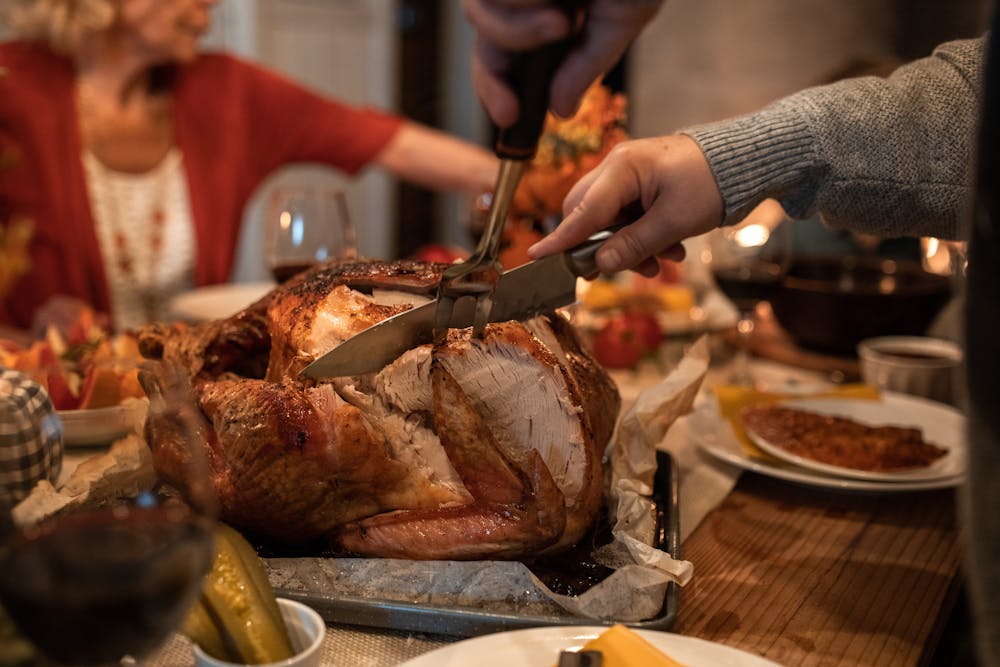
Our eating personalities could include:
how we respond to prompts for overeating, such as the presence of tempting foods or drinks at a buffet lunch, and whether we sometimes lose control
how desirable or appealing or rewarding we find different foods or drinks. It might be a glossy chocolate cake for one person but crispy roast potatoes for another
whether we notice and respond to internal signals of fullness
our tendency to serve large portions and eat until the plate is clean
whether we are able to wait until we start feeling hungry again to begin eating, rather than being guided by the clock or a tempting snack
our capacity to stick to longer-term goals in the presence of tempting foods or drinks
how fast we eat and whether we tend to maintain this pace or slow down during the course of eating
whether we are “emotional eaters[10]” who eat when we feel down or to celebrate success.
Read more: Mukbang, #EatWithMe and eating disorders on TikTok: why online food consumption videos could fuel food fixations[11]
5 ideas for eating according to your personality
Research published[12] this year, based on a randomised clinical trial with 217 adults, indicates that knowing your eating personality can help identify strategies to manage food intakes and weight. A second recent study of 165[13] people supports these findings.
Matching strategies to your particular eating personality traits could help you manage or avoid overindulgence.
1. The overeater
If eating when you’re not actually hungry is a component of your eating personality, improving awareness of hunger versus other triggers for eating when you feel full[14], and developing skills in responding to these cues before deciding to eat, could help[15].
2. The food admirer and impulsive eater
If high attraction to food is a factor, and you have difficulty resisting, acknowledging the attractiveness of food cues and practising using avoidance, distraction or resistance strategies may be effective[16].
3. The emotional eater
People who recognise they eat for emotional reasons might try other strategies[17] such as mindfulness, walking or listening to music to work through their feelings.
4. The plate cleaner
If resisting food is hard once it’s on your plate, choosing smaller portions[18] could help, along with developing awareness of fullness cues, or selecting some food but saving some for later in a separate location. Some young children do this naturally, spreading holiday chocolates or treats over days or weeks.
5. The speed eater
If eating quickly means you tend to eat too much, pay greater attention to your eating speed[19] during the meal and attempt to slow down by interspersing eating with other things like chatting or drinking water.
 Eating patterns and responses are highly individualised.
Unsplash, CC BY[20][21]
Eating patterns and responses are highly individualised.
Unsplash, CC BY[20][21]
Read more: When I work with people with eating disorders, I see many rules around 'good' and 'bad' foods – but eating is never that simple[22]
Acknowledging the challenges
It is a common experience to have tried, and sometimes failed, to temper food intakes during holiday periods and celebrations.
Food is a central part of holiday celebrations – it provides social and cultural connection, and is a source of enjoyment. However, if avoiding overindulgence is a priority for your health and wellbeing[23], it is worth exploring your eating personality. This is a path to a better understanding of overindulgence, and possibly to strategies for moderating what you eat and how much, during the holiday period and beyond.
Read more: Step away from the table – why you keep eating when you're full[24]
References
- ^ gain weight (www.nejm.org)
- ^ stay with us (www.nejm.org)
- ^ energy-dense (www.ncbi.nlm.nih.gov)
- ^ eating phenotypes (pubmed.ncbi.nlm.nih.gov)
- ^ interactions (www.ncbi.nlm.nih.gov)
- ^ even in infants (www.ncbi.nlm.nih.gov)
- ^ weight-loss strategies (papers.ssrn.com)
- ^ Pexels (images.pexels.com)
- ^ CC BY (creativecommons.org)
- ^ emotional eaters (www.ncbi.nlm.nih.gov)
- ^ Mukbang, #EatWithMe and eating disorders on TikTok: why online food consumption videos could fuel food fixations (theconversation.com)
- ^ published (jamanetwork.com)
- ^ study of 165 (papers.ssrn.com)
- ^ when you feel full (uhs.berkeley.edu)
- ^ could help (www.sciencedirect.com)
- ^ may be effective (www.sciencedirect.com)
- ^ other strategies (www.mayoclinic.org)
- ^ smaller portions (www.ncbi.nlm.nih.gov)
- ^ eating speed (pubmed.ncbi.nlm.nih.gov)
- ^ Unsplash (images.unsplash.com)
- ^ CC BY (creativecommons.org)
- ^ When I work with people with eating disorders, I see many rules around 'good' and 'bad' foods – but eating is never that simple (theconversation.com)
- ^ health and wellbeing (theconversation.com)
- ^ Step away from the table – why you keep eating when you're full (theconversation.com)