Ukraine has a mixed record of treating its citizens fairly – that could make it harder for it to maintain peace, once the war ends
- Written by: David Cingranelli, Professor of Political Science and Co-Director of the Human Rights Institute, Binghamton University, State University of New York
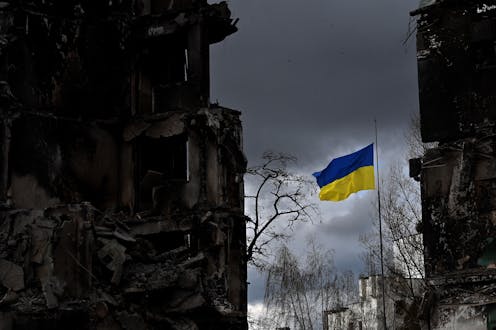
Since Russia invaded Ukraine in February 2022, the dominant Western media narrative has been clear – Russia is the “global villain[1],” and Ukraine a model country victimized by an unjust war. But while the war may be unjust, Ukraine had its share of problems before the conflict with Russia intensified in 2022.
Expert analysis shows that Russia launched an illegal war[2] and has committed the vast majority of the human rights violations [3] in the conflict – such as targeting[4] Ukraine’s civilians.
Ukraine has also allegedly committed [5] war crimes against Russian soldiers during the conflict. Much like Russia, the country has had a mixed record over the past two decades regarding treatment of its citizens.
We are[6] human rights scholars who[7] helped launch the world’s largest quantitative data set – known as CIRIGHTS[8] – to track global human rights in December 2022.
Our analysis shows that while Ukraine’s prewar human rights record is better than Russia’s, it is far below the global average. Along with an ongoing problem of government corruption[9], Ukraine has been cited by Western human rights groups[10] for not prosecuting hate crimes and failing to properly address and respond to gender-based violence.
Ukraine’s human rights record
Ukraine scores in the bottom third of all countries in terms of its human rights record, according to our data. Its score of 42 out of 100 is the same as that of the Central African Republic[12] – a country rife with violence against civilians and political instability[13].
Several factors contributed to this ranking. Ukraine’s military, for example, is known to have[14] indiscriminately used cluster munitions[15] in highly populated areas of Donetsk – in the eastern part of Ukraine that is occupied by a rebel government – in 2014, killing civilians. Ukraine’s police also killed numerous protesters in Kyiv during the 2014 protests[16], which led to EU sanctions.
Other human rights and freedom monitors like the U.S. nonprofit Freedom House have reported more recently that Ukraine was “partly free[17]” when it came to issues like expression, access to information and the press. The country ranked just below the global average, with a score of 59 out of 100.
Other human rights analyses[18] show that the extent to which people in Ukraine are free from government torture and forced labor and enjoy such privileges as freedom of religion and expression has improved since 1991, when the Soviet Union broke up – and Ukraine gained its independence – the country’s ranking[19] still stands below that of Ukraine’s Western European neighbors, like Poland and Hungary.
Unless Ukraine addresses its human rights shortfalls, it could risk not achieving or maintaining lasting peace, no matter when or how the war eventually ends. Research shows[20] that human rights violations create social and political problems[21] that can lead to conflict both within a country and internationally.
How it works
While many human rights measurement projects tend to focus on if and how a government uses physical violence[22] against its people, our project[23] aims to measure all 30[24] internationally recognized human rights[25], including women’s rights and workers’ rights.
We believe that this kind of comprehensive data helps all people have an easy, transparent and reliable way to understand a country’s human rights record.
Hundreds of undergraduate and graduate research assistants, as well as 10 faculty members across different schools, scored each human right for all countries of the world for each year since 1981, based on publicly available research and human rights reports. Each country’s scores in the 2022 report card are based on the most recent year for which scores were available for all human rights scored by the CIRIGHTS data project.
The scorers work independently with a rigorous set of scoring guidelines to consider 25 human rights measures and then work together to resolve differences to agree upon a numerical score.
The December 2022 annual report[26] placed Canada and Sweden at the head of the class, with a 96 each, followed by New Zealand, Norway and Portugal at 94. At the bottom were Iraq, with a score of 12, China at 10, and North Korea and Syria with 6, and Iran at 2. The U.S. was not measured in this report card, since the U.S. government does not report on its own human rights. Subsequent reports will include analysis of the U.S. drawn from other sources.
Ukraine’s recent history of protests
Research has shown[27] that violations of human rights increase the likelihood of violent protests, terrorism and rebellion.
Ukraine, like Russia, has a history of citizens’ fighting corruption through public grievances, which turn into mass protests. Its Orange Revolution[28] in 2004 and 2005, for example, resulted in widespread marches[29] in protest of the alleged fraudulent election of former Ukrainian Prime Minister Viktor Yanukovych, a candidate backed by Russian President Vladimir Putin.
Following a run-off election, Yanukovych’s anti-corruption opponent Viktor Andriyovych Yushchenko was elected in January 2005.
But five years later, Ukranians voted Yanukovych right back into office.
In 2014, mass protests once again emerged in Ukraine after the government abruptly canceled[30] an economic trade and political agreement with the European Union, following Russian pressure. People protested the decision, and Yanukovych’s government passed new laws[31] to limit protests. Emboldened, police violently repressed the demonstrators – leading to more violent and deadly riots[32].
The 2014 and 2015 clashes culminated in the ouster of Yanukovych and the overthrow of the pro-Russian Ukrainian government. The protests also coincided with Russia’s invasion and annexation[33] of Crimea, a Ukrainian peninsula.
Conflict between Russia and Ukraine has since dramatically intensified, spreading across much of Ukraine in 2022. This conflict has only made domestic human rights conditions more important.
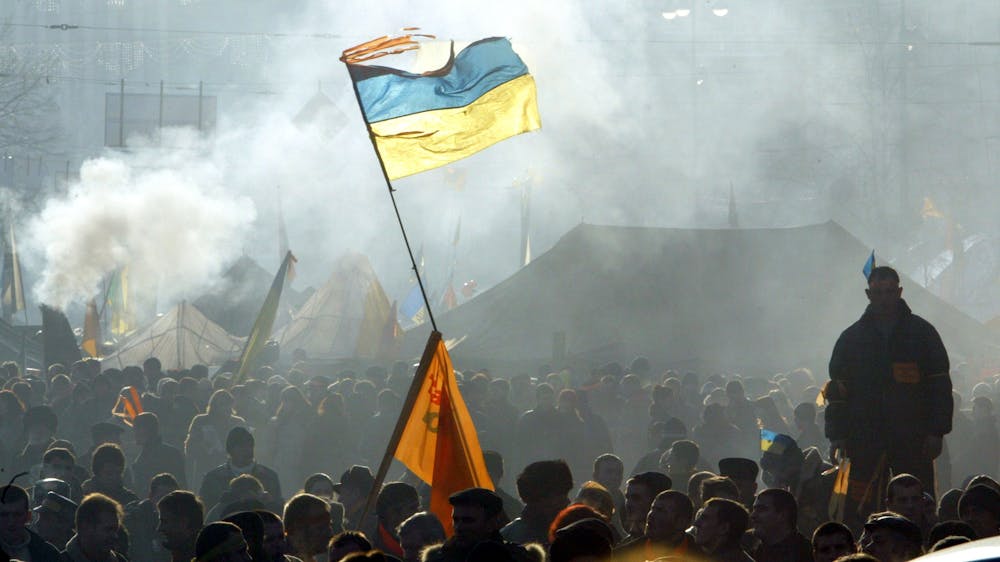 Ukrainians take to the streets during the 2004 Orange Revolution to protest an alleged fraudulent election.
Sergey Supinski/AFP via Getty Images[34]
Ukrainians take to the streets during the 2004 Orange Revolution to protest an alleged fraudulent election.
Sergey Supinski/AFP via Getty Images[34]
Why it matters
Our data shows that Russia ranked as the 12th-worst human rights violator in the world over the past two decades, placing it far below Ukraine. Russia is known to be responsible for thousands of civilian deaths in the eastern Donbas region[35] of Ukraine, as well as the torture[36] and imprisonment of Ukrainian citizens living in Russia.
And our analysis showed that Ukraine’s record for protecting civil and political rights, as well as other kinds of rights, were substantially better than Russia’s in recent years. Our scores are consistent with scores provided by other groups that track human rights[37].
The statistical evidence from all sources shows that both Russia and Ukraine have poor human rights records and are a long way from achieving a passing grade. This means for both countries it will be hard to achieve internal peace after the war ends.
References
- ^ global villain (apnews.com)
- ^ an illegal war (www.foreignaffairs.com)
- ^ human rights violations (theconversation.com)
- ^ such as targeting (www.defense.gov)
- ^ allegedly committed (www.nytimes.com)
- ^ We are (scholar.google.com)
- ^ scholars who (scholar.google.com)
- ^ known as CIRIGHTS (cirights.com)
- ^ government corruption (www.transparency.org)
- ^ human rights groups (www.hrw.org)
- ^ Jeff J Mitchell/Getty Images (media.gettyimages.com)
- ^ Central African Republic (www.ohchr.org)
- ^ political instability (www.cfr.org)
- ^ known to have (www.nytimes.com)
- ^ cluster munitions (www.hrw.org)
- ^ killed numerous protesters in Kyiv during the 2014 protests (www.bbc.com)
- ^ partly free (freedomhouse.org)
- ^ human rights analyses (www.refworld.org)
- ^ the country’s ranking (ourworldindata.org)
- ^ Research shows (www.mdpi.com)
- ^ create social and political problems (doi.org)
- ^ uses physical violence (rightstracker.org)
- ^ our project (cirights.com)
- ^ all 30 (www.amnesty.org)
- ^ recognized human rights (www.un.org)
- ^ December 2022 annual report (cirights.files.wordpress.com)
- ^ Research has shown (www.mdpi.com)
- ^ Orange Revolution (www.britannica.com)
- ^ in widespread marches (www.wilsoncenter.org)
- ^ abruptly canceled (www.theguardian.com)
- ^ passed new laws (www.theguardian.com)
- ^ violent and deadly riots (www.opensocietyfoundations.org)
- ^ Russia’s invasion and annexation (www.britannica.com)
- ^ Sergey Supinski/AFP via Getty Images (media.gettyimages.com)
- ^ Donbas region (www.crisisgroup.org)
- ^ as well as the torture (www.cnbc.com)
- ^ human rights (www.politicalterrorscale.org)