How NZ’s bird of the century contest helps us express ‘ecological grief’
- Written by: Olli Hellmann, Associate Professor of Political Science, University of Waikato
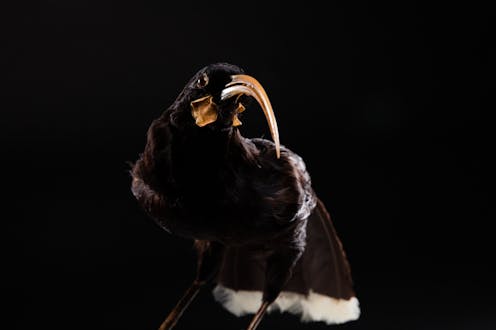
Humans typically reserve their practices of mourning for loved ones. But extending these rituals of grief and loss to non-human animals (and our shared habitats) can also help us appreciate being part of the natural world, not separate from it.
So the recent decision to include extinct species[1] in New Zealand’s Bird of the Year – now Bird of the Century – competition offers an opportunity to grieve in another way. In turn, this may help foster an ethic of care for the environment and greater appreciation of what may yet be saved.
The competition began 18 years ago as a modest campaign by environmental group Forest & Bird to draw attention to native birds, many of which are endangered. It has since grown into a national phenomenon.
Various bird species have their own “campaign managers”, celebrities and politicians publicly endorse their favourite feathered creature, and tens of thousands of votes are cast every year.
The hotly contested election has not been without controversy, either. In 2019, for example, the discovery of hundreds of votes being registered from Russia led to claims of election meddling[2]. In 2021, it made headlines for allowing a native bat to enter – to the dismay of many, the bat won[3].
Last year, the organisers were even threatened with a lawsuit over their refusal to include the extinct huia – a bird last seen in the wild in 1907. A concerned environmentalist wrote to Forest & Bird[4] to say: “We need to be urgently reminded of what we have already lost, if we are to minimise further loss.”
This year’s competition – which opens for voting[5] on October 30 and also marks Forest & Bird’s centenary – answers that call.
Ecological grief
There are five contenders that have died out: the huia, mātuhituhi (bush wren), tutukiwi (South Island snipe), piopio (turnagras) and whēkau (laughing owl). Explaining their rationale, the competition organisers say:
Eighty-two percent of our living native bird species are threatened or at risk of extinction. We cannot let any more end up with the tragic fate of the laughing owl or the huia.
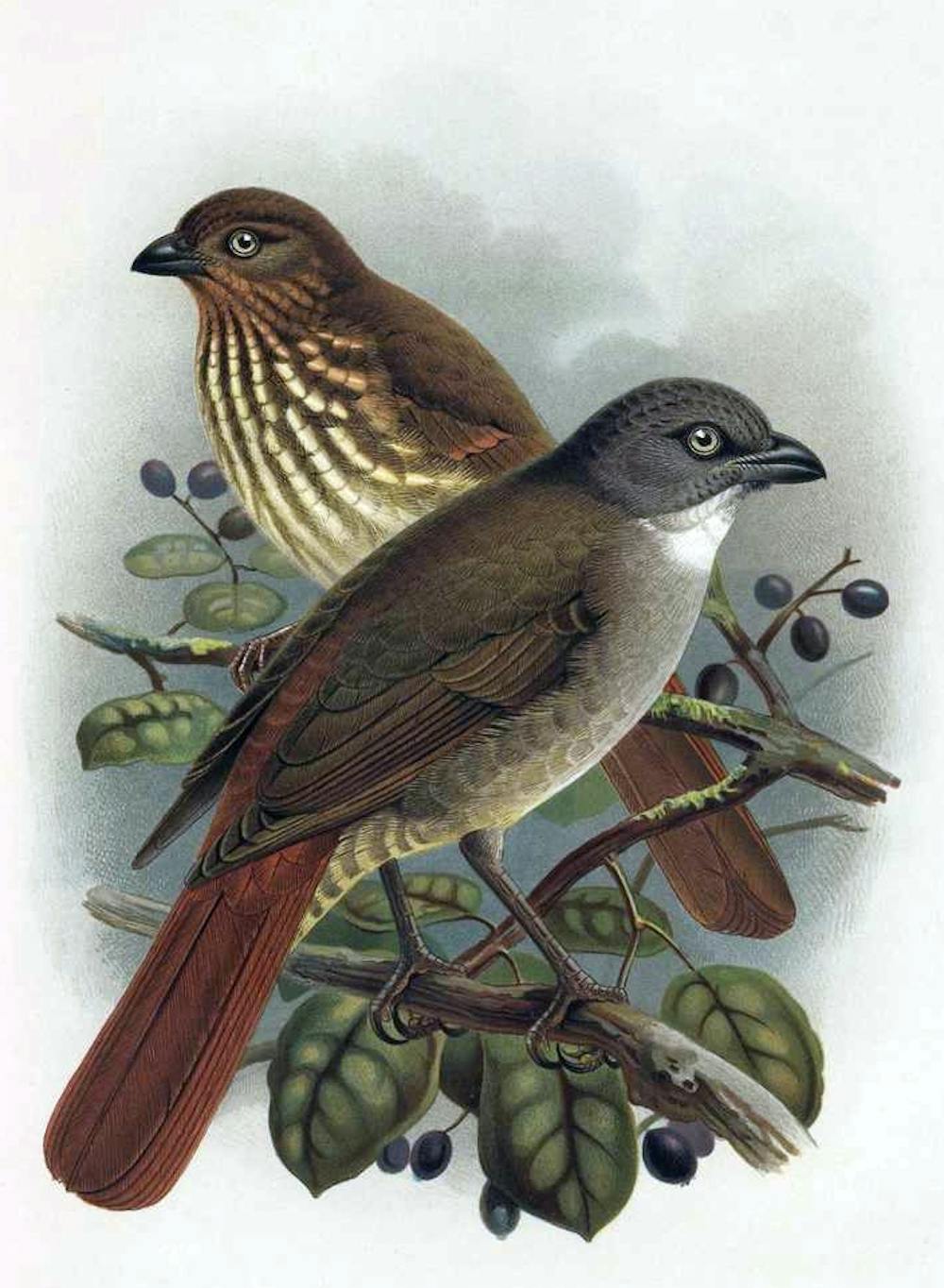
Those five birds represent only a small proportion of the total birdlife lost since first human settlement in Aotearoa around 750 years ago. Fossil record research[7] has concluded that, of the 174 endemic bird species present then, 72 have become extinct.
Adding extinct birds to the Bird of the Year ballot – even if only five – echoes other, similar efforts around the world by people finding new ways to express grief over the loss of nature.
As the global climate crisis rapidly transforms the environment, there have been commemorative practices and rituals[8] more often associated with human loss: funerals and memorial plaques for extinct animal species[9] and vanished glaciers, and monuments to lost landscapes[10].
Read more: Life in maars: why it's worth protecting a spectacular fossil site NZ almost lost to commercial mining interests[11]
Because ecological grief differs from human-centred grief in important ways, it can have an upside. For one, it not only addresses an absence in the present, but it can also encourage pre-emptive action to stop losses yet to come.
Furthermore, ecological grief is often accompanied by feelings of guilt over the harm humans have done to the environment, which can create a strong sense of responsibility for nature, as survey research has shown[12].
Entanglement with nature
Beyond helping prevent further loss of birdlife, commemorating extinct species through the Bird of the Year competition encourages an understanding of the connections that bind all lifeforms together.
Of course, such ideas only seem new from a Western perspective. Despite the violent disruptions of colonisation, Māori and other Indigenous peoples around the world have continued to hold worldviews where biological beings are interlinked in a complex web of life.
Read more: Dead as the moa: oral traditions show that early Māori recognised extinction[13]
Expressions of ecological grieving, such as whakataukī[14] (proverbs) mourning the loss of the moa, play an important role in maintaining these worldviews.
The decision to include extinct species in the Bird of the Year competition will likely cause controversy. But saving the planet means moving away from our usual perspectives and ways of thinking.
References
- ^ include extinct species (www.forestandbird.org.nz)
- ^ claims of election meddling (www.rnz.co.nz)
- ^ the bat won (www.bbc.com)
- ^ wrote to Forest & Bird (www.nzherald.co.nz)
- ^ opens for voting (www.birdoftheyear.org.nz)
- ^ CC BY-SA (creativecommons.org)
- ^ Fossil record research (www.tandfonline.com)
- ^ practices and rituals (www.theguardian.com)
- ^ extinct animal species (www.theguardian.com)
- ^ monuments to lost landscapes (www.newyorker.com)
- ^ Life in maars: why it's worth protecting a spectacular fossil site NZ almost lost to commercial mining interests (theconversation.com)
- ^ survey research has shown (journals.sagepub.com)
- ^ Dead as the moa: oral traditions show that early Māori recognised extinction (theconversation.com)
- ^ whakataukī (link.springer.com)