China says AUKUS is ‘driven by Cold War thinking’. Here are 3 reasons it is so threatened by the pact
- Written by: Benjamin Herscovitch, Research Fellow, School of Regulation and Global Governance, Australian National University
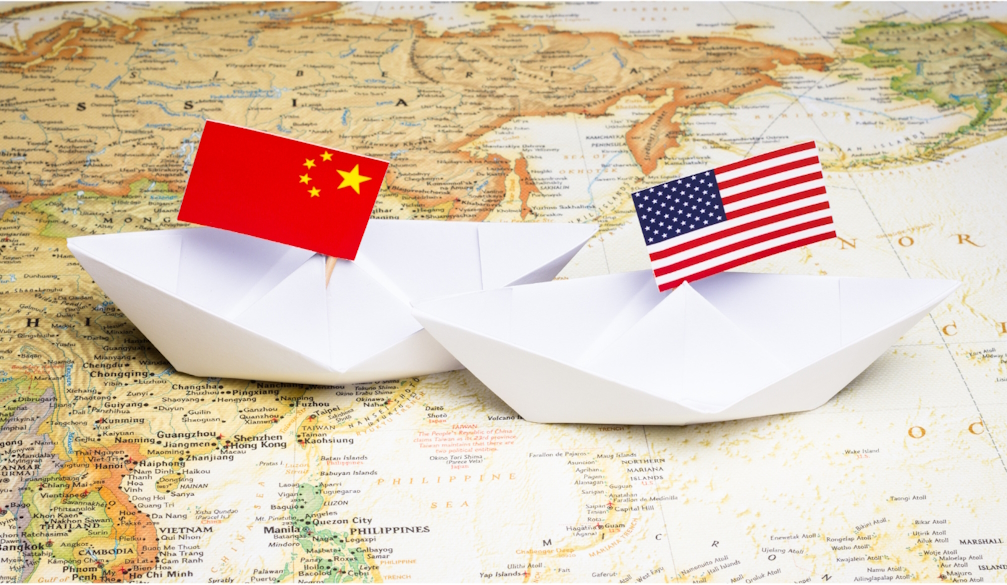
Ever since AUKUS’ public announcement three years ago, China has been staunchly opposed[1] to the partnership.
Beijing has blasted[2] AUKUS diplomatically and mounted a concerted campaign to challenge[3] its legality.
China has said[4] AUKUS is “driven by Cold War thinking,” “fuelling military confrontation,” and creating “additional nuclear proliferation risks”.
The aim of AUKUS[5] is for the Australian navy to acquire nuclear-powered submarines, with Australia, the United Kingdom and the United States also collaborating on other advanced military technologies.
As AUKUS sceptics have argued[6], it’s entirely possible Australia will never get its planned nuclear-powered attack submarines. Any number of factors — from the mercurial whims[7] of a future US president to American shipbuilding constraints[8] — could see the partnership fall over.
However, if the plan succeeds, even in a modified form, it’ll pose a serious military challenge to China. As Kevin Rudd, the former Australian prime minister and current ambassador to the US, said in recent days[9], it’s probably already complicating China’s future geopolitical calculations.
When Chinese military analysts look at the geopolitical picture, they see it more clouded and cluttered than they did before.
Here are three reasons why China finds the pact so threatening.
1. Complicating China’s nuclear strategy
AUKUS submarines will not be armed with nuclear warheads. But these boats could be used to endanger China’s sea-based nuclear weapons[10].
China currently operates six submarines[11] that are both nuclear-powered and capable of launching nuclear weapons. These are based on Hainan Island[12], where they enjoy the protection of hardened bases. They can quickly reach the deep waters[13] of the South China Sea to reduce the likelihood of detection.
Monitoring China’s nuclear weapons-capable submarines as they leave Hainan Island is likely to be among the most important of the many missions for the AUKUS boats.
The increased speed, stealth and endurance[14] of AUKUS submarines mean they’d be able to reach the South China Sea quicker. Once there, they can stay “on station” undetected for much longer.
This peacetime monitoring of China’s nuclear weapons-capable submarines would help build a better understanding of their hydro-acoustic signatures and thereby make these Chinese boats more vulnerable to detection.
Combined with the intelligence gathered by Australia’s regular South China Sea maritime air patrols[15], AUKUS submarines could eventually enhance the ability of the Australian and allied militaries to track and, in conflict scenarios, attack China’s sea-borne nuclear deterrent.
2. A direct military threat to China
Foreign Minister Penny Wong has said[16] in connection to AUKUS that Australia needs to be able to “hold potential adversaries’ forces and infrastructure at risk from a greater distance”.
She might not have mentioned China in the same breath. But like many Australians, military planners in Beijing would imagine China is the most probable target.
Likely armed with Tomahawk cruise missiles[17] capable of striking land, AUKUS submarines could be used to target[18] Chinese military bases and infrastructure in the South China Sea and along the country’s east coast.
AUKUS submarines could also constrict China’s access to the economic inputs essential for warfighting. China remains acutely dependent on Indian Ocean and East Asian shipping lanes for imports of oil[19] and other resources[20]. The ability of AUKUS submarines to travel vast distances without surfacing or refuelling[21] could allow them to threaten China’s vital maritime supply routes in conflict scenarios.
Beijing might even imagine that AUKUS submarines could be used to directly attack Chinese cities in an all-out war[22]. This might seem far-fetched for now, but with military planning often dealing with worst-case scenarios, Chinese defence strategists are probably considering this possibility.
3. Further tipping the regional military balance
Australia is expected to buy[23] at least three – and possibly as many as five – Virginia-class submarines from the United States in the next decade and a half.
These boats might have otherwise gone into the US fleet, meaning that until 2040 and perhaps even beyond[24], the size of the American nuclear-powered submarine force could be smaller than it would have been without AUKUS. And there is still much uncertainty surrounding the political and industrial feasibility[25] of both the planned sale of Virginia-class submarines and the construction of a new AUKUS class of boat.
But assuming it’s successful, AUKUS will substantially increase the total number of nuclear-powered submarines operated by the US and its allies from around the 2040s onwards, potentially giving them a long-term undersea military advantage over China.
In the near term, AUKUS could also enable the deployment of additional high-end US and allied military platforms to the region.
Of course, this isn’t just an AUKUS story. Australia will welcome[26] more US bombers and fighter aircraft in the coming years, and we’ll likely see larger US forces in Japan[27] and the Philippines[28], among other locations.
Still, the establishment of Submarine Rotational Force – West[29] under the AUKUS plan will see a big boost to US and allied military power in the region. It’s expected to involve the rotational presence of one UK and up to four US nuclear-powered submarines in Western Australia from 2027.
This might mean a weakening of China’s relative submarine strength in the region regardless of what happens with the eventual delivery and construction of nuclear-powered submarines for Australia.
This is not a complete account of all the reasons China might have for opposing AUKUS. But these three factors alone suggest the partnership has the potential to pose a significant and long-term military challenge to Beijing.
References
- ^ staunchly opposed (www.theguardian.com)
- ^ blasted (www.fmprc.gov.cn)
- ^ challenge (www.mfa.gov.cn)
- ^ said (www.mfa.gov.cn)
- ^ aim of AUKUS (www.pm.gov.au)
- ^ argued (www.smh.com.au)
- ^ mercurial whims (www.smh.com.au)
- ^ American shipbuilding constraints (www.afr.com)
- ^ said in recent days (www.crikey.com.au)
- ^ nuclear weapons (media.defense.gov)
- ^ six submarines (sgp.fas.org)
- ^ based on Hainan Island (beijing2canberra.substack.com)
- ^ deep waters (www.gebco.net)
- ^ speed, stealth and endurance (www.asa.gov.au)
- ^ maritime air patrols (www.defence.gov.au)
- ^ said (www.foreignminister.gov.au)
- ^ Tomahawk cruise missiles (www.navy.mil)
- ^ target (www.smh.com.au)
- ^ oil (www.eia.gov)
- ^ resources (www.statista.com)
- ^ without surfacing or refuelling (www.asa.gov.au)
- ^ all-out war (www.britannica.com)
- ^ expected to buy (www.asa.gov.au)
- ^ until 2040 and perhaps even beyond (crsreports.congress.gov)
- ^ political and industrial feasibility (www.lowyinstitute.org)
- ^ welcome (www.foreignminister.gov.au)
- ^ Japan (www.navy.mil)
- ^ Philippines (www.defense.gov)
- ^ Submarine Rotational Force – West (www.asa.gov.au)