


As the conflicts in the Middle East dramatically escalate, could Iran acquire a nuclear bomb?
- Written by: Ali Mamouri, Research fellow, Middle East Studies, Deakin University
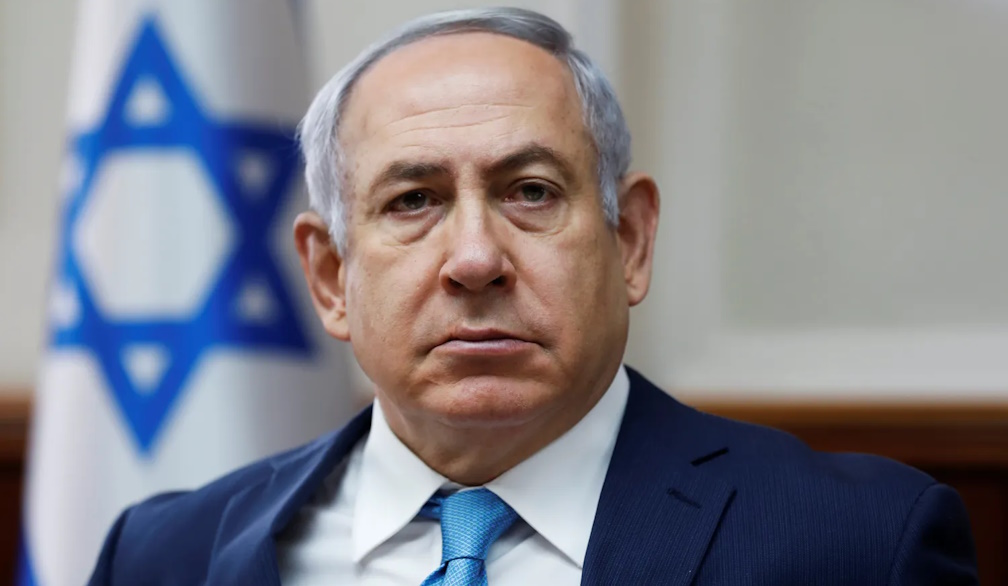
As Israel continues its assault on Hezbollah in Lebanon, Iran appears increasingly backed into a corner.
Israel’s efforts to weaken Iran’s proxy network have focused on a number of objectives: eliminating key Hezbollah leaders[1], destroying their weapons and other military sites, and targeting large numbers of fighters and sympathisers.
Hezbollah has undoubtedly been weakened over the past few weeks, which presents a dilemma for Iran. Could this sustained pressure on its main militant proxy group push Iran towards finally acquiring a nuclear weapon?
Iran’s deterrence strategy
The use of armed proxy networks as a deterrence strategy[2] is a well-known approach employed by countries worldwide.
Iran has successfully adopted this strategy for decades[3], starting with Hezbollah in Lebanon and extending to Palestinian militant groups such as Hamas and Palestinian Islamic Jihad in Gaza, various Iraqi militant factions, and Houthi rebels in Yemen.
This strategy[4] has allowed Iran to project power in the region and counter pressure from the United States, Israel and their allies, while deterring any direct military confrontation from its adversaries.
Both Iran and Israel have until recently appeared reluctant to engage in a full-scale war. Instead, they have adhered to certain rules of engagement in which they apply pressure on each other without escalating to all-out conflict. This is something neither side can afford.
Iran has long avoided direct confrontation with Israel, even when Israel has targeted its groups in Syria[5] and assassinated several Iranian nuclear scientists[6] over the past few decades[7].
Recently, however, this strategy has shifted. Feeling the impact of Israel’s prolonged assaults on its proxy network, Iran has responded by launching two direct missile attacks against Israel[8] in the past six months.
This indicates that as pressure on Iran’s proxies intensifies, Tehran may increasingly resort to alternative strategies to reestablish effective deterrence against Israel and its Western allies.
Some analysts believe[9] Israel may now be gaining what is called “escalation dominance” over Iran. As one group of experts has explained[10], this happens when one combatant escalates a conflict
in ways that will be disadvantageous or costly to the adversary while the adversary cannot do the same in return, either because it has no escalation options or because the available options would not improve the adversary’s situation.
Israeli Prime Minister Benjamin Netanyahu has vowed a “harsh response[11]” to Iran’s latest missile attack[12] against Israel in early October. This could push Iran further towards changing its deterrence strategy, particularly if Israel strikes Iran’s nuclear facilities.
Calls for a new nuclear strategy
With pressure growing on Iran’s leaders, the regime is now openly discussing[13] whether to declare a military nuclear program.
This would represent a major shift in Iranian policy. Iran has long maintained that its nuclear program is strictly for civilian purposes, with no intention of developing a military component. The US and its allies have contested[14] this assertion.
On October 8, the Iranian parliament announced[15] it had received draft legislation for the “expansion of Iran’s nuclear industry”, which will be discussed in parliament. The nature of this expansion is not yet known – it’s unclear whether it will include a military program. However, recent statements by Iranian officials suggest such an agenda.
Kamal Kharrazi, a senior politician and member of the Expediency Discernment Council, a high-ranking administrative assembly appointed by Supreme Leader Ayatollah Ali Khamenei, forewarned of a reconsideration of Iran’s nuclear program. In an interview[16] in May, he said:
Iran’s level of deterrence will be different if the existence of Iran is threatened. We have no decision to produce a nuclear bomb, but we will have to change our nuclear doctrine if such threat occurs.
Calls in Iran for a revision of the country’s defence doctrine are growing louder. This week, nearly 40 lawmakers wrote a letter to the Supreme National Security Council[17], which decides on Iran’s general security policy. They demanded the council reconsider the current nuclear policy, noting that Khamenei’s fatwa forbidding the production of a nuclear bomb could be subject to change due to current developments.
In the same vein, Ayatollah Hassan Khomeini, the grandson of the founder of the Islamic revolution and former Supreme Leader Ruhollah Khomeini, called[18] last week for “enhancing the level of deterrence” against Israel. Iranian media interpreted this as referring to nuclear weapons.
There have also been reports speculating that an earthquake in Iran last week could actually have been a nuclear bomb test[19].
However, the US has said[20] there is no evidence yet[21] that Iran is moving towards building a nuclear weapon.
Revived nuclear deal increasingly unlikely
In 2015, Iran signed the Joint Comprehensive Plan of Action (JCPOA) with the five permanent members of the UN Security Council, plus Germany and the European Union. This deal allowed it to pursue a civilian nuclear program with certain restrictions on its critical nuclear facilities. In exchange, the US and its allies agreed to lift sanctions on Iran.
However, the US withdrew from the deal under then president Donald Trump in 2018 and reimposed sanctions on Iran. Since then, Iran has barred[22] several international inspectors from monitoring some of its nuclear sites.
It is now believed[23] to be just weeks away[24] from producing enough weapons-grade material to build a bomb.
Efforts to revive the nuclear negotiations have not gone far in recent years, though Iran’s new president, Masoud Pezeshkian, has suggested[25] his government would be willing to engage again with the West and resume the talks.
Yet, if Israel carries out an attack on Iran’s nuclear facilities[26] in retaliation for last week’s missile attack, as has been speculated, Iran may deem it necessary to opt for the weaponisation of its nuclear program instead.
If Iran declares a military nuclear program, it would do so with the expressed intention of restoring a deterrence balance with Israel that could prevent a full-scale war. Israel is believed[27] to possess nuclear weapons, but has never confirmed[28] it.
However, such a decision is likely to have dire implications for both Iran and the region.
It would undoubtedly lead to more international pressure and US sanctions on Iran, making it even more isolated. And it could spark a nuclear arms race in the region, as Saudi Arabia has already pledged[29] to pursue a nuclear arsenal if Iran develops one.
References
- ^ eliminating key Hezbollah leaders (www.abc.net.au)
- ^ armed proxy networks as a deterrence strategy (esoc.princeton.edu)
- ^ adopted this strategy for decades (doi.org)
- ^ strategy (carnegieendowment.org)
- ^ groups in Syria (www.aa.com.tr)
- ^ Iranian nuclear scientists (foreignpolicy.com)
- ^ past few decades (www.nytimes.com)
- ^ launching two direct missile attacks against Israel (theconversation.com)
- ^ believe (www.washingtonpost.com)
- ^ explained (www.jstor.org)
- ^ harsh response (www.timesofisrael.com)
- ^ latest missile attack (www.bbc.com)
- ^ openly discussing (www.newsweek.com)
- ^ contested (www.state.gov)
- ^ announced (www.irna.ir)
- ^ interview (www.bbc.com)
- ^ letter to the Supreme National Security Council (www.isna.ir)
- ^ called (www.newsweek.com)
- ^ could actually have been a nuclear bomb test (www.euronews.com)
- ^ has said (www.nbcnews.com)
- ^ no evidence yet (www.ft.com)
- ^ barred (apnews.com)
- ^ believed (www.ft.com)
- ^ weeks away (www.nbcnews.com)
- ^ suggested (donya-e-eqtesad.com)
- ^ attack on Iran’s nuclear facilities (www.nytimes.com)
- ^ believed (www.icanw.org)
- ^ never confirmed (www.timesofisrael.com)
- ^ pledged (amp.theguardian.com)










