How and why the US Senate could thwart Trump’s cabinet picks
- Written by: Katie Pruszynski, PhD Candidate, Department of Politics and International Relations, University of Sheffield
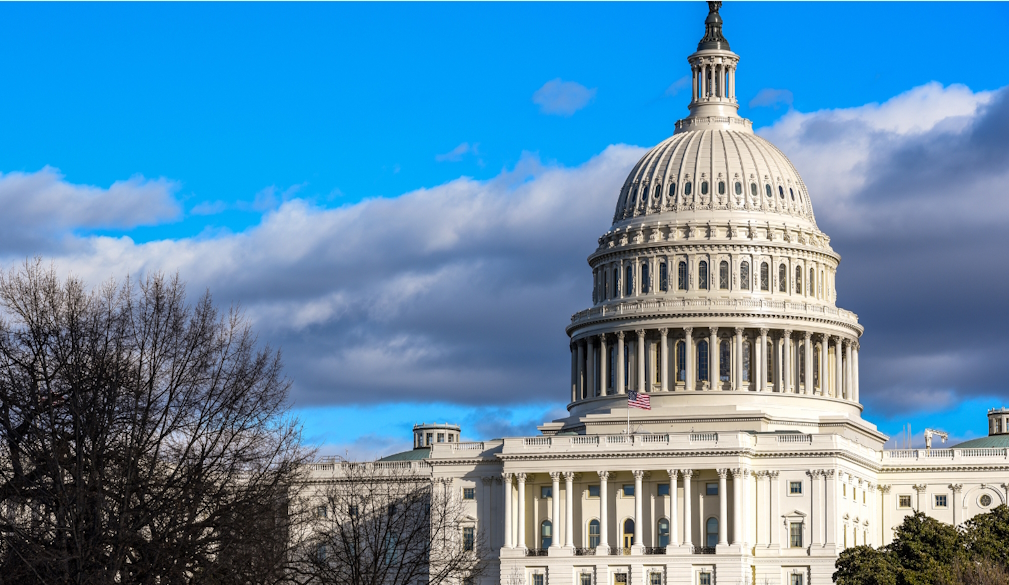
The US government, on the the ignominious anniversary of the seditious coup attempt on January 6 2021, met this week to ratify Donald Trump’s very real victory in the 2024 presidential election. They are shortly about to fulfil another key democratic function that ushers in a new presidential administration.
Article II, section II[1] of the US Constitution confers power on the president to appoint cabinet members. But these must be approved by a two-thirds majority of the Senate.
Historically[2], the process has been a chance for senators to scrutinise the record and character of the nominees through a series of confirmation hearings. This has largely been a dry, predictable endeavour.
Recently though, as with virtually all aspects of US democratic governance, the process has become increasingly partisan and cantankerous[3]. In the Senate’s history[4], only 28 nominees (or near-nominees) have failed. Nine of these were rejected by the Senate, the remaining 19 withdrew from consideration. Of the 28, more than half (16) occurred between the start of the Clinton presidency (1992-2000) to the present day.
The timings are not a coincidence. Clinton’s presidency ushered in our now familiar use of partisan obstructionism as a political tactic, spearheaded by the then speaker of the House of Representatives, Newt Gingrich[5]. The Senate confirmation process offered an opportunity to frustrate the agenda of a new administration before it had begun and deliver a humiliating blow to a new president on national TV.
Most recently, Joe Biden’s nominee for director of the Office of Management and Budget, Neera Tanden[6], was forced to withdraw in 2021. She had faced bruising hearings in which she was castigated by senators from both parties[7] for her partisan and personal attacks against (overwhelmingly) Republican politicians on social media, which she had attempted to delete. Many at the time enquired why Biden would proceed with such a controversial choice[8].
No such qualms are reflected in Trump’s nominees[9] for his second term cabinet. The list is remarkable in many ways, but two key themes stand out. The first is the jettisoning of any semblance of deference being paid to the Republican establishment. The second, closely tied to the first, is the way Trump is prizing loyalty above almost all else.
Trump’s first cabinet reflected, by his standards, a timidity about ostracising the Republican old guard. Rex Tillerson[10], John Kelly[11] and Jeff Sessions[12] were choices designed to reassure a wary Republican party that their firebrand president was willing to learn from their wisdom and experience.
Those days are evidently well behind us. Frustrated by what he felt was his first cabinet’s lack of devotion to his own fortunes, Trump’s 2025 nominees are a pointed message to those outside his inner circle: this is his presidency and he will conduct it as he sees fit. The list ranges from the unqualified to the unfit, with Senator Marco Rubio[13] one of very few exceptions whose CV befits a cabinet position.
Nominees have caused moral outrage: Congressman Matt Gaetz withdrew[14] in November 2024, saying that the allegations of sexual misconduct and illicit drug use making the news were “unfairly becoming a distraction”.
Others raised professional alarms: former Democratic congresswoman Tulsi Gabbard[15], who joined the Republican party in 2024, has been roundly criticised for her views on, and visit to, recently deposed Syrian dictator Bashar al-Assad, as well as her alleged links to Russia and Putin.
She is Trump’s choice for the highly sensitive role of the director of national intelligence. Robert F. Kennedy Jr’s nomination as secretary of health and human services sees a committed anti-vaxxer[16] potentially in charge of US public health programmes. What binds them together is their declared commitment to Team Trump.
In the coming weeks, 47 Democratic senators will have a clear choice ahead in how to use their political capital with this norm-shredding proposed cabinet. Some have already indicated a willingness[17] towards working with the declared nominees. This has angered other Democrats[18] who believe that opposing the most extreme candidates isn’t simply a political tactic, but a moral imperative.
Discourse focuses on which nominees they could confirm to buy themselves the ability to reject the ones that really worry them. A two-thirds majority of the Senate is needed to confirm a cabinet appointment, so only a relatively small number of Democrat senators need to vote against a nominee for it to fail. There will be enormous pressure on them to do so.
It may not matter. Trump has shown himself willing to throw the rulebook out of the window[19]. If his nominees fail, he can return with a less confrontational roster, placing more acceptable figures in those key cabinet positions while working from within the White House to enact his agenda through the creation of quasi-government departments or positions.
His new Department of Government Efficiency[20], co-directed by Elon Musk and Vivek Ramaswamy, is an advisory commission without the powers of a federal government department. Nonetheless it has already made waves, largely through Musk’s online influence, very nearly triggering a government shutdown[21] because he opposed the proposed spending bill.
There’s little reason to think that Trump would feel abashed in undermining the confirmed heads of government departments through this new shadow government structure. The coming confirmation process is thus as much a test of the democratic weight of the Senate in the face of an untethered second Trump presidency as it is of those he has chosen to help him enact it.
References
- ^ Article II, section II (constitution.congress.gov)
- ^ Historically (www.ucpress.edu)
- ^ increasingly partisan and cantankerous (www.vox.com)
- ^ In the Senate’s history (en.wikipedia.org)
- ^ Newt Gingrich (academic.oup.com)
- ^ Neera Tanden (en.wikipedia.org)
- ^ castigated by senators from both parties (www.nytimes.com)
- ^ such a controversial choice (www.politico.com)
- ^ Trump’s nominees (edition.cnn.com)
- ^ Rex Tillerson (history.state.gov)
- ^ John Kelly (www.theguardian.com)
- ^ Jeff Sessions (www.justice.gov)
- ^ Senator Marco Rubio (apnews.com)
- ^ Matt Gaetz withdrew (www.bbc.co.uk)
- ^ Tulsi Gabbard (www.independent.co.uk)
- ^ anti-vaxxer (www.bbc.co.uk)
- ^ willingness (thehill.com)
- ^ other Democrats (x.com)
- ^ rulebook out of the window (www.rollingstone.com)
- ^ Department of Government Efficiency (en.wikipedia.org)
- ^ very nearly triggering a government shutdown (edition.cnn.com)
Read more https://theconversation.com/how-and-why-the-us-senate-could-thwart-trumps-cabinet-picks-246717