Whether we carve out an exemption or not, Trump’s latest tariffs will still hit Australia
- Written by: Scott French, Senior Lecturer in Economics, UNSW Sydney
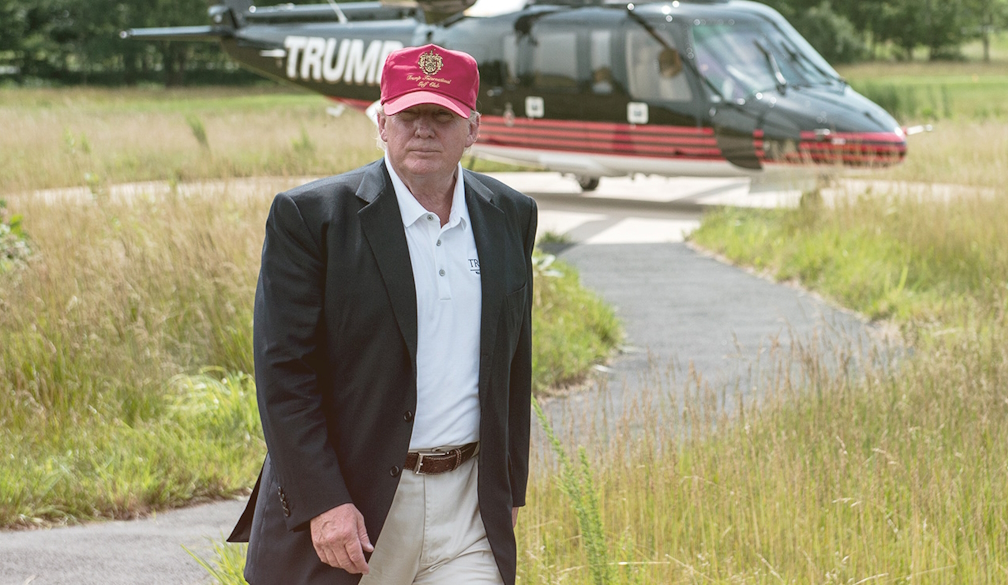
US President Donald Trump and Prime Minister Anthony Albanese have stated[1] an exemption for Australia from Trump’s executive order placing 25% tariffs on all steel and aluminium imported into the US is “under consideration”. But prospects remain uncertain.
Albanese would do well to secure an exemption using similar arguments[2] as then-Prime Minister Malcolm Turnbull did in 2018.
If Australia cannot obtain a carve-out from the tariffs, the main group affected will be the Australian producers of steel and aluminium. But the size of the hit they will take is difficult to predict.
Regardless of whether Australia gets an exemption, the world economy – and Australians – will be affected by Trump’s latest round of tariffs.
Producers will be hit
If ultimately imposed by the US, these tariffs will make steel and aluminium produced in Australia more expensive for US manufacturers relative to domestically produced alternatives. This will certainly result in reduced demand for the Australian products.
However, three factors will help limit the effects:
1. The price of metals produced in the US will rise
It will take time to ramp up US production to fill the gap of reduced imports, and the extra production will likely come from less efficient[3] domestic producers. This means that US manufacturers will continue to buy imported metals, despite the higher prices.
2. The US is not a huge market for Australian steel and aluminium
Australia produced A$113 billion of primary and fabricated metal in the 2022-23 financial year, according to the ABS[4].
By comparison, less than $1 billion of steel and aluminium was exported to the US in 2023, according to data from UN Comtrade[5], consisting of about $500 million of aluminium and less then $400 million of steel. Exports to the US account for about 10% of Australia’s total exports of these metals.
3. Major markets
If major markets such as China and the European Union enact retaliatory tariffs on US metals, this could make Australian metals more competitive in these markets.
Some stand to benefit
While workers in Australian steel and aluminium plants will be watching the news with trepidation, some of Australia’s biggest manufacturing companies may be less concerned.
For example, BlueScope Steel has significant US steel operations, and saw its share price increase[7] on news of the tariffs.
US-based Alcoa, which owns alumina refineries[8] in Western Australia and an aluminium smelter in Victoria, will also expect to see its US operations benefit.
And Rio Tinto will be most concerned about its substantial Canadian operations. Its Canadian hub is responsible for close to half of its global aluminium production[9].
Demand for iron ore could fall
The US tariffs will also have wider ranging effects on the Australian economy, regardless of whether Australia’s products are directly targeted.
While aluminium is Australia’s top manufacturing export[10], it still makes up only about 1% of total exports, and steel makes up less than half that[11].
Iron ore, by contrast, makes up more than 20% of Australia’s exports, with aluminium ores making up an additional 1.5%.
This means the effect of the tariffs on demand for the raw materials to make steel and aluminium may have the largest detrimental effect on the Australian economy.
Because the tariffs will make steel and aluminium more expensive to US manufacturers, they will seek to reduce their use of them. This means global demand for the metals, and the ores used to produce them, will decline.
Investors appear to be betting on this, with shares of Australian miners like Rio Tinto[13] and BHP[14] falling since Trump announced the tariffs.
Imported goods will become more expensive
Many of the things Australians buy are likely to get more expensive.
All US products that use steel and aluminium at any stage of the production process will also become more expensive. Tariffs will raise the cost of steel and aluminium for US manufacturers, both directly and by reducing overall productivity[15] in the US.
About 11% of Australia’s imports[16] come from the US. And about half of this consists of machinery, vehicles, aircraft, and medical instruments, which typically contain steel and aluminium. Further, these goods are used by manufacturers around the world to produce and transport many of the other things Australians buy.
References
- ^ stated (theconversation.com)
- ^ similar arguments (www.smh.com.au)
- ^ less efficient (theconversation.com)
- ^ ABS (www.abs.gov.au)
- ^ from UN Comtrade (comtradeplus.un.org)
- ^ Fabian Strauch/EPA (photos.aap.com.au)
- ^ share price increase (www.abc.net.au)
- ^ alumina refineries (www.theaustralian.com.au)
- ^ half of its global aluminium production (www.riotinto.com)
- ^ top manufacturing export (www.dfat.gov.au)
- ^ less than half that (comtradeplus.un.org)
- ^ BHP (photos.aap.com.au)
- ^ Rio Tinto (www.asx.com.au)
- ^ BHP (www.asx.com.au)
- ^ both directly and by reducing overall productivity (theconversation.com)
- ^ 11% of Australia’s imports (comtradeplus.un.org)