Government to introduce new powers to fight money laundering, terrorism financing, crypto crime
- Written by: Michelle Grattan, Professorial Fellow, University of Canberra
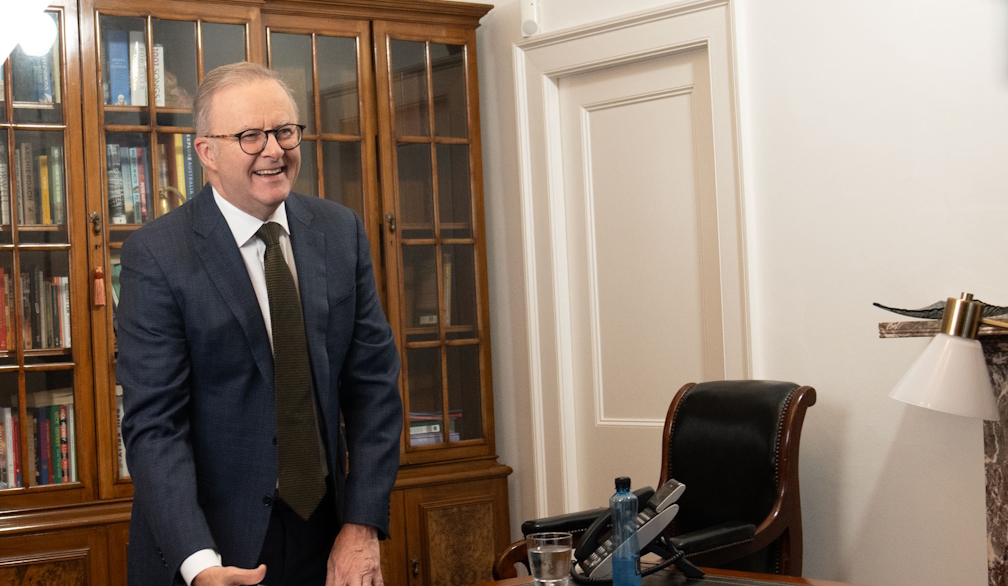
Home Affairs Minister Tony Burke on Thursday will outline new powers to combat money laundering, terrorism financing and crime risks associated with cryptocurrency and Crypto ATMs.
AUSTRAC, Australia’s anti-money laundering and counter-terrorism financing regulator, estimates 85% of the transactions sent by the top users of Crypto ATMs comes from the proceeds of scams or money-mule activity.
It has found that where victims are stopped from transactions by other financial institutions, the criminals then move to Crypto ATMs (CATMs).
Almost all (99%) of CATM transactions are estimated to be cash deposits, which are high risk for money laundering, the government says.
Under amendments Burke will introduce, the AUSTRAC CEO will be given the power to restrict or prohibit high-risk products, services or delivery channels, including Crypto ATMs.
There will also be new powers to disrupt the use of mule accounts by money launderers. This is where criminals take over legitimate bank accounts, which they often buy or rent from from international students or other visa holders.
The Home Affairs Department’s Visa Entitlement Verification Online Terms and Conditions will be changed to give financial institutions ongoing access to visa information, so they can determine people’s residential status, thus helping close mule accounts.
Burke said: “There are significant money laundering, terrorism financing and serious crime risks associated with Crypto ATMs.
"Australia has the highest number of CATMs in the region, and the third highest in the world. Three years ago there were only 200 in operation, six years ago there were 23.”
In June AUSTRAC put the number of Crypto ATMs at more than 1800.
Burke said that under the changes, “if a bank suspects mule activity, they will be able to check visa-holder status and use this to inform decisions about whether the account is being used by criminals”. This was “about equipping banks with the right information to help them manage risk, and prevent their accounts falling into the hands of criminals.”
AUSTRAC says on its website that its cryptocurrency taskforce had found “a hidden world of scams and dodgy dealings”.
It says the taskforce has refused to renew the registration of one crypto ATM provider; another has withdrawn registration, and a third has paused operation.
“In July, a joint law enforcement operation identified 90 victims of crimes including money mule activity and scams targeting older Australians. That same month, we introduced minimum standards for crypto ATM providers,” AUSTRAC says.
In June the AUSTRAC CEO Brendan Thomas said that people in the 60 to 70 age group were the most prolific users of Crypto ATMs in Australia.
“It is a huge concern that people in this demographic are over represented as customers using cash to purchase cryptocurrency and, as evidence suggests, that a large number of 60-70 year old users are victims of scam activity,” he said.
“Crypto can be a high risk investment, but people who consider and are willing to accept those risks may find them a convenient vehicle for investment.
"However, I would warn anybody who is asked to use one of these machines to send funds to someone to stop and think twice, as once your money is gone it is almost impossible for authorities to retrieve it.”