Google AI
Brisbane News
The Times Australia

Times Media Advertising

What effect do residential short-term rentals have on lifestyle and the housing market in Brisbane?

  • Written by: The Times
Short terms rentals to be banned in parts of Brisbane

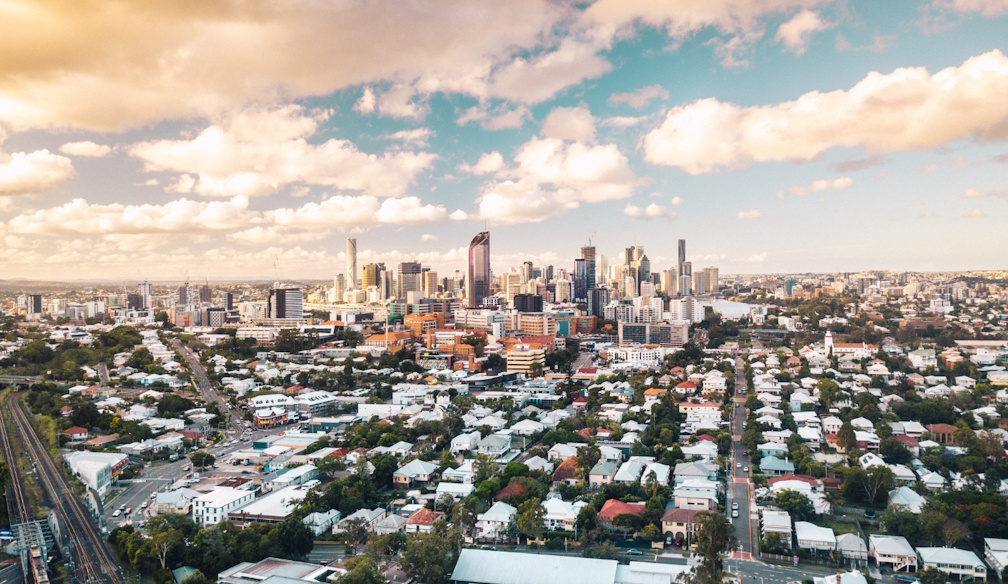
Walk through inner-Brisbane suburbs like Fortitude Valley, New Farm, West End or Teneriffe and it’s no longer unusual to see key-safe boxes on fences, rolling suitcases on footpaths mid-week, or apartment foyers that feel more like hotel lobbies than residential buildings.

Short-term rentals — via platforms such as Airbnb, Stayz and Booking.com — have become a permanent feature of Brisbane’s housing landscape. But as the city grows, prepares for the 2032 Olympics, and struggles with housing affordability, the impact of short-term letting is becoming harder to ignore.

The debate is no longer about whether short-term rentals exist. It’s about what they are doing to Brisbane’s lifestyle, neighbourhoods, and already-tight housing market — and whether the balance has tipped too far.

From spare room to industry: how short-term rentals took hold in Brisbane

Short-term rentals began as a relatively benign idea: homeowners renting out a spare room, or letting their home while away. In Brisbane, this initially aligned well with:

  • A growing domestic tourism market

  • Business travel linked to mining, infrastructure and government

  • Events, festivals and interstate visitors avoiding hotel prices

But over time, the model professionalised.

Entire apartments and houses — not spare rooms — became dedicated short-stay properties. Some investors now own multiple listings. In certain buildings and streets, short-term guests cycle through weekly while permanent residents quietly move out.

What was once “sharing” has, in many cases, become a parallel accommodation industry embedded inside residential suburbs.

The housing market impact: fewer long-term rentals, higher pressure

Brisbane’s housing market has tightened dramatically over the past decade, accelerated by interstate migration, population growth, and construction constraints.

Short-term rentals interact with this pressure in several key ways.

1. They remove homes from the long-term rental pool

Every dwelling used for short-term accommodation is one less home available for long-term tenants.

In suburbs close to the CBD, hospitals, universities, and entertainment precincts, short-term letting can be more lucrative than traditional leasing, even after fees and vacancy periods.

For investors, the maths can be compelling. For renters, the result is fewer listings, tighter competition, and rising rents.

Even a small percentage shift matters in a tight market. When vacancy rates hover near historic lows, the loss of hundreds or thousands of dwellings has a disproportionate effect.

2. It reshapes investor behaviour

Short-term rental returns can distort housing investment decisions.

Instead of asking “Who will live here?”, some buyers ask “Will this perform well on Airbnb?”

That shift encourages:

  • Smaller, transient-friendly apartments

  • Furnished stock over family-friendly homes

  • Investment decisions based on nightly yield rather than community need

Over time, this changes the type of housing being built — and who it’s built for.

3. It contributes to rent inflation indirectly

Short-term rentals don’t just reduce supply. They also influence expectations.

When landlords see short-stay rates online, it can recalibrate what they believe a property is “worth,” even if they ultimately rent long-term. This psychological effect can push asking rents higher, especially in popular inner-city areas.

Lifestyle impacts: when neighbourhoods become semi-hotels

Housing markets are not just economic systems — they’re social ecosystems. This is where short-term rentals have their most visible lifestyle effects.

1. Loss of community continuity

Stable neighbourhoods rely on familiarity: recognising faces, knowing who lives next door, informal social trust.

High concentrations of short-term rentals can erode that continuity. When neighbours change weekly, it becomes harder to build relationships, look out for one another, or feel a sense of belonging.

Residents often describe buildings feeling “anonymous” or “temporary,” even if they themselves plan to stay long-term.

2. Noise, security and amenity issues

Most short-term guests are respectful. But the impact of a small minority can be significant.

Common complaints in Brisbane apartment buildings include:

  • Late-night noise and parties

  • Misuse of shared facilities

  • Security concerns from frequent strangers accessing common areas

  • Increased wear on lifts, foyers and rubbish facilities

Unlike hotels, residential buildings are not designed, staffed or regulated for transient occupancy — and the burden of managing issues often falls on body corporates and permanent residents.

3. A shift in the “feel” of suburbs

In popular precincts, the presence of short-term rentals can subtly change the rhythm of daily life.

Local cafés may benefit from visitor spending, but other services — schools, sporting clubs, community groups — rely on stable populations. Over time, areas risk becoming places people pass through rather than put down roots.

That shift raises a deeper question: what is a suburb for? Permanent living, or flexible accommodation?

The upside: tourism, income and flexibility

It’s important to acknowledge that short-term rentals are not universally negative.

They provide:

  • Additional income for homeowners under mortgage pressure

  • Flexible accommodation for families, medical visitors and business travellers

  • Competition and choice within the tourism market

  • Economic activity for local shops and services

For some Brisbane residents, short-term letting has been a financial lifeline — particularly during periods of interest-rate stress or job insecurity.

The challenge lies in scale. What works well in moderation can become disruptive when concentrated.

Brisbane’s regulatory response: cautious, incremental, contested

Queensland has so far taken a lighter regulatory approach than some international cities.

Local councils and the state government have explored measures such as:

  • Registration schemes

  • Data sharing with platforms

  • Planning controls in high-density zones

  • Body corporate rule clarifications

But policymakers face a balancing act: restricting short-term rentals too aggressively risks backlash from property owners and tourism operators; doing too little risks worsening the housing shortage and neighbourhood tensions.

The looming Brisbane 2032 Olympics adds complexity. Governments want sufficient visitor accommodation — but also need to ensure locals aren’t permanently priced out in the lead-up.

Who feels the impact most?

The effects of short-term rentals are uneven.

Most affected groups include:

  • Long-term renters facing rising costs and limited choice

  • Apartment residents in buildings with high short-stay concentrations

  • Key workers who need to live close to employment hubs

  • Lower-income households pushed further from the city

Least affected (and often beneficiaries):

  • Property owners with well-located assets

  • Visitors and short-term guests

  • Investors able to manage regulatory complexity

This unevenness fuels political and social tension, particularly as Brisbane positions itself as a “liveable” global city.

The broader question: housing as a home or an asset?

At its core, the short-term rental debate reflects a deeper philosophical divide.

Is housing primarily:

  • A place to live, build community, and put down roots?

  • Or an asset to be optimised for yield and flexibility?

In reality, it’s both — but cities must decide where to draw boundaries.

Brisbane’s rapid growth means those decisions can no longer be deferred. The cumulative impact of thousands of short-term listings is no longer theoretical; it’s being felt in rental inspections, body corporate meetings, and neighbourhood conversations.

Where to from here?

Most experts agree that outright bans are unlikely and undesirable. But clearer rules, better data, and targeted limits may be necessary to strike a balance.

Possible pathways include:

  • Caps in high-pressure suburbs

  • Stronger protections for residential buildings

  • Incentives for returning properties to long-term rental pools

  • Transparent reporting of short-term rental numbers

The goal is not to eliminate short-term rentals, but to ensure they don’t undermine the very lifestyle that makes Brisbane attractive in the first place.

The bottom line

Short-term rentals have undeniably reshaped parts of Brisbane — economically, socially, and culturally.

They bring flexibility, income and tourism benefits. But they also reduce long-term housing supply, strain neighbourhood cohesion, and intensify affordability pressures in a city already under stress.

Whether Brisbane remains a city of neighbourhoods or becomes a patchwork of semi-hotels will depend on choices made now — about planning, regulation, and the values placed on housing as both shelter and commodity.

For many residents, the question is no longer if short-term rentals have an impact — but how much more impact Brisbane can absorb before lifestyle and liveability begin to erode.

Times Magazine

Why Australian Enterprises Are Rethinking Their Core Communication Technologies

The corporate landscape in Australia has undergone a permanent structural shift over the past few ...

Road safety risk: New data reveals almost 2 in 3 Australian drivers are letting car maintenance slide as cost of living pressures bite

Australians are putting off vehicle maintenance and new research released on the eve of National R...

Woodroffe footy club BBQ legend crowned in national Bunnings search

Bunnings has found its latest community hero, naming Brent Tanner from Darwin Buffaloes Football C...

VoltX Energy expands into Victoria & ACT to meet surging home battery demand

Leading Australian energy solutions provider VoltX Energy and premier sponsor of the NRL Manly Wa...

Victorian Drivers To Receive 20% Rego Rebate From June 1 In Major Cost-Of-Living Measure

Victorian motorists will begin receiving significant registration savings from June 1 as the Allan...

How Australian Businesses Are Using AI To Cut Costs And Improve Efficiency

Artificial intelligence was once viewed by many small business owners as something futuristic, exp...

Quickest Way of Getting Rid of Your Old Cars in Brisbane?

If you are done searching for a practical solution for quickly getting rid of your old car, this w...

The Human Supplement Craze Has Officially Gone to the Dogs (Literally)

Australians’ appetite for supplements is no longer limited to their own vitamin cabinets. New reta...

AI Guilt: It’s Real — But it is irrational

Artificial intelligence is rapidly becoming one of the most powerful tools ever made available to ...

The Times Features

The Great Indoors: Commune Group Has Every Reason To Ge…

From Ramen Nights To $15 Pho And Midweek Set Menus, Commune's Southside Venues This Winter Tokyo Ti...

Why Australians need to rethink new apartments after th…

As the Federal Government pushes to accelerate housing supply and incentivise new residential deve...

SpaceX goes public: how Australians can invest in Elon …

One of the most anticipated share market listings in history is about to take place, with Elon Mus...

Property markets react to budget signals before laws ar…

Australia’s property market has already begun reacting to the federal budget announcements despite...

The evolution of bread in Australia: from basic staple …

For generations, bread was one of the simplest and most affordable foods in Australia. A loaf sat...

Australian football fan Forest Robinson scores a Champi…

A solo competition trip to Budapest became a night in Heineken’s Skybox and pitchside celebrations a...

Why fit matters more than fashion

Fashion changes constantly. Colours come and go. Trends rise and disappear. One year oversized cl...

Why Your Backyard Pool Is One of the Best Investments Y…

The Gold Coast backyard has always punched above its weight. Long summers, reliable sunshine and a c...

Whole-Home Climate Control in Australia: What Homeowner…

If you are weighing up how to heat and cool your whole home with one system, ducted reverse-cycle ...