The Victorian Paradox: how Labor keeps winning elections even when it feels “unpopular”
- Written by: The Times
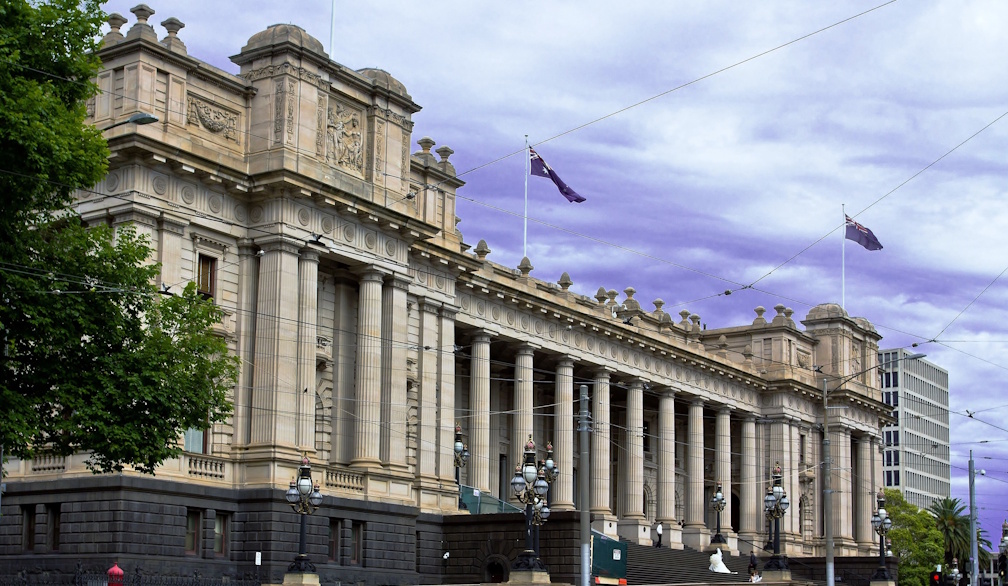
If you spend any time in a Melbourne café, a tradie ute yard, a Facebook comments section, or the talkback-radio universe, you’ll hear it said with absolute certainty: “Everyone hates Labor in Victoria.” And yet, election after election, Victorian Labor keeps getting back in.
So what’s going on?
The “secret sauce” isn’t one thing. It’s a blend: demographic geography, a disciplined party machine, policy coalitions that hold together just long enough, and—crucially—an opposition that has too often looked like an argument in search of a government.
To understand the puzzle, it helps to separate volume from votes, and vibes from electoral mathematics.
First: “unpopular” isn’t the same as “unable to win”
At the 2022 Victorian state election, Labor won 56 of 88 seats in the Legislative Assembly (lower house) on about 37% of first-preference votes statewide.
That headline alone tells you two important truths:
-
You don’t need to win a majority of first preferences to win a majority of seats.
-
When your vote is efficiently distributed across the right electorates, you can convert a modest primary vote into a commanding parliamentary majority.
Australia’s preferential voting system rewards parties that can (a) come first or second in most seats and (b) reliably attract enough preferences to push them over the line.
If a lot of voters feel frustrated but split their first preferences among minor parties and independents, Labor can still win the two-party contest in seat after seat—especially if the alternative (the Coalition) is not widely trusted or is internally unstable.
The map matters: Labor’s coalition fits modern Melbourne
Victoria is not politically uniform. But elections are won where people live—and increasingly, Victorians live in metropolitan Melbourne and its growth corridors.
Labor’s modern Victorian “seat engine” has three big geographic pillars:
1) The growth suburbs
Outer-suburban and peri-urban electorates are full of mortgage holders, young families, and new migrants. Their priorities are often practical and immediate: schools, hospitals, roads, public transport, cost-of-living pressures, and time spent commuting.
These seats can swing, but they also punish oppositions that feel chaotic or offer “cuts” without a compelling alternative story.
2) The middle-ring suburbs
These are the classic battlegrounds—aspirational, service-heavy, and values-mixed. They don’t always love Labor, but they’ll stick with it if they don’t see a credible government-in-waiting.
3) A “progressive professional” inner city (with a twist)
Inner-city Melbourne has strong Green support, but it also contains professional voters who may criticise Labor loudly while still preferencing it ahead of the Coalition.
That last part matters: a voter can complain at dinner parties and still, in the privacy of the ballot box, mark preferences that ultimately help Labor win.
The machine: Victorian Labor is organisationally ruthless (in the competent sense)
Politics is not only persuasion. It’s logistics.
Victorian Labor has a reputation for being exceptionally disciplined at the unglamorous work that wins seats: volunteer mobilisation, booth coverage, data-driven targeting, message repetition, and candidate management.
You can dislike a party and still be out-organised by it.
The party’s structure is closely connected to unions and factional organisation (as is Labor nationally). Whatever your view of factionalism, it tends to produce two electoral advantages: message discipline and campaign capacity—the ability to turn out people and resources in marginal seats. (Factionalism can also produce obvious downsides, but electorally, organisational strength is real.)
The opposition problem: Labor’s “secret sauce” often tastes like Liberal weakness
There’s a blunt rule of Victorian politics: governments don’t only win; oppositions also lose.
In 2025, the ABC’s analysis of Victorian Liberal leadership turmoil described the scale of the task for the new leader—uniting the party and convincing voters it is “worth voting for,” amid demography and brand challenges.
The Guardian has also reported on internal dysfunction and toxicity concerns within the Victorian Liberal organisation.
When an opposition looks unstable, divided, or unready, a remarkable number of voters default to the incumbent—even if they’re irritated—because they see the alternative as higher risk.
That is not an endorsement of Labor so much as a risk management decision by voters.
Labor’s policy coalition: big projects, public services, and “managed controversy”
Victorian Labor has built a durable governing coalition by aligning itself with three broad expectations:
-
The state should be active in health, education, transport, and major infrastructure.
-
Public services should be defended, even when budgets are tight.
-
The government should look like it’s doing things, not just commenting on problems.
You don’t have to agree with every project or every tax setting to see how this works politically: people often vote for the party they associate with delivery—especially in fast-growing areas where the shortage of services is felt daily.
Even when there’s backlash from specific sectors—property, business lobbies, parts of the regions—Labor can survive if it keeps enough of its broader metro coalition intact. (Recent commentary from industry groups about Victoria’s housing and planning settings shows how contentious that relationship can be.)
The “loud minority” effect: anger is not evenly distributed
One reason Labor can feel unpopular is that dissatisfaction is often:
-
More concentrated (geographically and socially),
-
More vocal (online and in certain media ecosystems),
-
More emotionally intense (taxes, lockdown memories, major works disruption, cost pressures).
Meanwhile, satisfied or resigned voters are quieter.
This creates a perception gap: the noise is real, but it doesn’t always translate into the numbers needed to flip dozens of seats.
Preferential voting and the fragmentation of the right
Minor parties have proliferated. In 2022, the vote was spread across Greens and a long list of smaller parties.
Fragmentation doesn’t automatically help Labor—sometimes it hurts. But it often means the anti-Labor vote is not cleanly consolidated behind a single challenger. In two-candidate contests, that can leave the Coalition chasing preferences and trying to unify a broad church that doesn’t always want to be unified.
Meanwhile, Labor often benefits from being the “acceptable second choice” for enough voters who won’t put the Coalition first.
Candidate strategy: local MPs matter more than people admit
Victorian elections can turn on local reputations—school communities, multicultural networks, small business strips, sporting clubs, local hospitals.
A well-embedded sitting MP with a strong electorate office presence can survive a pretty ugly statewide mood. Multiply that by dozens of seats and you get a resilient electoral map.
Media dynamics: the state-government punching bag paradox
State governments are exposed: they run the systems people rely on (and complain about) every day—roads, trains, hospitals, schools, planning. That makes them permanent targets.
Paradoxically, being the punching bag can also normalise your incumbency: people get used to the government as the default manager of daily life. The opposition must do more than criticise; it must convince voters it can manage the same mess better.
When the opposition can’t clear that bar, the government survives on “experienced manager” energy—even if the manager is unpopular at the BBQ.
The deeper structural truth: Victoria’s political centre of gravity has shifted
Over the last couple of decades, Victoria’s voter base—more urban, more tertiary-educated, more culturally diverse—has tended to be more receptive to centre-left governance than some other states.
That doesn’t guarantee permanent rule. But it changes what the Coalition must do to win: it can’t rely on nostalgia, culture-war intensity, or purely regional messaging. It has to build a modern Victorian coalition that works in Melbourne’s middle and outer suburbs.
When it fails to do that, Labor can keep winning without being loved.
So what is the “secret sauce”?
If you had to bottle it, it would read like this:
1) A Melbourne-shaped electoral map that rewards a strong centre-left metro coalition.
2) A formidable ground game (organisation, targeting, discipline).
3) Preferential voting that lets Labor win with a modest primary when it stays competitive everywhere.
4) A repeatedly struggling opposition—leadership churn, internal conflict, and brand issues.
5) Incumbency and “delivery politics” that keep enough voters in the tent, even when they grumble.
That’s the Victorian paradox: a party can be widely criticised, genuinely controversial, and still be electorally dominant—because elections are not popularity contests in the abstract. They’re seat-by-seat decisions made by risk-averse humans living in specific places, choosing between real options, under a voting system that rewards breadth, discipline, and second preferences.
If the Coalition wants to break the pattern, it won’t be by assuming Victorians secretly agree with it. It will be by building a credible, stable alternative that fits Victoria as it is now—not as anyone wishes it still was.