Fremantle Ports to trial project to enhance marine health of Cockburn Sound.
- Written by: Times Media
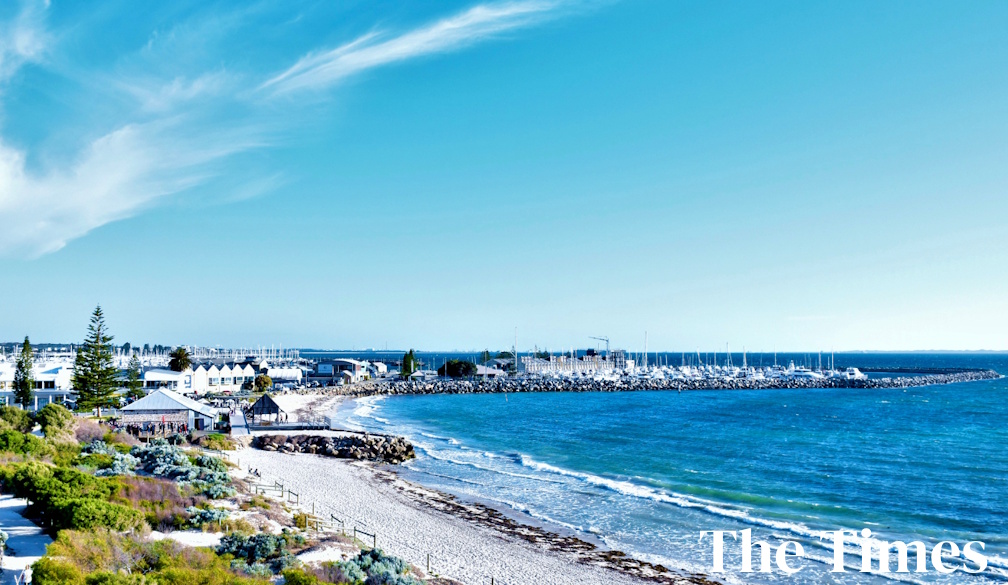
Fremantle Ports has partnered with Byssal and DevelopmentWA to trial an innovative nature-based pilot project to enhance marine biodiversity and water quality for the long-term health of Cockburn Sound.
The trial, developed with marine environmental specialists Byssal, involves seeding approximately 20 tonnes (770,000 shells) of locally sourced blue mussels (Mytilus galloprovincialis) onto a selected rock wall at the Australian Marine Complex Common User Facility in Henderson.
Seeding will establish a self-sustaining mussel population, with pre- and post-seeding monitoring to measure water quality and changes in marine biodiversity and provides a baseline for potential long-term ecological and community benefits.
Mussels are natural biofilters, capable of improving water clarity by removing suspended particles, excess nutrients and phytoplankton. The trial population could filter more than two million litres of seawater per hour - more than 23 Olympic swimming pools each day - contributing to healthier marine conditions over time.
Beyond water quality, mussel beds create complex habitats that support fish, crustaceans and other marine organisms. They are an essential part of the Western Australian coastline’s food chain base which supports numerous species of fish. Additionally, their ability to bind to rock and each other via their byssal threads, can result in a reduction in erosion through stabilisation of seabeds.
The trial aims to establish a self-sustaining mussel population that will:
improve water quality through natural filtration
increase habitat complexity and biodiversity
support marine food chains and fisheries
demonstrate how nature-based solutions can be integrated into existing infrastructure.
The mussels were seeded last week, with ongoing monitoring to assess mussel survival, growth and ecological benefits, including biodiversity changes and water filtering capacity.
Fremantle Ports Chief Executive Officer Jodie Ransom said the project was in line with the organisation’s Sustainability Approach, focusing on a commitment to environmental stewardship and sustainable port operations.
‘Fremantle Ports is committed to finding smarter, more sustainable ways to operate and this project is a practical example of how we can work with nature to improve environmental outcomes,’ Ms Ransom said.
‘Working in partnership with Byssal and DevelopmentWA, this project is an exciting opportunity to test a nature-based solution that could deliver real environmental benefits while shaping how we design and manage port environments into the future.’
‘By exploring innovative, low-impact solutions like this, we’re strengthening the long-term health of Cockburn Sound and contributing to a more sustainable future for our port and community.’
‘With considerable development planned in the marine landscape over the coming decades, we are looking for ways to future proof Cockburn Sound’s marine environment,’ said Byssal Director and Principal Scientist Dr Dean Thorburn.
‘We’re using healthy, locally grown mussels and applying a simple distribution method to help them establish on rock walls. If successful, it could provide a model for ports and other maritime environments around Australia,’ Dr Thorburn said.
‘We are one of the first organisations to apply aquaculture for an environmental benefit. Currently Byssal has 50 tonnes of blue mussels growing at our mussel farms in Cockburn Sound and the equipment to grow up to 40 times that amount, giving us the ability to scale the project quickly if the pilot is successful.’
‘It’s an exciting opportunity to collaborate with other departments on a nature-based solution that integrates directly with existing infrastructure,’ Dr Thorburn said.
‘DevelopmentWA is proud to support the Mussell Greenwall trial by granting Byssal access to a section of a breakwater within the Australian Marine Complex Common User Facility, to conduct the trial,’ said Lorissa Kelly CEO DevelopmentWA.
‘The trial’s objective is to improve the environmental performance and support the health of the local marine ecosystem.’
‘It’s a wonderful example of Government and Byssal collaborating on forward-thinking evidence-based initiatives to the benefit of both the environment and the wider community,’ Ms Kelly said.
See the pilot underway https://www.youtube.com/watch?v=N0WssP8gzyI