Housing in Canberra: is affordable housing now just a dream?
- Written by: The Times
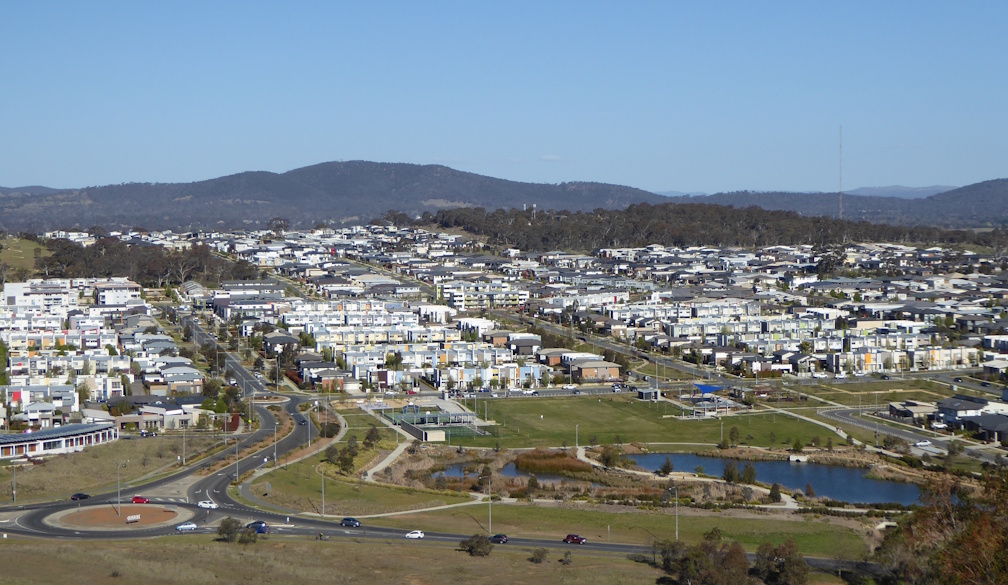
Canberra was once seen as an outlier in Australia’s housing story — a planned city with steady employment, predictable growth and a housing market that, while never cheap, felt rational.
That reputation has changed.
In 2025, Canberra consistently ranks among Australia’s least affordable cities relative to income. Prices are high, rents are tight, and the path into home ownership for first-home buyers increasingly looks like a test of endurance rather than aspiration.
So is affordable housing in Canberra still achievable — or has it quietly slipped into the realm of nostalgia?
A city built on stability — and priced accordingly
Canberra’s housing market has always been shaped by its economic foundation.
Unlike Sydney or Melbourne, Canberra is not driven by finance, manufacturing or global tourism. It is driven by government.
The presence of the federal public service creates:
-
High median household incomes
-
Strong job security
-
Low unemployment volatility
-
Predictable demand for housing
These characteristics make Canberra attractive — and expensive.
During national downturns, Canberra property prices often fall less and recover faster than other capitals. That stability is reassuring for owners, but punishing for buyers trying to break in.
The numbers behind the pressure
While Canberra’s median house prices fluctuate, they remain stubbornly high compared to incomes — particularly when compared to Brisbane, Adelaide or Perth.
At the same time:
-
Rents have surged, driven by population growth and limited supply
-
Vacancy rates have hovered near historic lows, intensifying competition
-
Deposit requirements have risen faster than wages
For many households, saving a deposit while paying record rents feels like running uphill on a treadmill that never slows down.
The result is a growing cohort of long-term renters — including professionals who, a generation ago, would almost certainly have owned a home by now.
Why supply is so hard in the nation’s capital
Canberra is often described as spacious, but housing supply is constrained in ways that are less obvious than in older cities.
1. Geography and planning limits
The ACT is geographically small and surrounded by New South Wales. Expansion is not unlimited.
At the same time, Canberra’s planning framework emphasises:
-
Environmental protection
-
Height controls in established suburbs
-
Carefully staged land releases
While these policies preserve liveability, they also slow the pace at which new housing enters the market, particularly in well-located areas.
2. The missing middle problem
Much of Canberra’s housing stock sits at two extremes:
-
Detached houses in established suburbs
-
High-density apartments in town centres
What’s missing is the “middle” — townhouses, duplexes and low-rise apartments in existing suburbs.
Without this diversity, buyers are forced into expensive houses or dense apartments that don’t suit everyone, limiting choice and affordability.
3. Construction costs and labour shortages
Even when land is available, building is expensive.
Rising construction costs, skilled labour shortages, and compliance requirements have pushed up the price of new dwellings. Developers face narrow margins, making genuinely affordable projects harder to deliver without government support.
Renters feel the squeeze first — and hardest
Canberra’s rental market has become one of the tightest in the country.
Demand comes from:
-
Young public servants on initial placements
-
Defence and security staff
-
University students
-
Contractors on fixed-term government projects
This constant inflow keeps pressure on rents, particularly for one- and two-bedroom dwellings close to employment hubs.
For lower-income households, the situation is acute. Social housing waitlists are long, and private rentals increasingly consume more than 30% — sometimes 40% — of household income.
Housing stress, once seen as a marginal issue in Canberra, is now firmly mainstream.
Affordable housing schemes: helpful, but limited
The ACT Government has not ignored the problem.
Programs such as:
-
Land rent schemes
-
Shared equity arrangements
-
Inclusionary zoning targets
-
Public and community housing construction
have helped some households access housing they otherwise could not afford.
But these schemes face structural limits.
They are often:
-
Oversubscribed
-
Complex to navigate
-
Restricted by income thresholds and eligibility rules
For every household assisted, many more remain locked out — earning too much to qualify for help, but too little to compete in the open market.
First-home buyers: stuck in the middle
First-home buyers in Canberra face a particularly cruel paradox.
They are often:
-
Well-educated
-
Securely employed
-
Earning above-average incomes
Yet still unable to compete with:
-
Dual-income households
-
Existing homeowners upgrading
-
Investors with equity buffers
Stamp duty concessions and grants help at the margins, but they rarely bridge the gap created by rapid price growth and large deposit requirements.
As a result, many first-home buyers either:
-
Buy far from employment centres
-
Compromise heavily on dwelling type
-
Delay buying for years
-
Or leave the ACT altogether
Lifestyle trade-offs: space, time, and compromise
Affordability is not just about price — it’s about what you give up to afford housing.
In Canberra, those trade-offs increasingly include:
-
Longer commutes
-
Smaller dwellings
-
Reduced access to schools and services
-
Delayed family formation
For a city long marketed as family-friendly and liveable, these shifts represent a quiet but significant change.
Is Canberra becoming a city for insiders?
One uncomfortable question hangs over the debate: who is Canberra really affordable for?
Homeowners who bought before the last decade have seen strong equity growth. New entrants, by contrast, face barriers that feel structural rather than cyclical.
This creates a two-speed housing system:
-
Insiders with property wealth and security
-
Outsiders renting long-term or relying on assistance
When essential workers — nurses, teachers, hospitality staff — struggle to live near their jobs, affordability becomes not just an economic issue, but a social one.
Can affordability be restored — or only managed?
Few experts believe Canberra will ever become “cheap.”
But there is a meaningful difference between expensive but attainable and expensive and exclusionary.
Improving affordability likely requires:
-
Faster and more diverse housing supply
-
Greater density in well-serviced suburbs
-
Stronger incentives for build-to-rent projects
-
Continued investment in public and community housing
-
Better coordination with surrounding NSW regions
None of these solutions are simple. All involve political trade-offs.
So, is affordable housing a dream?
For some — particularly those entering the market today without family support — affordable housing in Canberra can feel like a distant aspiration.
But it is not an illusion yet.
Affordability in Canberra is not about returning to the past. It’s about preventing exclusion from becoming permanent.
If policy, planning and supply continue to lag behind population growth and demand, the dream will fade further. If governments are willing to confront difficult choices about density, land use and investment, Canberra can still be a city where secure housing is achievable — not just inherited.
The next decade will decide which version of Canberra becomes reality.