Is childbirth really safer for women and babies in private hospitals?
- Written by: Hannah Dahlen, Professor of Midwifery, Associate Dean Research and HDR, Midwifery Discipline Leader, Western Sydney University
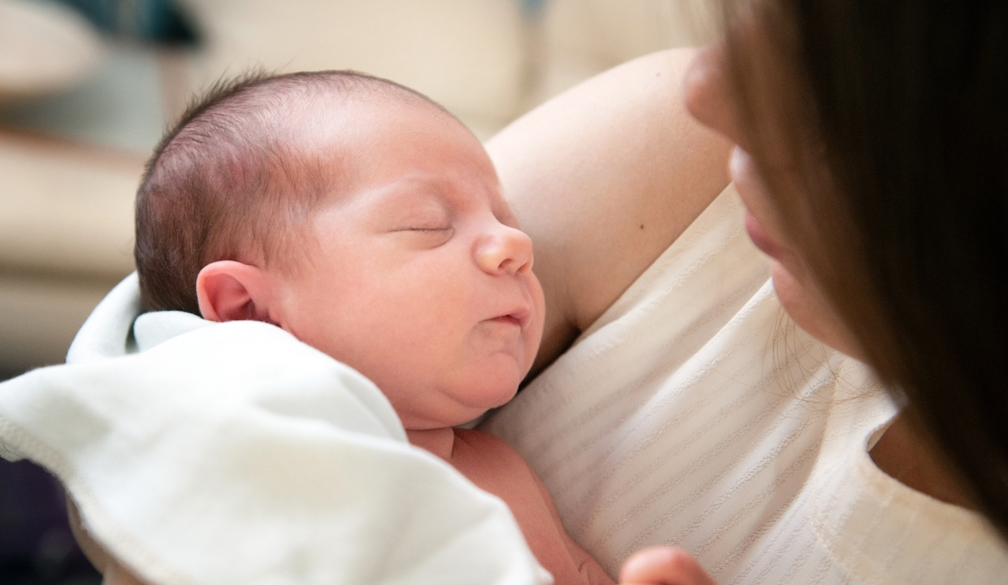
A study published this week[1] in the international obstetrics and gynaecology journal BJOG has raised concerns among women due to give birth in Australia’s public hospitals.
The study compared the outcomes of mothers and babies, as well as the costs, of standard public maternity care versus private obstetric-led care from 2016 to 2019 in Victoria, New South Wales and Queensland.
It found[2] women who gave birth in the public system were more likely to haemorrhage, sustain a third or fourth degree tear, and were less likely to have a caesarean than those who birthed in the private system. It found their babies were more likely to be deprived of oxygen, to be admitted to intensive care and to die.
But the study and subsequent media reports[3] don’t tell the whole story. There are also several reasons to be cautious about this data.
And it’s important to keep in mind that while things sometimes go wrong during childbirth, the majority of women who give birth in Australia do so safely[4].
Birth options in Australia
Australia has a two-tiered system of health care:
-
a publicly funded system that provides care for free, or limited out-of-pocket costs, to patients in public hospitals
-
a private system where patients with private health insurance access care from doctors mainly in private hospitals. They face varying out-of-pocket costs.
There are multiple models[5] of maternity care in Australia, but these can be grouped into:
-
fragmented care models, where women see many different care providers. Fragmented models include medical and midwifery care, and GP shared care (shared between GPs, obstetricians and midwives)
-
continuity of care models where one (or a small number of providers) provide the majority of the care throughout the antenatal, birth and postnatal period. This includes continuity of midwifery care in the public system, private obstetric care, or care from a privately practising midwife in the private system.
Women favour[6] continuity of care and they and their babies experience better outcomes in these models, especially under midwifery continuity of care[7].
However, continuity of midwifery care can be difficult to access, despite calls to expand this model worldwide[8].
Digging into the data
The BJOG paper[9] examined the outcomes for 368,292 births selected out of a bigger data set of 867,334 women who gave birth in NSW, Queensland and Victoria between January 2016 and December 2019.
It used publicly available data collected on each birth in three states in Australia, as well as Pharmaceutical Benefits Scheme (PBS[10]) and Medicare Benefits Schedule (MBS[11]) data linked to these cases to help examine cost.
The study grouped all the models of care together in the public system and compared them to one model of private obstetric care (excluding the privately practising midwifery model altogether).
A major problem with doing research with big data sets is they do not contain the many medical and social complexities that inform health outcomes. These complexities are much more prevalent in the public system and impact on health outcomes.
Only diabetes and blood pressure problems were included in medical complications controlled for in this paper.
But there are others that impact on outcomes. There was no controlling for drug and alcohol use, mental health, refugee status and many more significant factors impacting health outcomes for mothers and babies.
On the other hand, women who give birth in private hospitals are more likely to be socially advantaged (with higher incomes, more education, and greater access to health care, transport and safe housing), which also impacts on birth outcomes.
While the researchers attempted to “match” the population groups to be as similar as possible and reduce these differences, some of the variables were not included in the data sets. Data on artificial reproductive technology, body mass index and smoking, for example, were not available in all three states. These variables impact outcomes.
The study did not consider some key outcomes often used to measure maternity care, such as rates of episiotomies[12] (surgical cuts to the perineum). Rates of episiotomies are higher in the private sector[13].
The findings of the study also differ from other research on some measurements, such as third and fourth degree perineal tears[14]. The BJOG paper reports[15] severe perineal tearing[16] is lower in private hospitals, while other earlier research[17] shows the opposite.
Severe perineal tearing does, however, occur more often among some ethnic groups[18] who are more likely to have public health care.
More c-sections
The study found women in private hospitals were more likely to have a caesarean section (47.9%) than in the public system (31.6%). There were also higher rates of caesarean sections undertaken before 39 weeks in private obstetric-led care.
It was beyond the scope of the paper to examine the impacts of this on children, however previous research shows early births are linked to an increased risk of developmental problems[19], such as poorer school performance.
While caesarean sections are generally safe, past research as found c-sections can increase risks for women’s future pregnancies and births[20] and can have long-term impacts[21] on children’s health.
Our previous research showed low-risk women who gave birth in private hospitals had higher rates of intervention[22] but earlier research showed no difference in the rate of deaths[23]. Thankfully, baby deaths are very rare in Australia’s high-quality health system[24].
It’s important that women have a choice in how they give birth, and for that choice to be informed and supported. Australian women can also be reassured that Australia is one of the safest countries[25] in which to give birth.
References
- ^ study published this week (obgyn.onlinelibrary.wiley.com)
- ^ found (obgyn.onlinelibrary.wiley.com)
- ^ subsequent media reports (www.theaustralian.com.au)
- ^ safely (www.aihw.gov.au)
- ^ multiple models (theconversation.com)
- ^ favour (theconversation.com)
- ^ midwifery continuity of care (www.cochranelibrary.com)
- ^ worldwide (www.nationaltribune.com.au)
- ^ BJOG paper (obgyn.onlinelibrary.wiley.com)
- ^ PBS (www.pbs.gov.au)
- ^ MBS (www.mbsonline.gov.au)
- ^ episiotomies (theconversation.com)
- ^ higher in the private sector (pubmed.ncbi.nlm.nih.gov)
- ^ perineal tears (www.safetyandquality.gov.au)
- ^ reports (obgyn.onlinelibrary.wiley.com)
- ^ perineal tearing (www.sciencedirect.com)
- ^ other earlier research (bmjopen.bmj.com)
- ^ ethnic groups (www.sciencedirect.com)
- ^ an increased risk of developmental problems (pretermalliance.com.au)
- ^ future pregnancies and births (www.healthynewbornnetwork.org)
- ^ long-term impacts (www.healthynewbornnetwork.org)
- ^ higher rates of intervention (pubmed.ncbi.nlm.nih.gov)
- ^ no difference in the rate of deaths (pubmed.ncbi.nlm.nih.gov)
- ^ high-quality health system (www.aihw.gov.au)
- ^ safest countries (www.aihw.gov.au)